

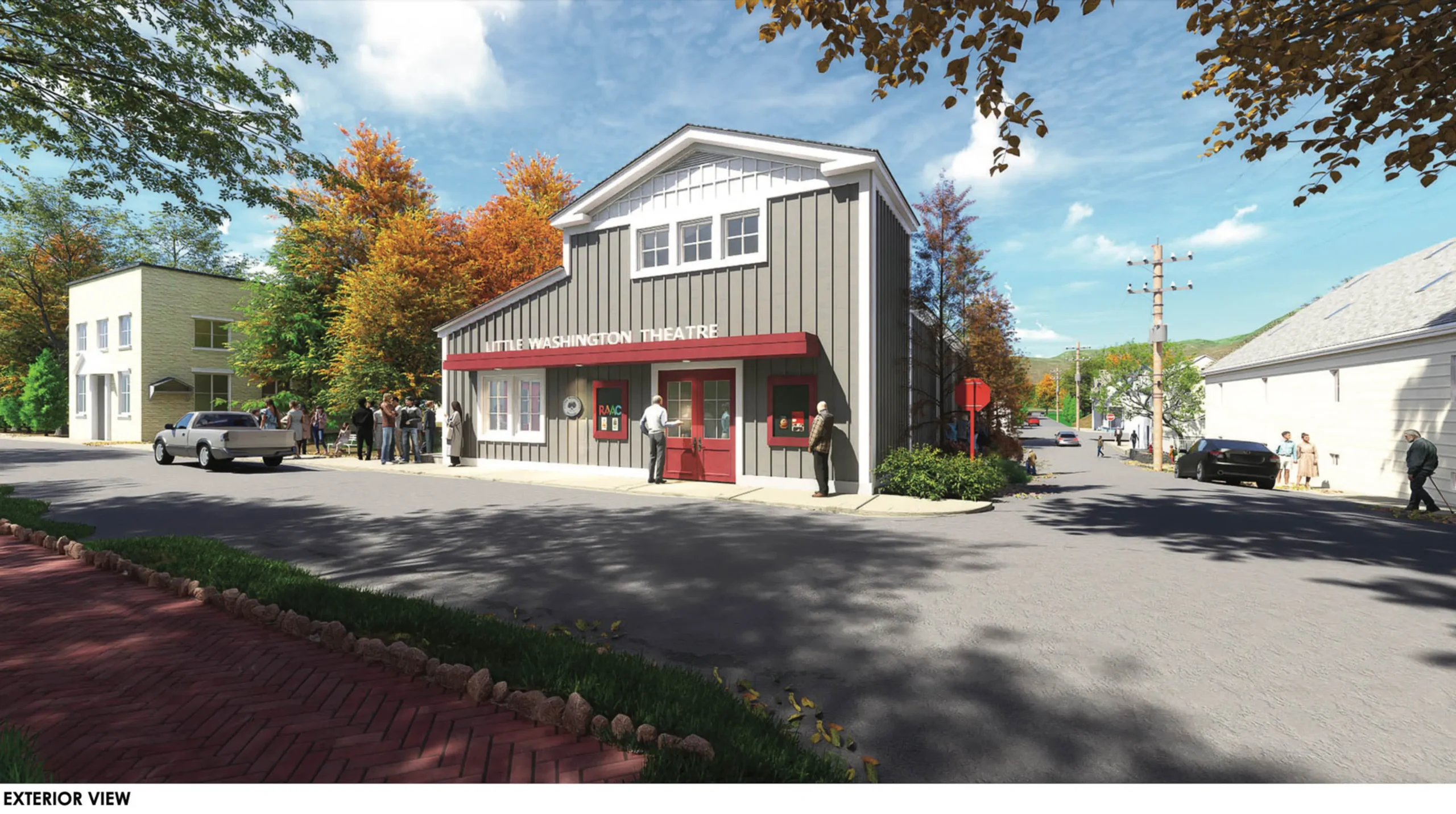
Gears up for year-long, $2.5M renovation
The moment you step into the Little Washington Theatre, its history is obvious — red velvet stage curtains, heavy wooden doors, an old ticket counter from movie theater days and a stage worn smooth by generations of performances.
But after more than 80 years, the beloved space is ready for an upgrade.
“It needs a little loving right now,” said Matthew Black, president of the Rappahannock Association for Arts and Community (RAAC). “We need to improve it. It could serve the community better if we make an improvement.”
Now, a fast-moving, $2.5 million capital campaign is planned to transform the theater with ADA-accessible bathrooms, a backstage space with storage underneath it, green room and dressing room, an expanded multi-use lobby, new upholstering on its vintage seats and exterior improvements.
Construction is expected to begin in early July, after the season’s June 27 final production, tribute concerts for one of RAAC’s founders, Charlie Tompkins. The theater will likely close for a year, but in the meantime, RAAC is planning two or three productions in alternate venues in addition to the annual Christmas play.
“There’s just a hunger for the arts,” said RAAC vice chair Lynn Dolnick, who helped lead the capital campaign. “And in this divisive world, the theater is completely not divisive. We want to bring people together.” (Dolnick is co-vice chair of Foothills Forum, an independent nonprofit news partner of the Rappahannock News.)
The expanded lobby will give audiences room to gather indoors rather than out on the street, while new backstage areas will allow rehearsals, set construction and performances to happen more efficiently. Accessibility improvements will also make the building easier for everyone to navigate.
Dolnick said the renovation is meant to give the theater room to breathe. “It’s going to stay the charming place it is,” she said.
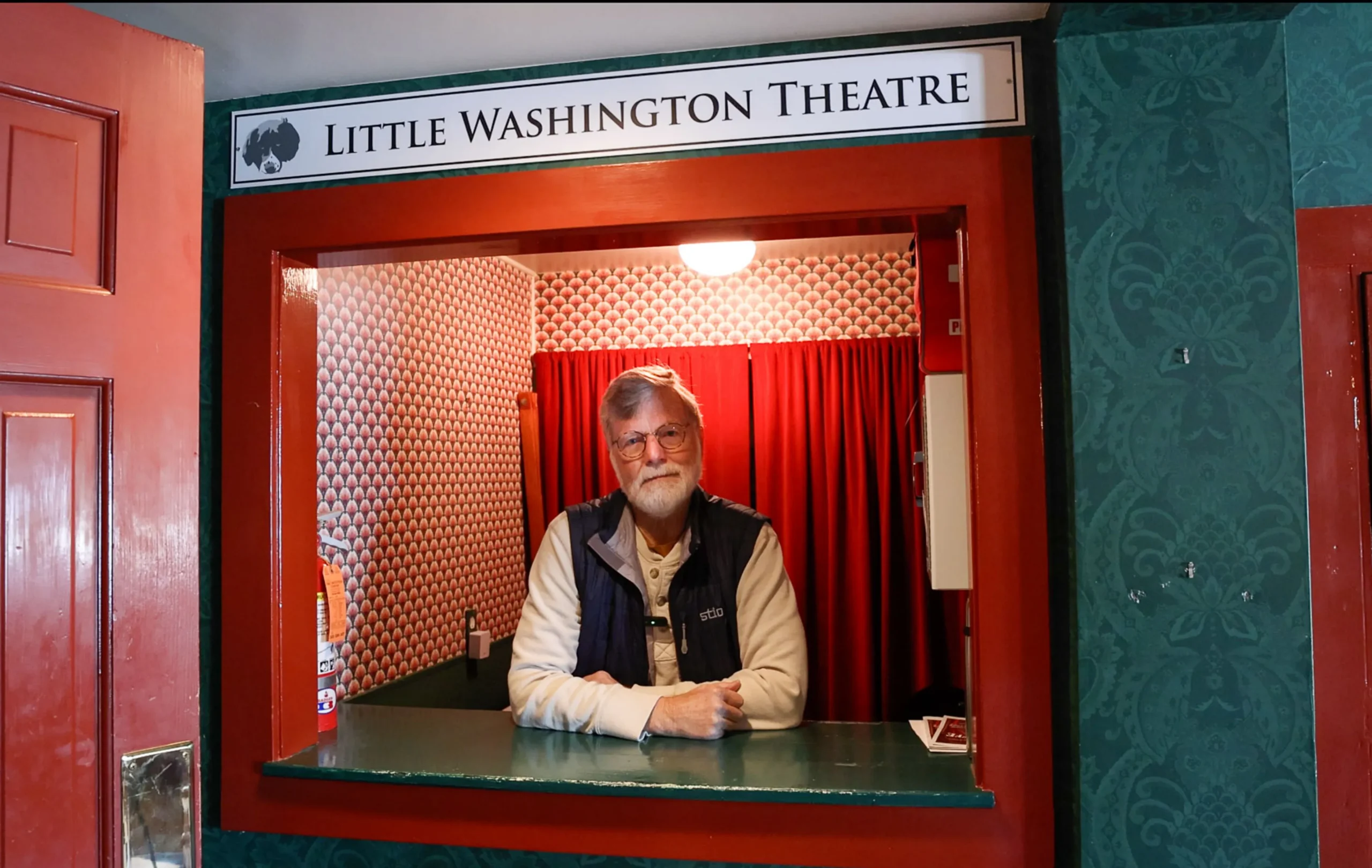
RAAC President Matthew Black at the ticket counter in the Little Washington Theatre lobby. The theater is getting ready to undergo a $2.5 million restoration and renovation project. (Photo/Ireland Hayes)
Raising the curtain on renovation
After RAAC received the theater as a gift from Nancy Raines in 2023, board members began planning renovations with architect Paul Falkenbury — husband of RAAC board member Tina Falkenbury — and Thorsen Construction. Several rounds of estimates came in higher than expected forcing the group into what Black called “the art of the possible” — trimming the list of wants against cost while also protecting the improvements that would make the project worth doing at all.
Then came a breakthrough: an anonymous donor offered a $1 million matching grant. “That really gave this thing liftoff,” Black said.
Black and Dolnick led an intensive, largely personal fundraising effort, visiting people in their homes and inviting people into the theater itself. Black walked potential donors through cramped backstage hallways and a crowded lobby to help them visualize the need, letting the space make the case.
“It’s one thing to say it in words and try to envision it,” Black said. “But when you see it in the flesh, it starts to make a little bit more of a difference.
“We have a community asset,” Black continued. “There’s a rare opportunity to make transformative improvements where this can become a community asset for decades to come.”
By this spring, the campaign had surpassed its expanded $2.5 million goal. The anonymous donor increased the matching challenge to $1.25 million after RAAC decided to extend improvements inside the theater itself.
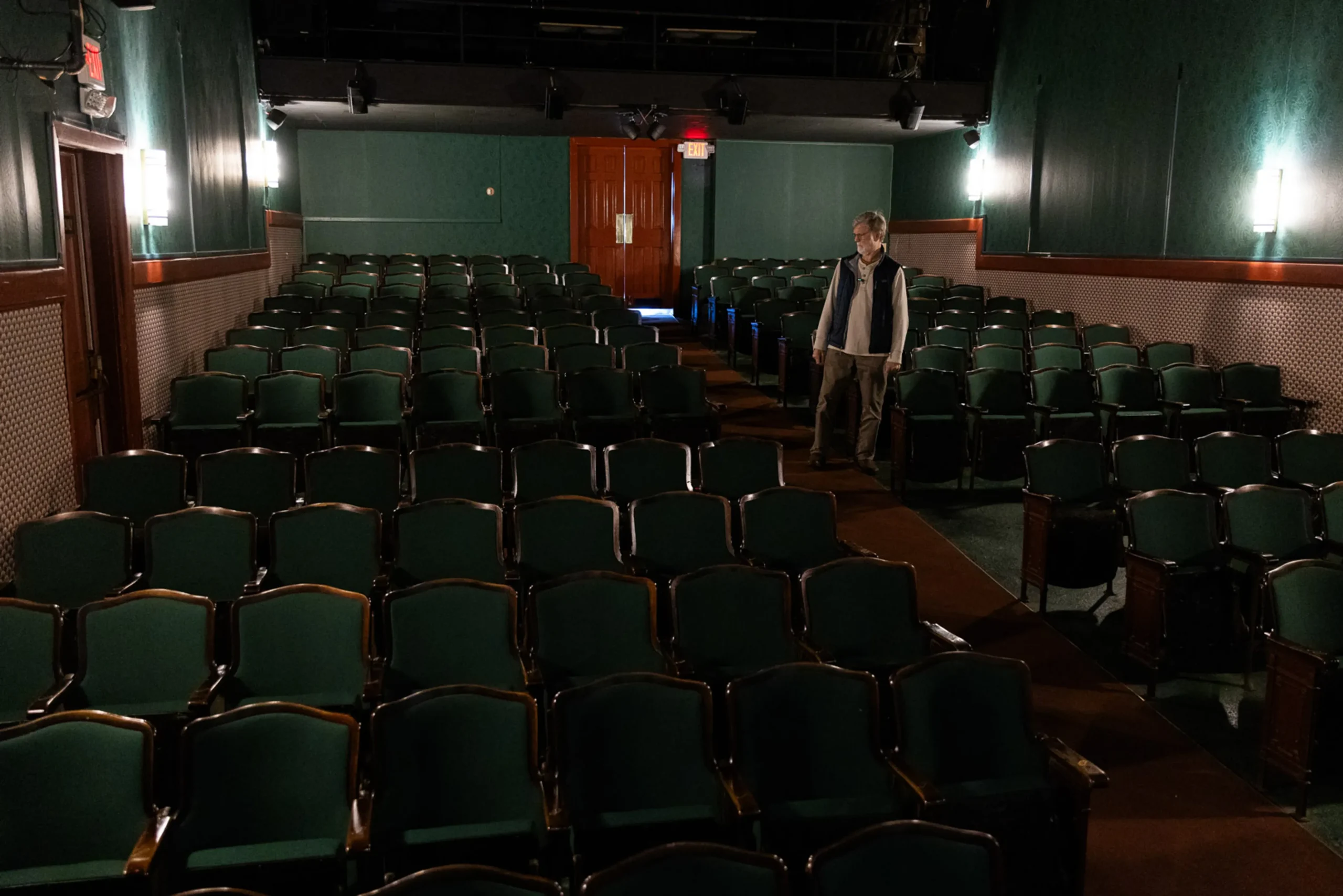
RAAC President Matthew Black standing in the historic auditorium. The original seats will remain after the renovation, but will be reupholstered. (Photo/Ireland Hayes)
“It doesn’t usually work this smoothly,” said Paul Falkenbury. “That’s a real testament to Matthew and Lynn and the story they were able to tell.”
Black said even though the goal has been met, there is still a small amount needed to be raised. Beyond the renovation, RAAC is hoping to make improvements to the audio equipment and stage rigging, and add acoustic panels to improve sound.
“The capital campaign reached its goal, exceeded its goal, but there’s some additional fundraising still underway,” Black said. “This last lap of fundraising will be able to pay for the technical improvements in terms of better lighting controls, better acoustical treatment and audio.”
A land expansion that almost wasn’t
But that’s not to say the goal came without some roadblocks, and at one point the project nearly fell apart entirely when RAAC struggled to secure an adjacent lot for backstage expansion.
“We almost didn’t get that property,” Black said. “It was only at the 11th hour that we learned it was going to be sold, and we were able to inject ourselves into that process.”
Neighbors worried the addition would disrupt their viewshed. Falkenbury quickly created new sketches showing the proposed expansion, with the extension reduced from 25 feet to 21 feet. The two parties began working together on landscaping plans for the remainder of the lot.
“They decided they could live with this,” Falkenbury said.
Eventually, former theater owner Wendy Weinberg agreed to sell the lot to RAAC. Black said backers of the theater project presented the case and explained what the expansion would mean for the theater and the town, and she agreed.
“I would say it was nip and tuck for a while,” Black said. “But she eventually said OK.”
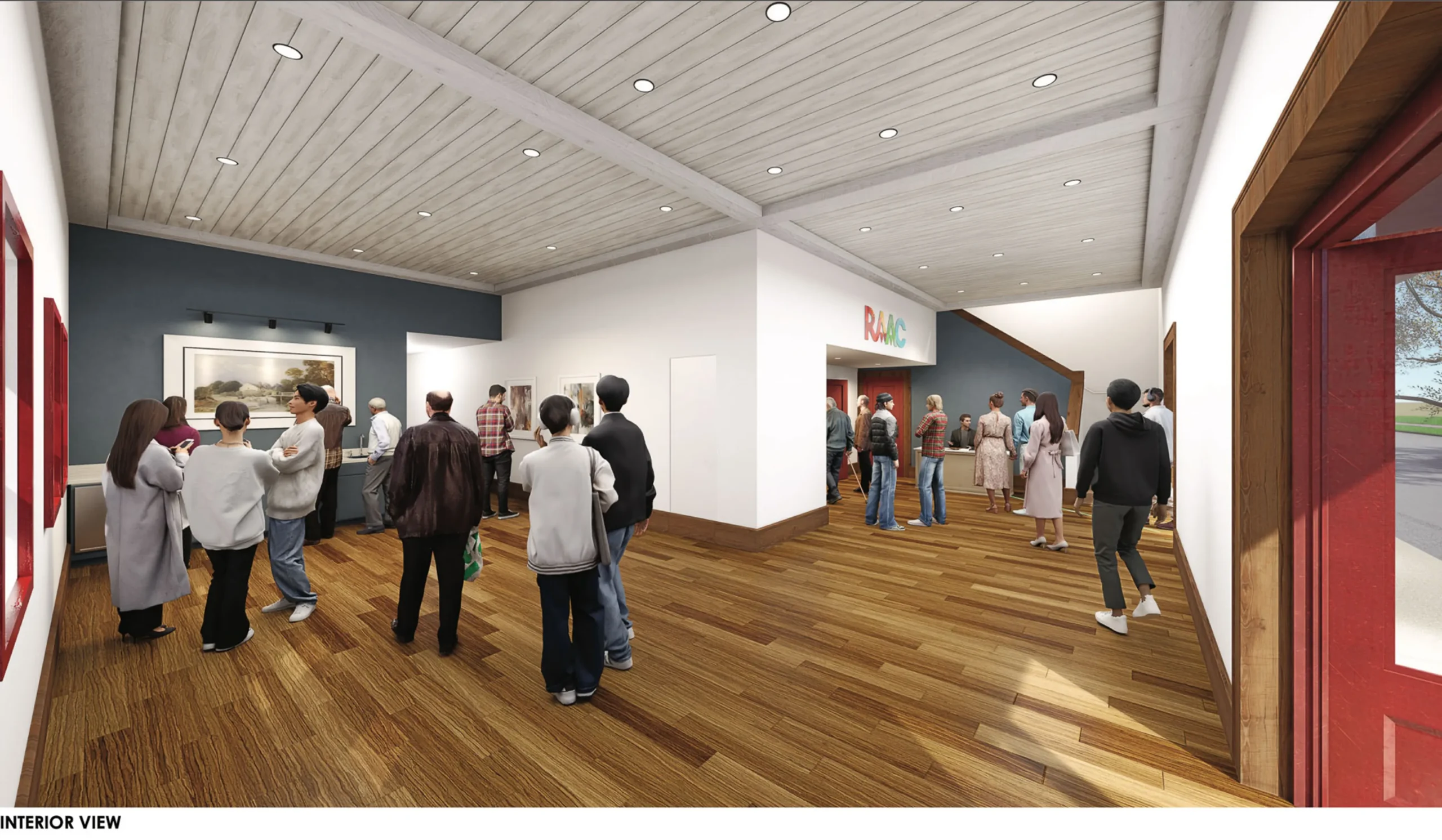
A rendering of the expanded, multi-use lobby space. (courtesy)
Life behind the curtain
For RAAC artistic director Patty Hardee, who has worked at the theater for more than 20 years, the renovation will solve longstanding logistical challenges.
In a recent run of “Tartuffe,” a 17th century French comedy staged in elaborate period dress, women wore wide, poofy gowns, maneuvering through a backstage passage that is, in places, just two to three feet wide, Hardee said.
“We made it work,” Hardee said. “We’re really good at making it work. But it’ll be easier, I think, once the construction is done.”
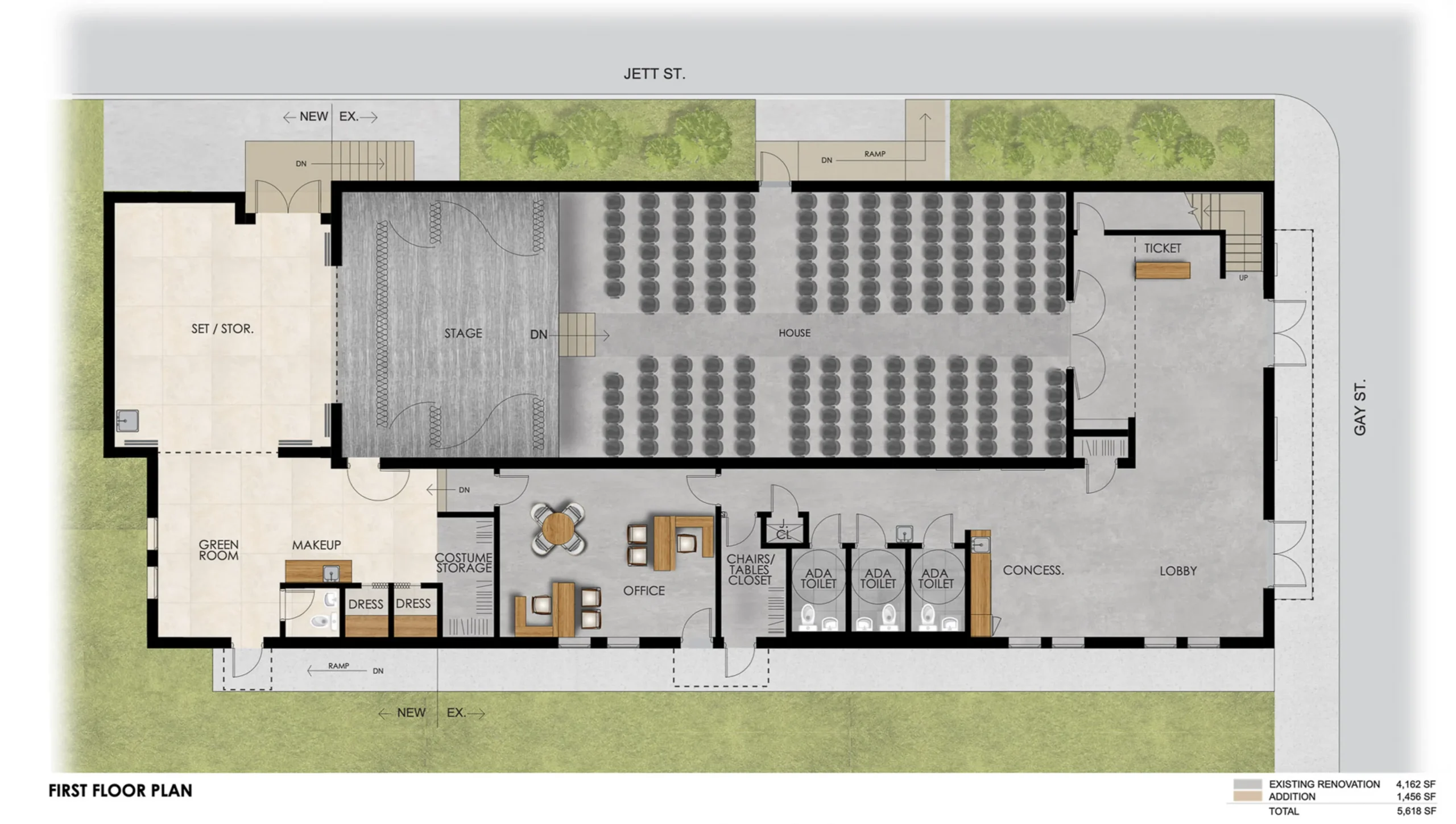
Set construction currently happens on the stage, or against the audience seats because there is nowhere else to build, Black said, which limits how many shows or performances can happen each year.
He said actors have occasionally changed costumes across the street and walked over already dressed, because there was no backstage space to change, and actors navigate pitch-black stairs right off the stage to the green room during every performance.
The renovation will bring the green room level with the stage itself, allowing performers to move directly on stage without navigating steps in the dark. Expanding into the adjacent lot will open up the back of the stage and create room for movement and staging.
“When they push out the back of the stage and open that up into that big back room, that will also open up performance possibilities for us,” Hardee said. “It gives us another way to bring actors on, or expand a cast, or have different levels of scenery. So that’s really exciting for us.”
“When it’s done … it’ll have the art, it’ll have the performing arts, it’ll have storage for most of the stuff RAAC has accumulated over the years — and it has future flexibility,” Falkenbury said.
For Black, who has spent the better part of two years shepherding the project, the speed and warmth of the community’s response has been something he didn’t quite expect.
“It really makes me feel good … we’ve got friends and partners all over the place,” Black said, which for a project this size in a place this small, he added, those friends and partners made all the difference.
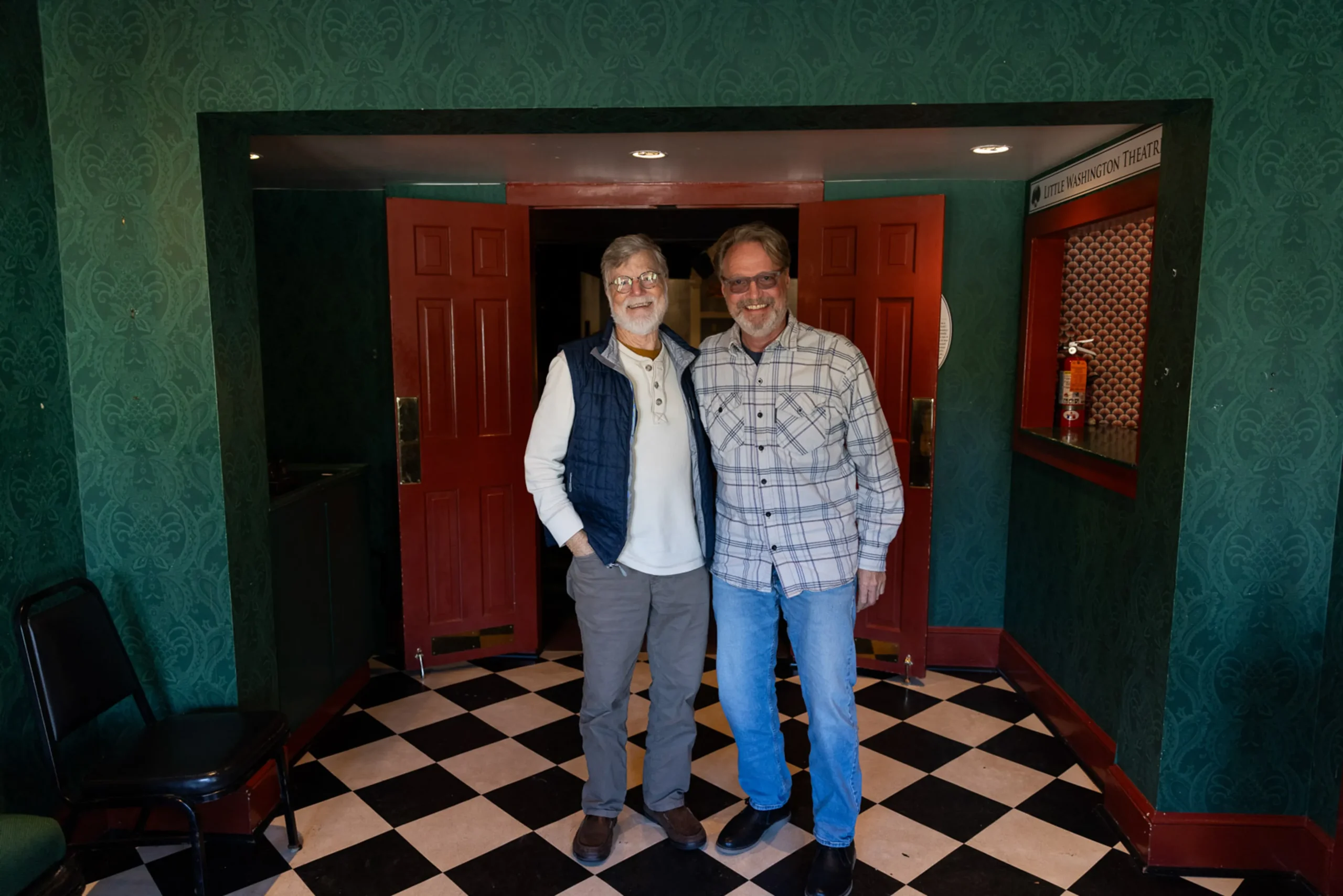
Matthew Black and architect Paul Falkenbury who volunteered his time to help with the designs and plans for the renovation. “When it’s done, it’s going to be RAAC’s center,” Falkenbury said. (Photo/Ireland Hayes)