

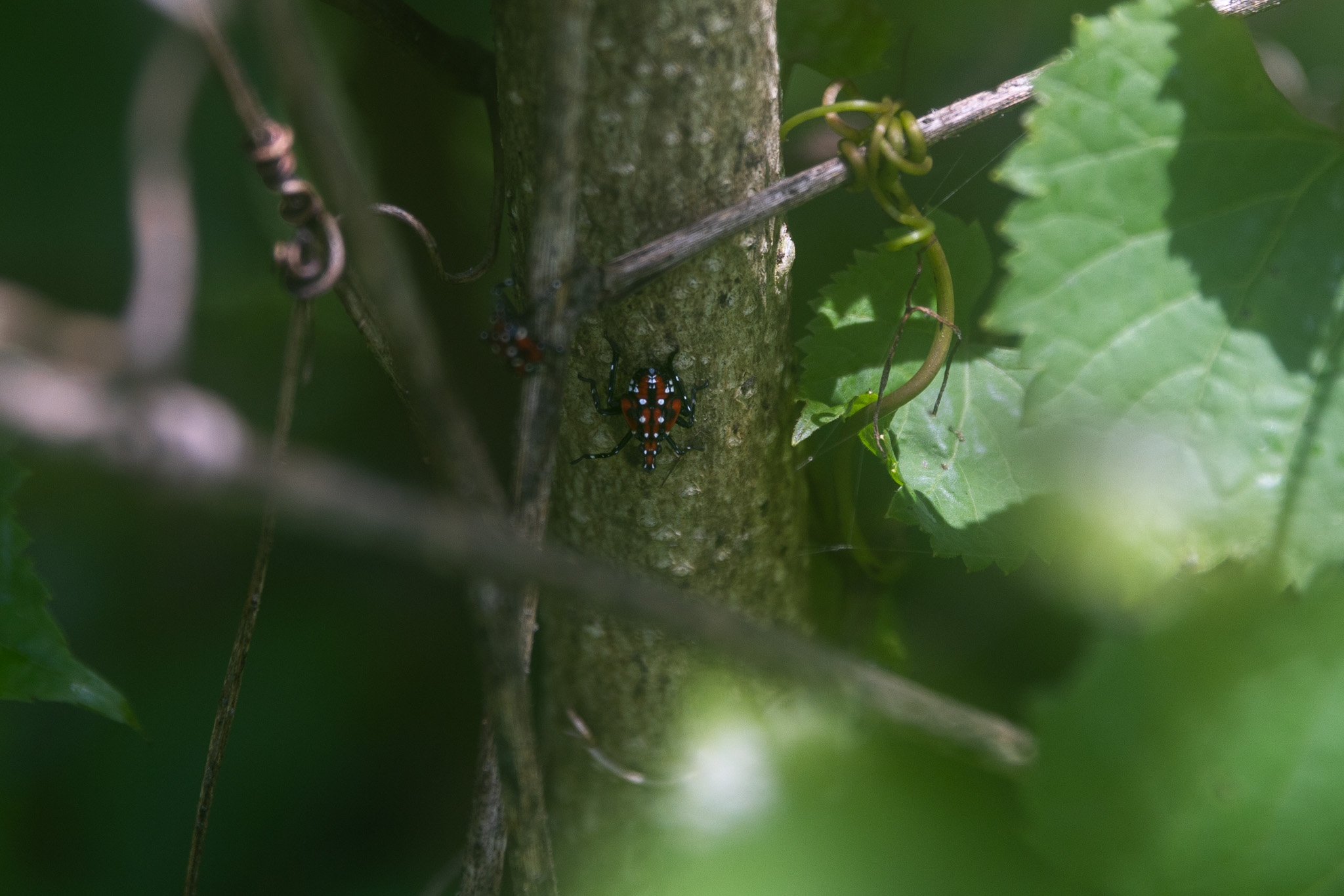
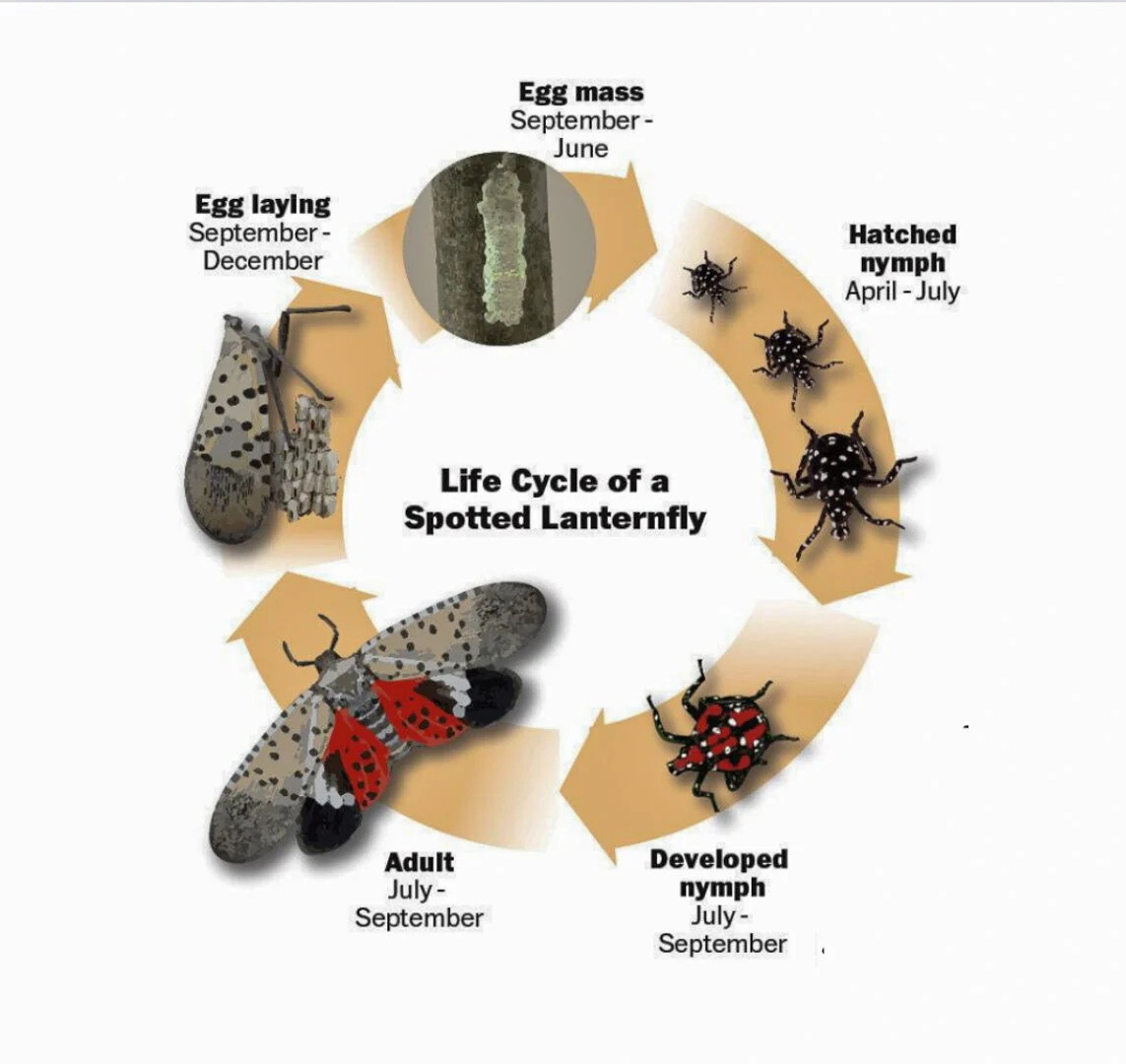
Spotted lanternflies, and more of them, are back in Rappahannock County this summer — with a vengeance.
“There’s a greater presence throughout the county than last year,” said Adam Downing, forestry extension agent for the Northwest District, which includes Rappahannock County. “We’re in the upswing now.”
The red-and-black, polka-dotted pests have been wreaking havoc across Virginia since 2018 — presumably arriving in the United States via a shipment of stone from their native Southeast Asia.
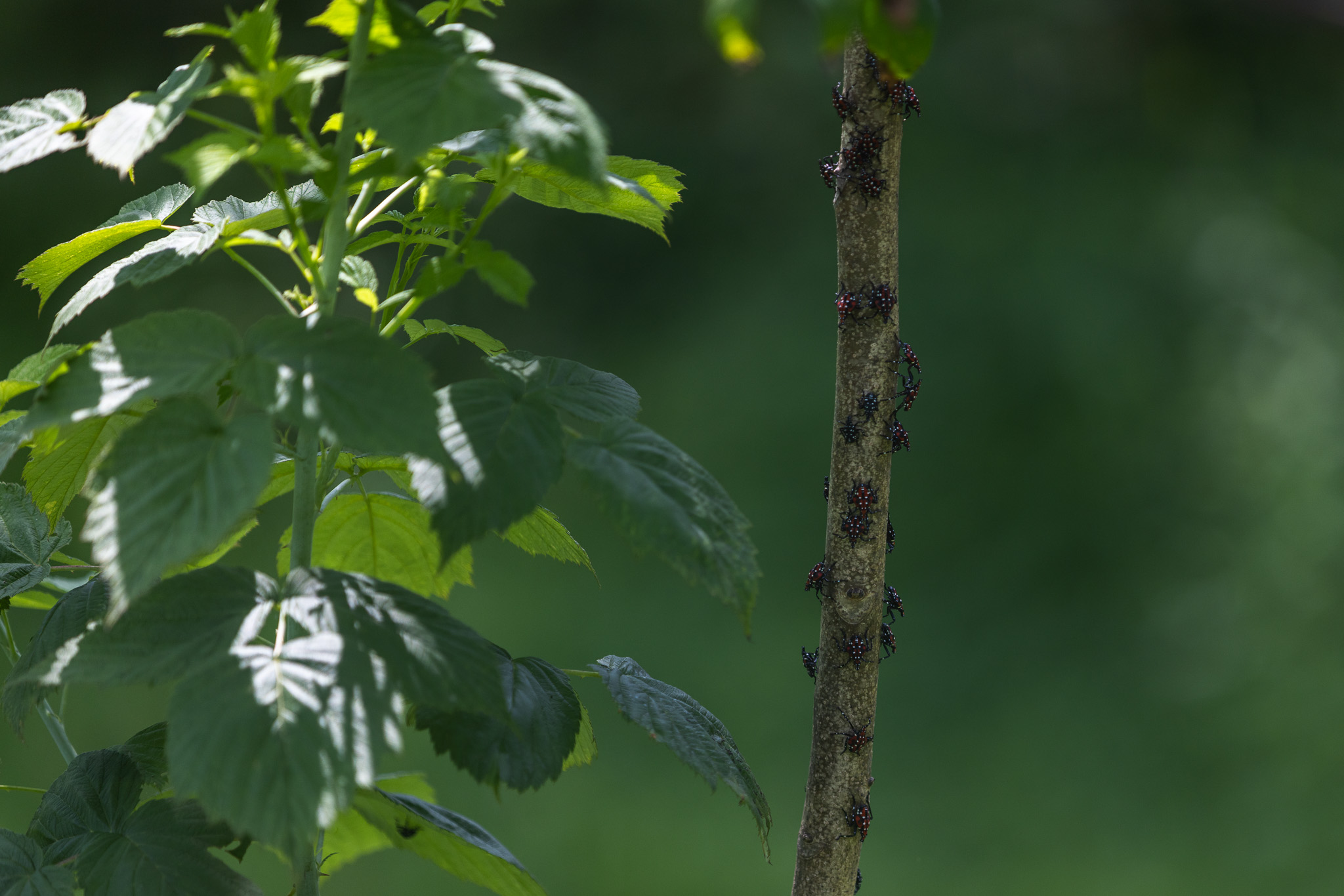
At Muskrat Haven Farm in Amissville, farmer Hunter Call said he has seen hundreds of nymphs this year, particularly on the tree of heaven variety — an invasive tree that is a favorite of spotted lanternflies — that grow intertwined with his black raspberry bushes.
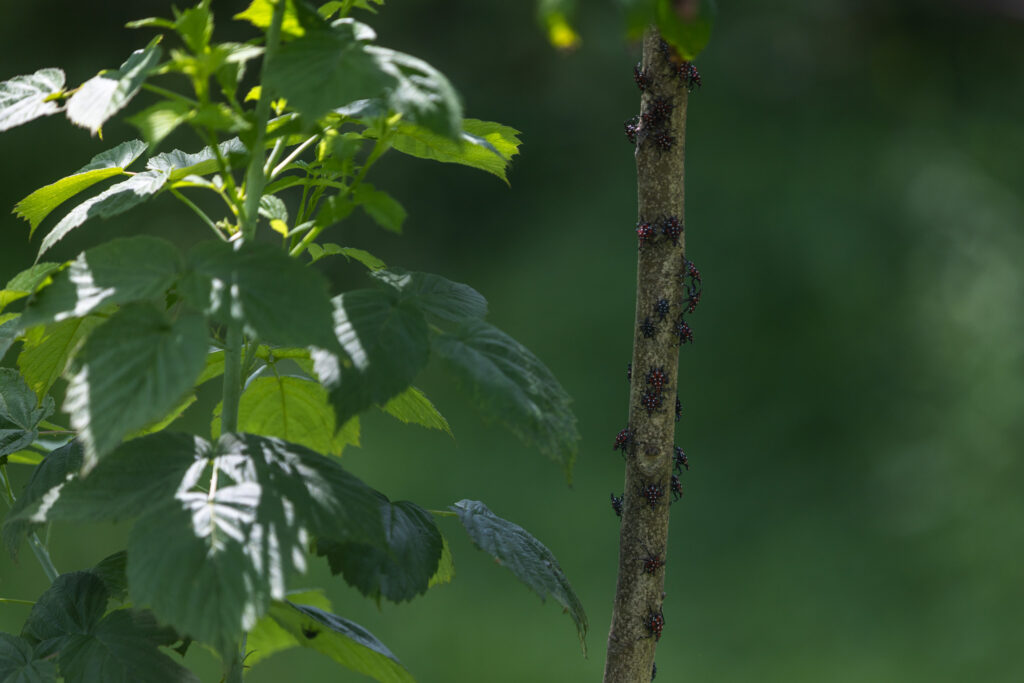
Dozens of nymphs lining a branch of a tree of heaven at Muskrat Haven Farm in Amissville. (Photo/Ireland Hayes)
“Last year was the first year I saw them,” Call said. “This year, they’re everywhere. We’re inundated with them.”
Wineries in Amissville like Narmada Winery and Magnolia Winery said they have had little trouble with lanternflies this year, and spot-treat egg clusters and nymphs, young lanternflies, when they are spotted.
“We haven’t seen many of them yet,” said John Rivard at Gadino Cellars in Washington.
Other wineries have not been as lucky. At Rappahannock Cellars in Huntly, egg masses were first seen this winter, but winemaker Steve Monson said the infestation is difficult to quantify.
“There’s just so many of them and there’s definitely sections where they’re much more prevalent than others,” he said.
Monson added that the general insecticides used by the vineyard seem to be working against the nymphs, which have not caused much noticeable damage to the grapevines. But the winery is bracing for the coming months when they mature into adults. “It really becomes a question of how bad does it get when they’re adults,” he said.
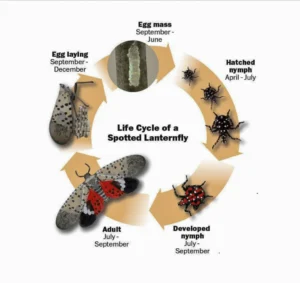
Virginia Cooperative Extension
But Downing said there is hope for population decline in coming years. In Pennsylvania, where lanternflies were first detected, the populations have quelled. If not next year, Downing said the population should stabilize by 2027, and not be such a large nuisance to farmers and homeowners.
So what should you do if you spot a lanternfly? Downing says there’s not much you really can do at this point. He said stepping on the insects or smothering egg masses doesn’t hurt, but “practically speaking, it doesn’t make a difference.”
Downing added that residents should not call and report sightings, unless large, nuisance populations are discovered, or a farm or winery is having issues with infestation or crop damage.
“We know they’re everywhere,” Downing said.