

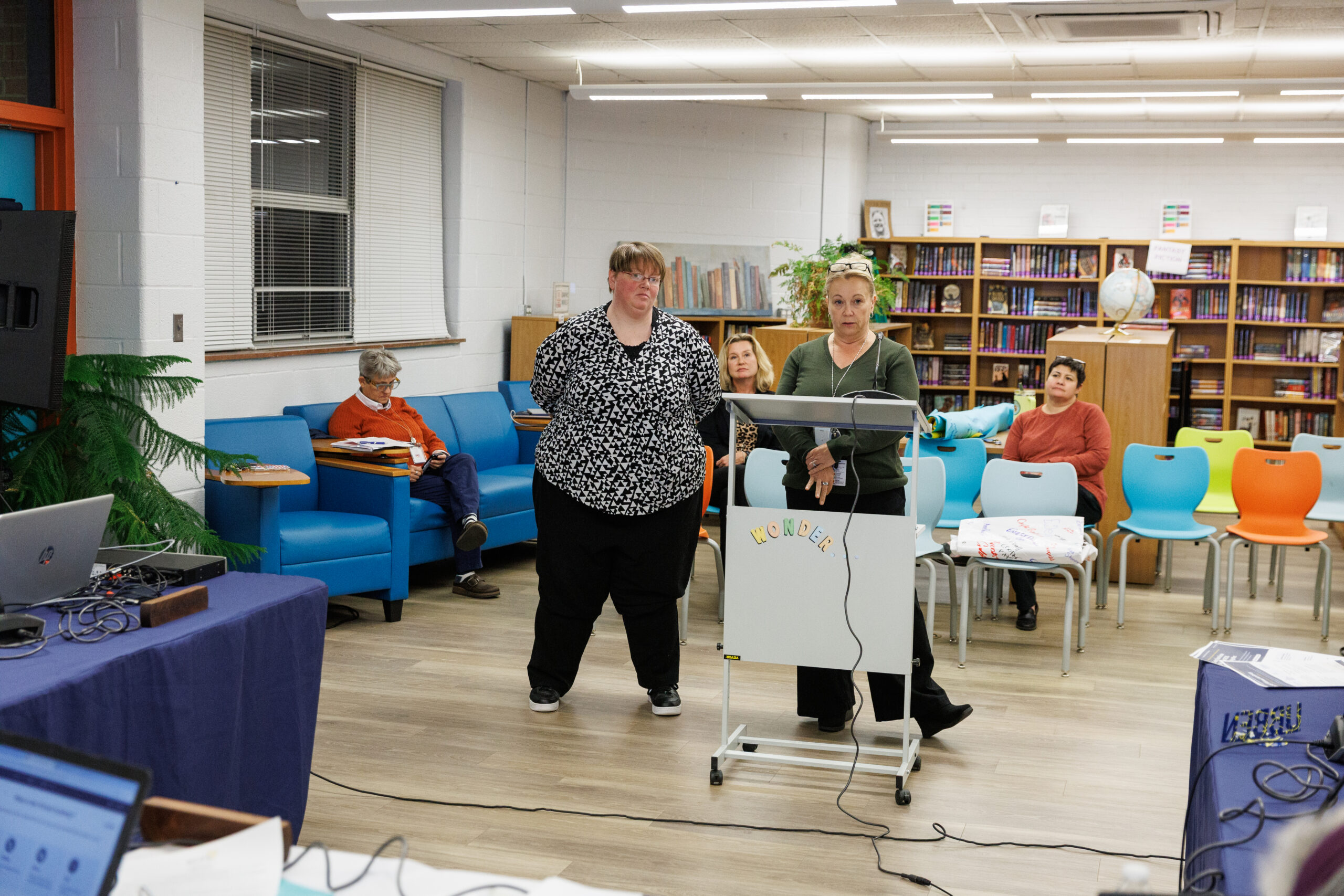
Program starting next semester hopes to draw homeschool families to RCPS
Rappahannock County High School will pilot a virtual schooling option for students starting in January, hoping to engage homeschool families with a more flexible option.
At its Tuesday meeting, the Rappahannock County School Board gave school administration the unanimous go-ahead to try out the idea.
“A lot of rural schools right now are looking at this because there is a massive enrollment drop across the state,” Superintendent Shannon Grimsley said.
Students would be enrolled in classes through a platform called Edmentum, and all courses available on the platform would be rigorous, state-standard courses.
Students enrolled online could participate in sports and clubs, attend school dances, take certain classes in person and have access to after-school academic support groups.
“One thing that we struggle with is the vast number of students that are homeschooled in this county, and trying to figure out ways where we can include them in a lot of what we do at Rappahannock High School and the division as a whole, while also honoring the fact that they have chosen to homeschool,” Mary Jane Boynton, high school principal, said.
The students would receive an RCHS diploma and be able to walk the stage at graduation. Shanna McComb, director of school counseling, will lead the program with Boynton.
“With Edmentum, you can go in and you can track everything from when they log in, how long they spent on an assignment, to how many times it took them to master an assignment,” McComb said. “It wouldn’t be us just setting them loose.
“They will be actively working towards a diploma. Our diploma,” she said.
The pilot program — which Boynton said she hopes will draw around 15 students — will better inform administration on how to adapt the program going forward. She said several other school districts have online programs, which she and McComb have looked to for inspiration.
“I love this idea, that we’re being innovative,” Stonewall-Hawthorne representative Lynnie Genho said.
The online option will be free and only available to Rappahannock County residents.
Wakefield representative Chris Ubben emphasized future opportunities for the online-only option to draw in out-of-county students who could pay tuition — about $10,000 — and add to the school’s average daily enrollment — a number the state looks to when deciding funding.
“I don’t see a downside to that,” Ubben said.
Boynton said the next step is outreach to homeschool families. Then, around March, the board will receive a mid-semester update on how the pilot is playing out.
Comprehensive plan survey results
Grimsley presented the results of a recent community survey about the school district’s upcoming review of its comprehensive plan:
- The district collected close to 100 responses either online or through the Community Listening Tour it conducted in September. Most who responded did not attend a listening session.
- Most of the respondents were parents or school staff. Students submitted 8% of responses.
- Over 60% of respondents said students feel safe and included, but Grimsley said she “would love to see that much higher.” Some 45% said the schools handle bullying effectively.
- Respondents largely found limited cellphone use in schools positive and said they want to see more shop, trade and emergency services classes. The survey also showed a desire for the schools to focus on excellent teachers and leaders.
From the survey data and feedback, Grimsley said five new priority areas were created for the new comprehensive plan: deep learning, thinking and communication; life-ready pathways; community connection and trust; recruitment and retention; and safe, kind, healthy school culture.
Five “stakeholder work groups” will then be formed around those priorities to set goals and targets and draft budget scenarios, Grimsley said.
Another survey was released Wednesday looking for more volunteers to participate in the work groups. The survey can be found at https://rappnews.link/j7p.
“This is really the time to roll up your sleeves and get involved,” Grimsley said.
Sales tax referendum
School Board members discussed the 1% sales tax referendum that Rappahannock County voters passed last week. The new revenue will go straight to school capital improvements and projects the district says are sorely needed.
Grimsley said Rappahannock was one of only four rural communities in the state to pass the tax. Genho said five counties and 10 cities passed similar referendums statewide.
Chair Wes Mills credited the outreach the schools and county did before the vote.
“I think it’s because we got out there,” Mills said.
But the tax does not get the schools out of the woods this budget season. The money can only pay for capital projects, and cannot help cover other parts of the budget like unfunded state mandates.
For salaries and operating costs, Grimsley said the schools will need “innovative ways to try to drive up revenue.” The schools were “level funded” this fiscal year, meaning the county gave them the same amount as the year before. To make that work, the district overhauled its entire employee benefits structure.
“I don’t have many tricks left,” Grimsley said. She added that declining enrollment makes things harder, because state funding is tied to enrollment.
Updates to high school wastewater plant
Robin Bolt, executive director of administrative services, told the board that the high school’s wastewater treatment plant, built in 1959, doesn’t meet a new limit on ammonia from the Virginia Department of Environmental Quality. The limit takes effect Nov. 1, 2029.
The district plans small repairs next summer, when the building is empty. Crews would insulate the above-ground septic tanks, replace sand in the sand pit and fix a leak, using money already in the district’s capital improvement plan. If the repairs work, they buy time to plan a full replacement, estimated at $900,000 to $1.6 million. If they don’t, the district will have to construct a new plant before the 2029 deadline.
The catch, Bolt said, is that ammonia levels rise in cold weather, so she won’t know until winter whether the repairs worked. Bolt said Pamela Parker, the manager of the Sperryville wastewater plant, and County Administrator Garrey Curry think the repairs will do the job.
The replacement costs are “big numbers, but at least now we have a funding source to actually do this,” Bolt said, referring to the sales tax.