


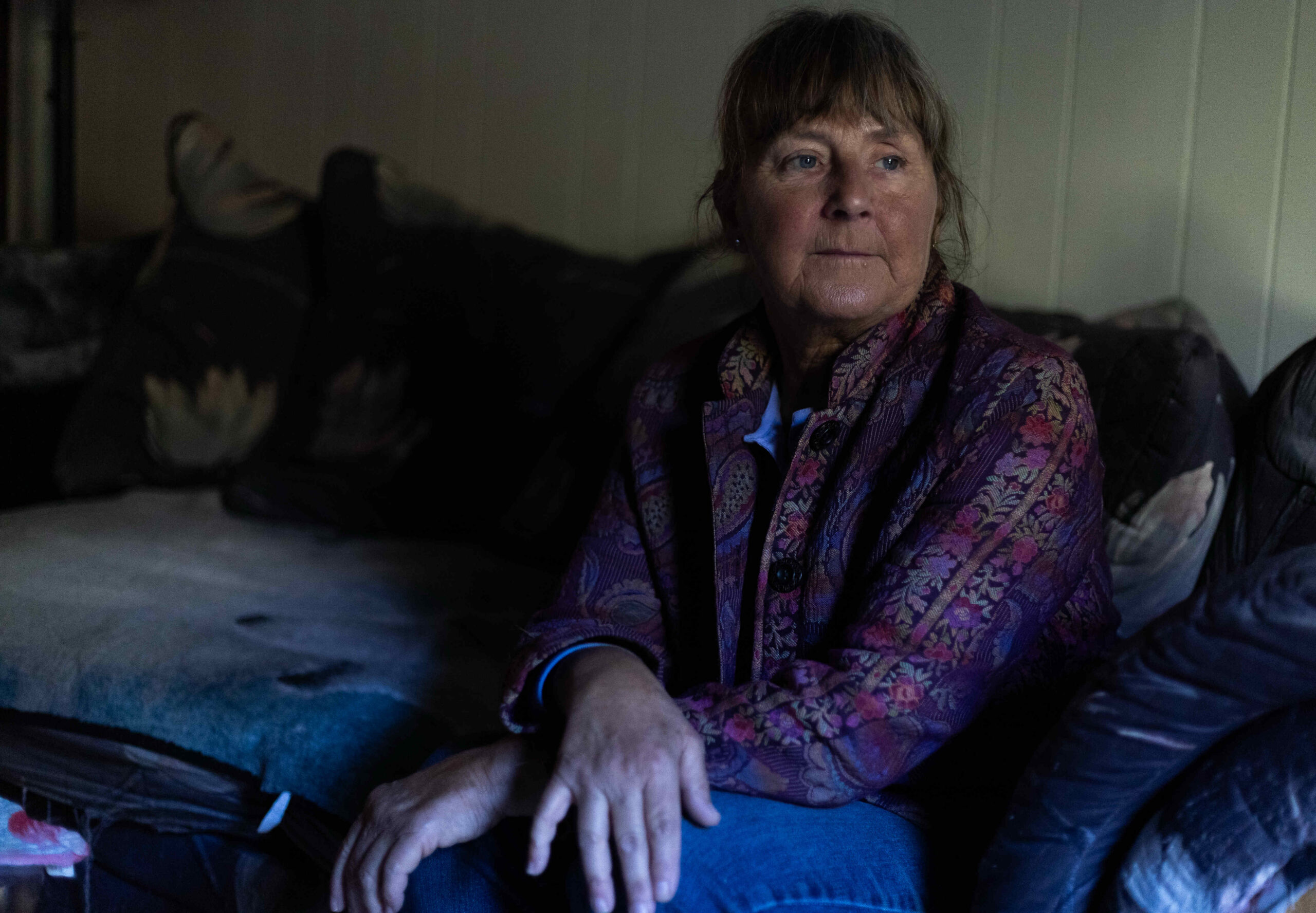
Sherry Weakley, a former Sperryville resident, was diagnosed with alpha-gal syndrome after several hospital visits and run-ins with the Sperryville Rescue Squad. “I had to see three doctors before I got an alpha-gal test,” she said. “Nobody understands it.” (Photo/Ireland Hayes)
‘Nobody understands it’
Sherry Weakley found a lone star tick on her thigh after attending a farmers’ market in Haymarket. She and her partner joked about it giving her alpha-gal syndrome.
Soon after, she ate a cheeseburger and within hours, she was covered in hives. By the time she reached the Sperryville Rescue Squad, her legs were convulsing and her heart rate had hit 188 beats per minute.
ER doctors checked her out, then sent her home. But in the coming days the reactions kept coming, and for about two weeks, the rescue squad was at her house almost daily.
“I had to see three doctors before I got an alpha-gal test,” she said. “Nobody understands it.”
The test was positive.
Weakley soon discovered she reacted not only to eating meat and dairy, but even to smells. Once, her partner reheated sausage in the microwave and the smell alone triggered a reaction. She gave up leather shoes, air fresheners and perfumes. In just six months, she said she needed about 18 shots of epinephrine (EpiPen), an emergency medication used to stop allergic reactions.
Weakley, who now lives in Strasburg, said her reactions have eased and her allergy is “in remission” in part thanks to a costly acupuncture treatment.
“Even with acupuncture, it’s not a cure,” she said.

Chris Ubben, who lives in Chester Gap, came down with erlichiosis 10 years ago. (Photo/Ireland Hayes)
Rare diagnosis
It began with a persistent headache.
About 10 years ago, Chris Ubben of Chester Gap felt suddenly ill — light hurt his eyes, his muscles were weak and walking just 15 feet left the sheriff’s deputy drenched in sweat.
“My body felt like it had to fight to keep going,” he said.
After many visits to the emergency room and doctors’ offices, courses of antibiotics and CT scans, a doctor reviewed test results related to Ubben’s liver function that reminded him of a case of ehrlichiosis — a tick-borne blood infection — he had seen 30 years earlier.
“He said, ‘I’ve only ever seen this one time before,’” Ubben said. “I never did find the tick.”
Six weeks on a different antibiotic finally cleared the infection. Now, Ubben keeps 40% DEET spray in his police car, his truck and his house.
“I might wind up with cancer from Deep Woods Off, but I’m not going through ehrlichiosis again,” he said. “It’s frightening.”

Erica Gore holding one of her goats at her Culpeper farm.
Living with ‘chronic Lyme’
Erica Gore was six when she came home from a family vacation in Maine with a bull’s-eye rash.
Doctors in California, where she grew up, didn’t know what they were looking at, she said. She was misdiagnosed, and the Lyme disease she had contracted went untreated.
Decades later, Gore — now owner of Hock Newberry Farm in Culpeper — lives with chronic, or post-treatment Lyme: joint pain, headaches and days she can barely get out of bed.
“I didn’t know until literally this year that not everyone gets a migraine when they cry,” she said. “That’s something people need to be able to do to express themselves. And I can’t do it because I’ll be in bed for hours.”
Gore said she has not yet found a “regular doctor” who will take her seriously. Instead, she manages her symptoms with chiropractic care, physical therapy and a clean diet, much of it raised on her farm.
‘Hit me like a frickin’ Mack truck’
Debbie Capasso has had Lyme disease before, so she knew what a tick-borne illness felt like. Or thought she did.
Capasso, who lives in Castleton, was bitten repeatedly last May — on her back, where she couldn’t reach with bug spray. Over Memorial Day weekend, her illness came on so suddenly she could barely drive herself to urgent care.
“It hit me like a frickin’ Mack truck,” she said.
She said her blood tests showed that her kidneys were shutting down. She was diagnosed with ehrlichiosis and spent four days in the hospital, then 10 more days on IV antibiotics at home.
More than a year later, she still has joint pain and other chronic symptoms, and she’s cut back her time outdoors. She doesn’t step outside, even for a few minutes to feed her horse, without spraying her boots with insect repellent.
“I’m borderline paranoid,” she said.

Urgent care workers found a tick at the nape of Charlotte Wagner’s neck, buried under her long, dark hair in 2014, and she was diagnosed with Rocky Mountain spotted fever. She sought medical care immediately after her symptoms started. “We caught it early,” she said. “I was just lucky.” (Courtesy/Charlotte Wagner)
‘I was just lucky’
In 2014, while driving down Crest Hill Road, Charlotte Wagner suddenly became so ill she had to pull over, losing feeling in her hands and feet.
“I had trouble coordinating, and I really freaked out,” she said.
At an urgent care in Warrenton, she was diagnosed with Rocky Mountain spotted fever. A tick was found at the nape of her neck, buried by a thick cascade of dark hair.
Over a month and two rounds of doxycycline later, aside from side effects from the heavy antibiotics, she was cured.
“We caught it early,” she said. “I was just lucky.”
Once she recovered, she cut her long black hair into a pixie cut.
Wagner is a dog trainer and behaviorist and farmer who lives near Bean Hollow along the Shenandoah National Park, and said she practically lives outdoors.
She’s tried several essential-oil-based tick deterrents — primarily around her face and head — and sprays her clothes with permethrin insecticide.
“You’re putting chemicals on your body, but at the end of the day, tick-borne illness can change your quality of life or kill you, too. So, pick your poison,” she said.

It took Erin Sherry four years to get an alpha-gal syndrome diagnosis. Her symptoms were originally misdiagnosed as side effects of pregnancy, then hormonal changes. She takes more precautions now, but doesn’t let the ticks stop her from doing what she enjoys, like spending time in her garden.(Photo/Ireland Hayes)
‘Don’t be afraid to live your life’
Erin Sherry was diagnosed with alpha-gal syndrome in 2018, but believes the tick bite that caused it happened in 2014 while she was pregnant with her youngest child. Many of her symptoms were attributed to pregnancy, then postpartum hormonal changes.
“It took four years to get that diagnosis,” she said. “I went to the doctor and would tell them all my symptoms, and they said, ‘You have IBS’ or, ‘We really don’t know what’s wrong.’”
Sherry, a teacher who lives in Amissville, later wrote a children’s book, “Alpha-gal Gal,” to raise awareness about the syndrome and living with food allergies.
Sherry said she doesn’t let the allergy hold her back, still enjoying time in her garden and finding restaurants that accommodate for alpha-gal.
“Don’t be afraid to live your life,” she said. “But it definitely has upped my level of precaution.”
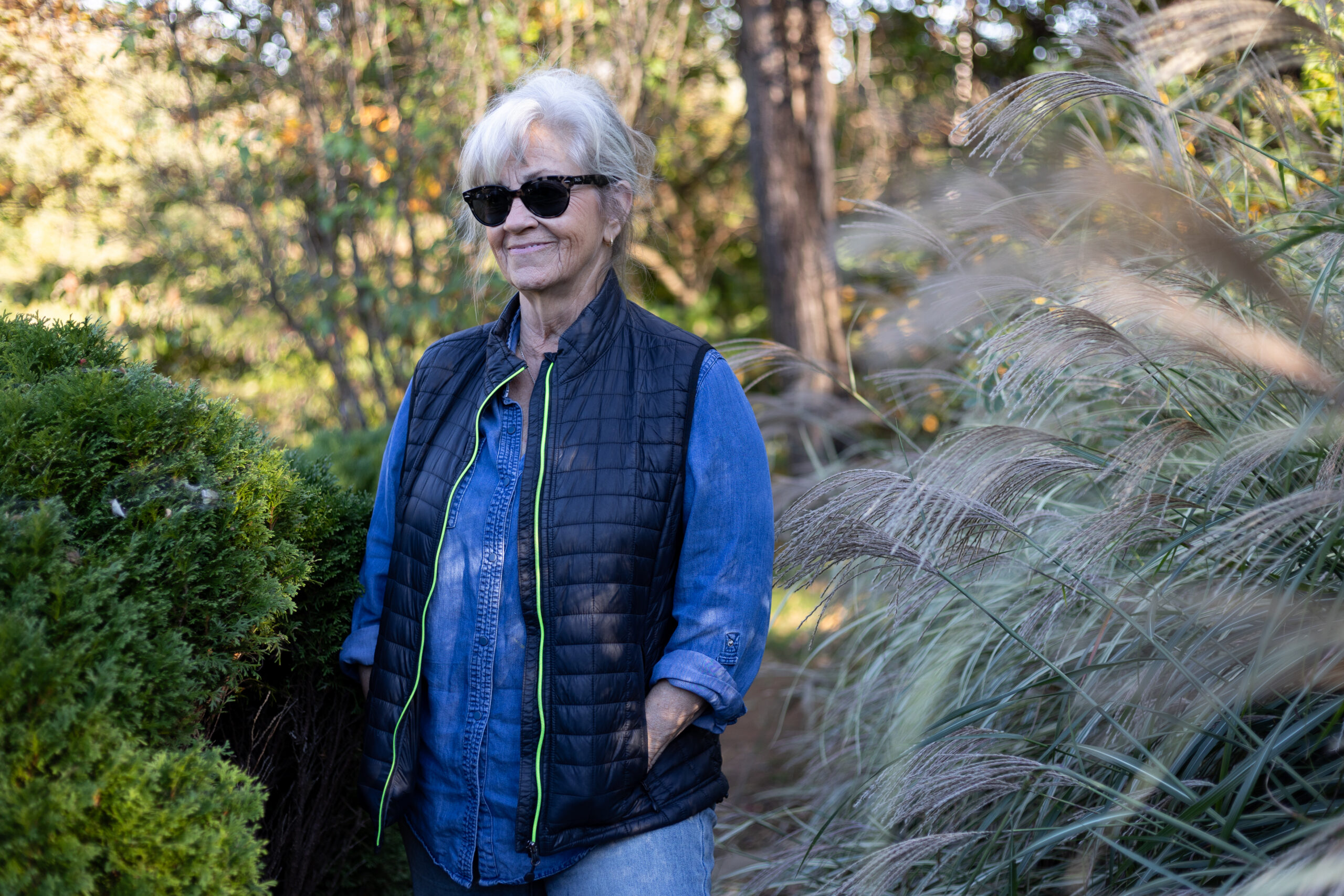
Vinnie Lainson was diagnosed with Lyme disease, ehrlichiosis and babesiosis 15 years ago, then developed alpha-gal syndrome this spring. “I keep going with my life, and a lot of people with Lyme don’t,” she said. (Photo/Ireland Hayes)
Three at once
About 15 years ago, Vinnie Lainson sensed something wasn’t right. “My joints hurt and I had a low-grade fever,” she said.
Lainson, who is an Episcopal priest and hospice chaplain and lives in Sperryville, said another priest recommended she start chronicling her symptoms and when they would flare up.
A Lyme disease test showed some signs of infection, but her doctor said the results weren’t conclusive.
“I was like, ‘Well, if I have all the symptoms, what do you mean I don’t have it?’” she said.
She eventually sought out an infectious disease and Lyme specialist in Warrenton, who required months of records before agreeing to see her.
The diagnosis was Lyme disease, ehrlichiosis and babesiosis — a parasitic disease that affects red blood cells — all at once. Then this spring brought another tick-borne diagnosis — alpha-gal syndrome.
“I keep going with my life, and a lot of people with Lyme don’t,” she said. “Lyme is something you don’t want to have. The brain fog is significant, and the fatigue and the aches.”