

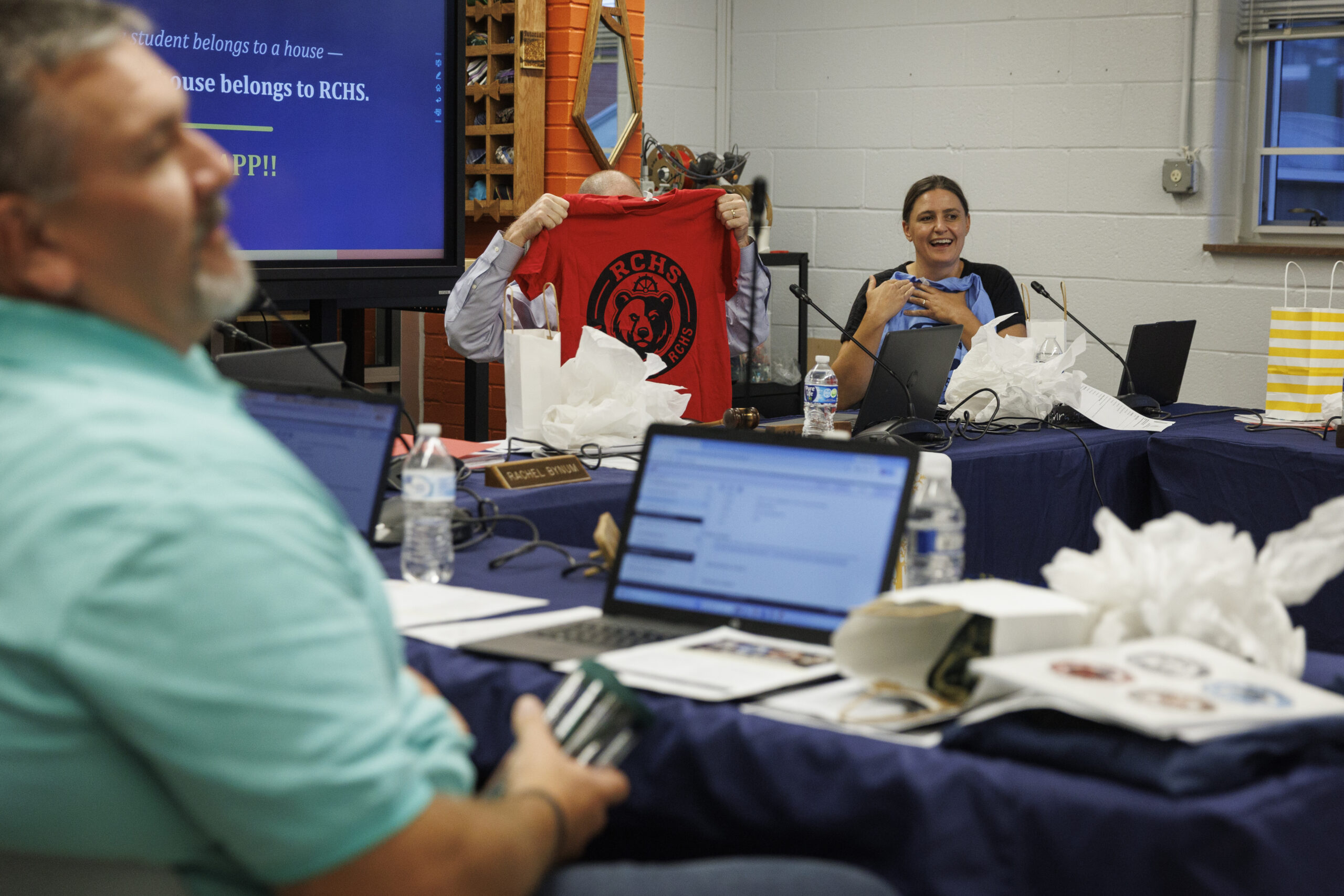
Hopes to promote belonging, morale
Updates: capital improvements, new Headwaters director
Students at Rappahannock County High School will begin the school year by being sorted into one of four “houses” as part of a new program that administrators hope will promote student engagement and belonging amid concerns about student morale, truancy and respect among students.
But unlike Hogwarts, the fictional school in the Harry Potter series, students will not be sorted by a magical all-knowing hat. High school principal Mary Jane Boynton said the tradition of house systems has been around for centuries and is backed by research as an effective way to build a sense of belonging and avoid absenteeism.
“Yes, people like to tie it with Harry Potter, but I can assure you that the house system became part of educational platforms a long, long, long time before Harry Potter was even thought of,” Boynton told the School Board at Tuesday’s meeting. “We’ve heard about lack of engagement, and really, what it came down to is [students] need to feel like they belong.”
All students from eighth through 12th grade will be sorted into one of four houses of about 60 to 70 students each: Blue Ridge (the Eagles), Shenandoah (the Otters), Mill (the Bears) and Piedmont (the Foxes).
Each house includes both students and staff, and students earn points for their house through effort, kindness, attendance and service, according to Boynton, and take part in inter-house competitions. Boynton said every student — regardless of academic achievement or athletic ability — has a chance to contribute and take on a leadership role.
Students took a survey similar to a personality test, Superintendent Shannon Grimsley said, that helped sort students and teachers into houses based on interests and strengths. “It’s a scientific placement,” she said.
Boynton highlighted the lack of a “sense of belonging” at the high school, which she said has contributed to poor attendance and behavioral problems. Recent survey data collected at the school indicated that many students feel bullied or unwelcome. In response, school leadership is exploring solutions to encourage students to want to attend school, and the house system is a key component of that strategy.
“When I saw that in a school of 300, 23% of our students say they are being bullied at the high school — that’s not going to fly. So we are working on that,” Boynton said. “We do pride ourselves in being a small community, small family. But sometimes that is actually a barrier to our students, and sometimes the way they have behaved and learned to treat one another has actually become that barrier to belonging.”
Student liaison to the school board Rachael Wilkinson said during her report she is looking forward to the new system.
“I’m super excited for the new house system that’s coming up,” Wilkinson said. “I’m optimistic that’ll be a good change.”
During public comment, former Piedmont Supervisor Christine Smith said she thought she was attending a School Board meeting but “somehow a dystopian novel broke out,” and she hopes fellowship across all groups of students continues to be promoted.
“I think there’s a lot to be gained by learning to get along with all different kinds of people, whether they’re like you or not. And at the heart, I hope everybody stays a Panther, because I can see that this path may be fraught with peril, and I’ve seen this movie before,” Smith said.
Boynton said in the first few days of the school year, students will be introduced to their houses and take part in a series of house-themed events, including a meeting in their “dens” on Aug. 13 and a pep rally to close out the week.
Capital improvements progress
Progress was made this summer on a long list of capital improvements the Rappahannock County Public School system is facing.
According to a report during the School Board meeting, about $885,000 of work was completed at both schools in the last few months, most notably a replacement of the elementary school roof. The project came in under budget, said executive director of administrative services Robin Bolt, and half of the project was paid for with a grant obtained by the county.
The elementary school has faced chronic leaks during storms and heavy rain for several years, but Grimsley said even “with all the rain we’ve had” since the new roof was installed, “not a single leak” has been found.
ADA-compliant bathrooms were also installed in the elementary school, another under-budget project, Bolt said.
Bolt said a major project that is still pending is a boiler line that broke last year, which she has had trouble getting a bid to replace. She said she is currently working with two local vendors on quotes, and hopes the repair will be completed before cold weather arrives.
“Summers are busy. They go quick and are the most enjoyable part of my year because things get done,” Bolt said.
Other maintenance updates include:
- Two new water filling stations at the high school
- Repairs in the wrestling room
- Refinished gym floor at both schools
- Electrical repairs in classrooms
- Paint jobs at the elementary school
- New mulch in playground areas
REACH evaluation update
The board heard a presentation of preliminary findings from a three-year, grant-funded program known as REACH that aims to strengthen mental health support for students, expand professional development for staff and improve overall school climate.
Now in its second year, the grant has funded additional behavioral and mental health positions and a partnership with the Center for Inspired Teaching, said Leah Childress, an evaluator who presented interim findings. Since receiving the grant in August 2024, the added positions have served more than 500 individual students, Childress said.
Survey responses from students, staff and families were largely positive, Childress said, but she flagged a few areas for the board to watch heading into year three of the survey, like perceptions among respondents of “favoritism” and concerns about whether personal relationships in the small district might affect treatment of students.
In family surveys, half of respondents said they wanted to be more involved with the district, but only slightly agreed the district helps families feel involved — citing work schedules, childcare needs and short notice of events as barriers.
Board member Chris Ubben noted the drop-off in survey participation from last year to this year and asked Childress how engagement could be increased. Childress said there are incentives in place for students involving sweet treats, but the team is working on ways to further incentivize students.
Piedmont resident James Jenkins suggested during a public comment period that bonus points could be given to students on test grades or other incentives that would “almost make it mandatory” to complete.
“Is there a way that we could incentivize the kids?” Jenkins said. “I know it’s kind of a battle with families and everything, but students is what the focus should be.”
Boynton said during her presentation that the high school drew from REACH data while planning for the new house system.
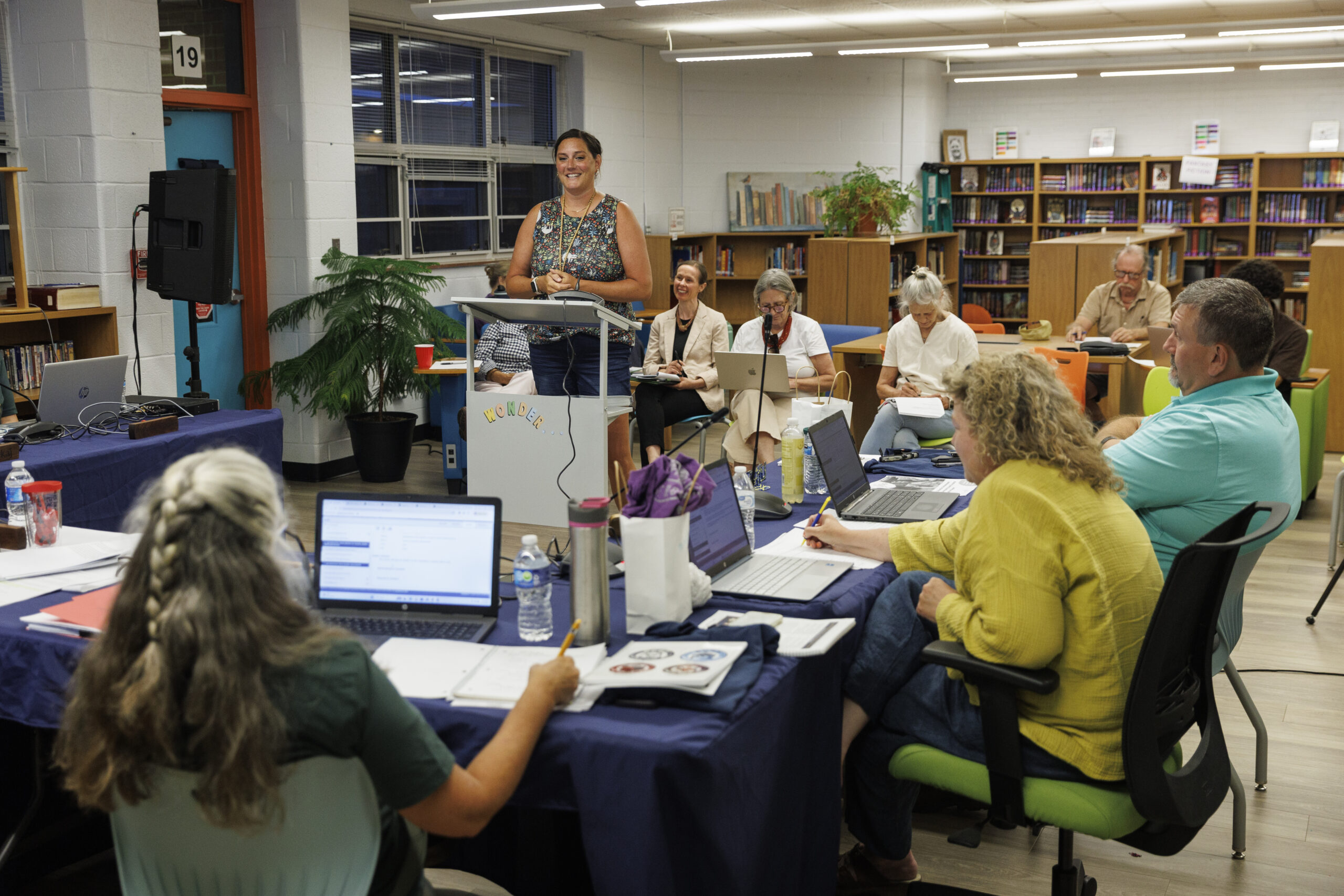
Lacey Jenkins, longtime deputy director of programs for the Headwaters Foundation, announced Tuesday that she has stepped into the role of executive director. “We’ve had some transitioning the past couple of years, and I’m proud to say that we stuck through things, and I’m ready to move forward for this year,” she said. (Photo/Luke Christopher)
New Headwaters Foundation executive director
Lacey Jenkins announced to the School Board that she will take over as the new executive director of the Headwaters Foundation, where she has served as deputy director of programs for the last 12 years.
Jenkins will replace outgoing interim director Cole Johnson, who has been at the helm for the last eight months. The Headwaters Foundation has had two interim directors in the past 15 months. Jenkins said her main goals for the upcoming school year are to double the organization’s fundraising goal and its budget for educational enrichment grants for teachers.
“We’ve had some transitioning the past couple of years, and I’m proud to say that we stuck through things, and I’m ready to move forward for this year,” Jenkins said. “We’re a tiny but mighty organization, and we really want to just be more and more supportive for the schools. We can get a lot done.”
Jenkins said Maggie Riley, a former teacher at the Child Care & Learning Center, is the new deputy director of programs.