

Worst tick season in years looms — for humans too
It was May 2021 when several bulls came out of their pasture at Eldon Farms in Woodville covered in something farm manager John Genho had never seen before.
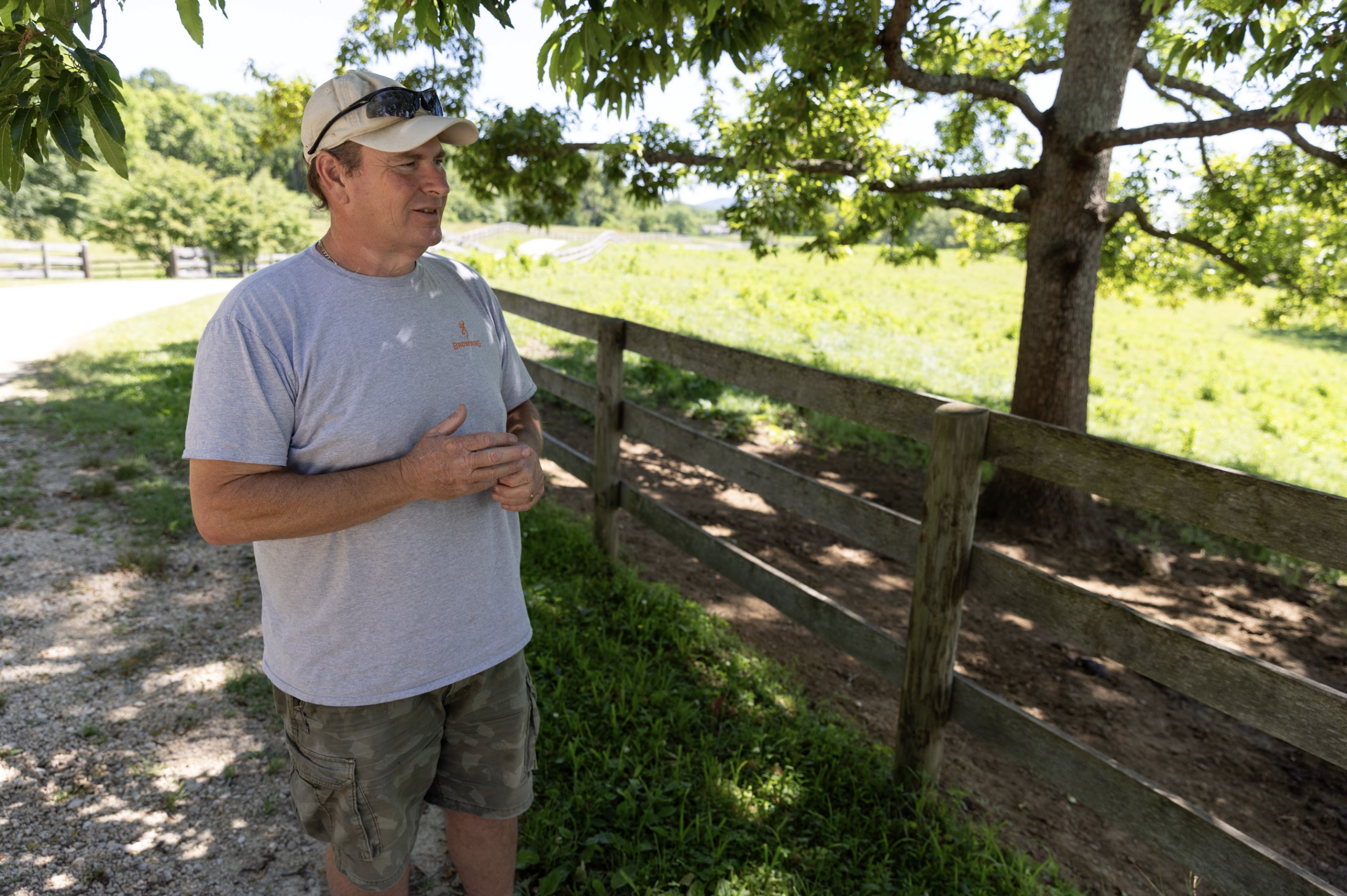
“You couldn’t put your hand on the bull and not touch a tick,” said Genho, who manages 1,200 head of cattle. “There were thousands of ticks on every bull. They were tiny, not microscopic, but tiny little things.”
Those tiny ticks blanketing the animals were a new invasive species named the Asian longhorned tick.
Genho said his team moved all but two bulls out of the field. Those two were strong, healthy animals — the kind you don’t expect to lose, he said. But by the end of the summer, one of them was dead, killed by anemia from the sheer number of ticks that had fed on it.
“We were like, ‘How do you have just a healthy bull die?’” Genho said in a recent interview
Five years have passed since Asian longhorned ticks were first spotted at Eldon Farms, and the ticks have dug in.
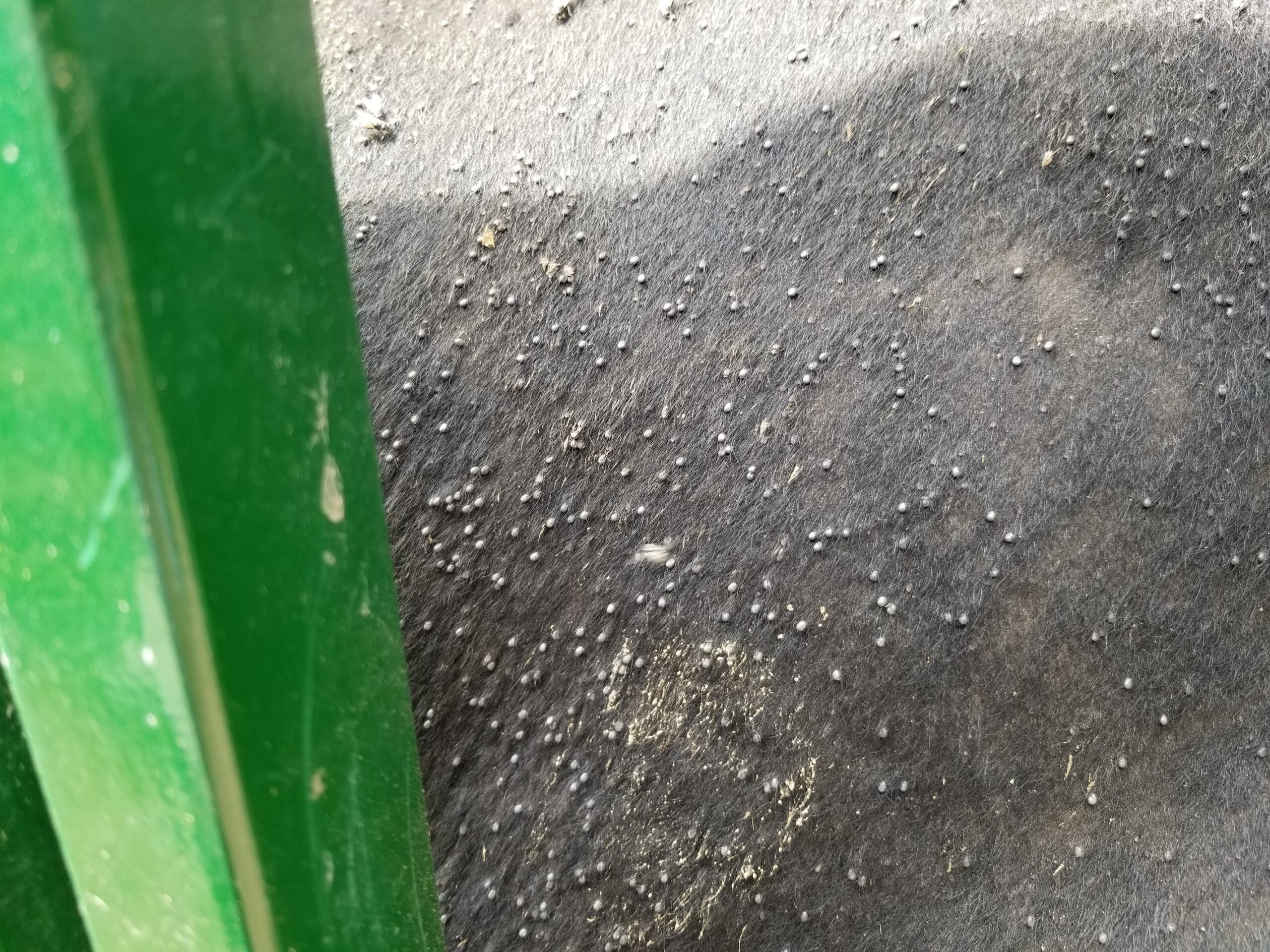
The side of a bull covered in Asian longhoned ticks at Eldon Farms in May 2021, around the time farm manager John Genho said they first started seeing the invasive species. (Photo/Courtesy)
Virginia Cooperative Extension agent Kenner Love said he has been hearing from local cattle farmers for several years about issues with Asian longhorned ticks on their farms, and animals sickened or killed by them. This year is no different.
“We were beginning to see cattle that were unthrifty, and we really didn’t know why, but then upon closer examination, you find they’d be covered with ticks,” he said. “We’ve had reports of cattle dying or cattle infected and those kinds of things for the last three or four years … but we’re deep into it now.”
Virginia’s cattle farmers are in the midst of what is shaping up to be one of the worst tick seasons in recent history. This tick season — for humans and animals — is projected nationally to be among the worst on record, according to the Centers for Disease Control and Prevention, with Virginia seeing some of its highest rates of tick-borne illness in years.
Data from the CDC’s Tick Bite Tracker shows emergency rooms for tick bites are higher than normal in its Northeast region — which encompasses Virginia — and both the Virginia Department of Health and Virginia Department of Agriculture jointly flagged this tick season as a “serious concern.”
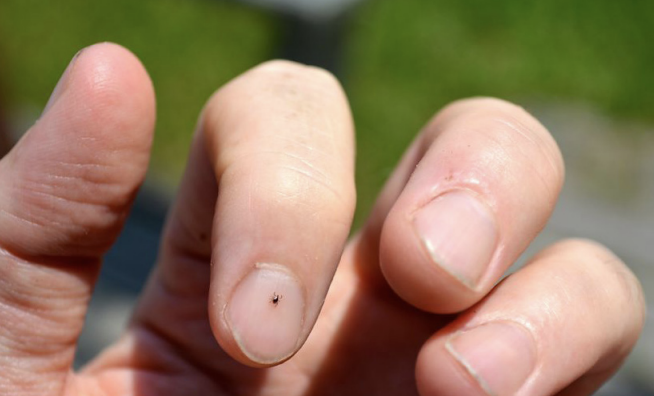
An unfed Asian longhorn tick. (Courtesy/CDC)
Small but mighty
Unlike other native tick species, Asian longhorned ticks reproduce asexually — a single female can lay up to 3,000 eggs without mating, according to research from Penn State University. The result is a population that can explode seemingly out of nowhere, with hundreds or even thousands of small ticks covering a single animal.
According to the VCE, 38 Virginia counties now have established populations of the tick, with the highest concentrations running along the Great Appalachian Valley — which includes Rappahannock. The tick, reddish-brown and about the size of a sesame seed when unfed, prefers tall grasses — like hay — which Genho said most cattle operations rely on to feed their animals.
“We need grass to make a living,” Genho said. “If you cut it all down, you’d probably have less ticks. But that’s what we make a living off of.”
Disease with no cure
The bigger threat for cattle farmers isn’t the tick itself, but the diseases it carries. Theileria, a disease spread by the Asian longhorned tick, attacks a cow’s red blood cells, slowly draining the animal of its strength. There is no approved treatment in the United States. Once a cow has it, there’s nothing the farmer can do.
“It’s probably endemic [on our farm] at this point,” Genho said. “Probably all of our cows have theileria, even if all the ticks disappeared tomorrow.”
The disease weakens cattle slowly, causing anemia, weight loss, and in older animals, death. Genho said Eldon Farms has seen its death rate increase by one to two percent in recent years — a number that sounds small until you do the math on a herd of more than 1,200. Cows are also being culled earlier than they otherwise would be, forced off the farm before the disease causes prolonged suffering.
“We had several cows die right before preg checking,” Genho said, referring to a fall procedure where cattle are checked for pregnancy. Genho said he and the farm’s herdsman have been working there for decades. “We’ve never seen this.”
While theileria is not a risk for humans, the Virginia Cooperative Extension (VCE) notes that researchers are still studying what diseases Asian longhorned ticks may be capable of spreading to humans.

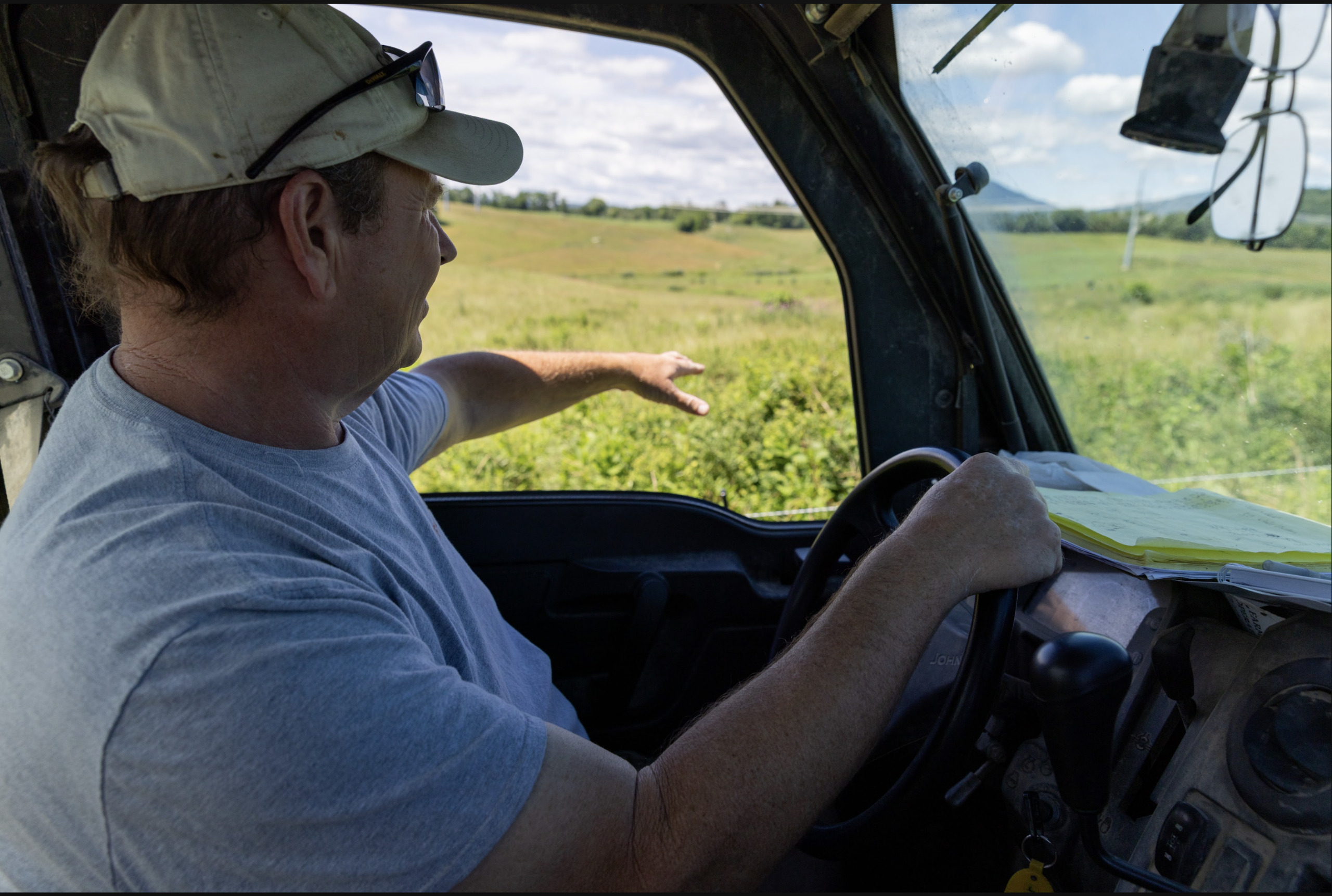
Chuck Presgraves, farm manager at Chancellors Rock Farm, driving through a cow pasture. He says his 130 head of cattle have had minimal issues with ticks, which he attributes to a mineral mix called Cinnegar that is fed to the cows. “We don’t have a problem,” he said. (Photo/Ireland Hayes)
A magic mineral?
On the other end of the county, at Chancellors Rock Farm outside of Flint Hill, farm manager Chuck Presgraves says his 130 head of cattle have had minimal issues with ticks — and he has a theory as to why.
For nearly seven years, Presgraves said he has been feeding the cattle a natural mineral supplement and pest repellant called Cinnagar, which is a blend of cinnamon and garlic oil extracts. He believes it deters the insects from latching onto animals, pointing to the near-absence of flies and ticks on his herd compared to neighboring operations.
“Everybody else … has problems,” Presgraves said. “We don’t have a problem.”
Genho said he tried a similar garlic-and-cinnamon mineral mix at Eldon for a year and the tick load seemed a little lighter — but the results weren’t conclusive, and the supplement is cost-prohibitive.
Rose Wetzel, conservation ecologist at Eldon Farms, suspects the differences between operations may have a lot to do with terrain and plant composition.
“We have a large area, a lot of different fields with different plant composition that we’re sending cattle through, and a lot of cows,” she said. “We wonder … are [the ticks] preferring certain plants, invasive plants? There’s just a lot we don’t know.”
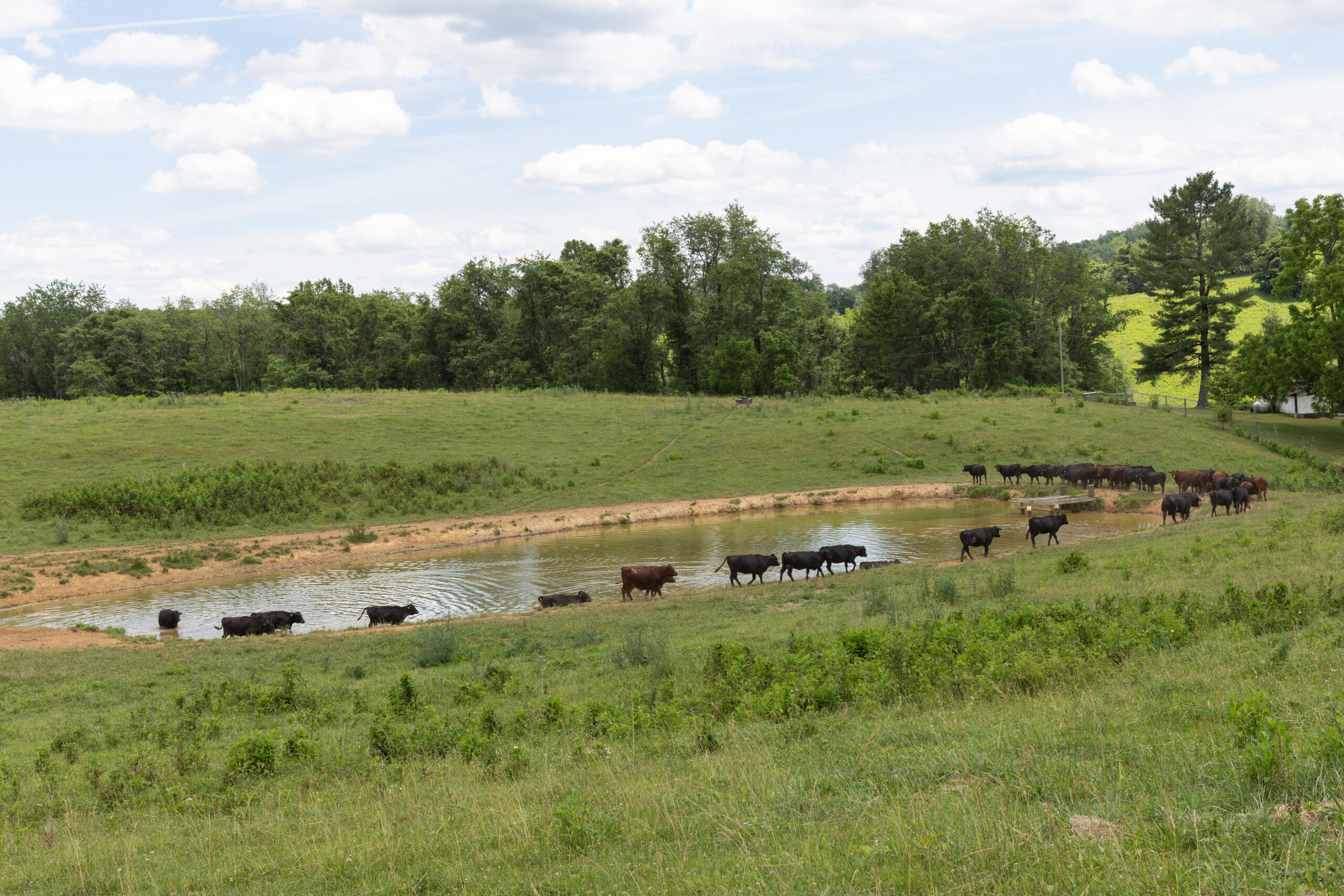
A herd of cows walk around a pond in their pasture at Eldon Farms in Woodville. (Photo/Ireland Hayes)
Prevention: a work in progress
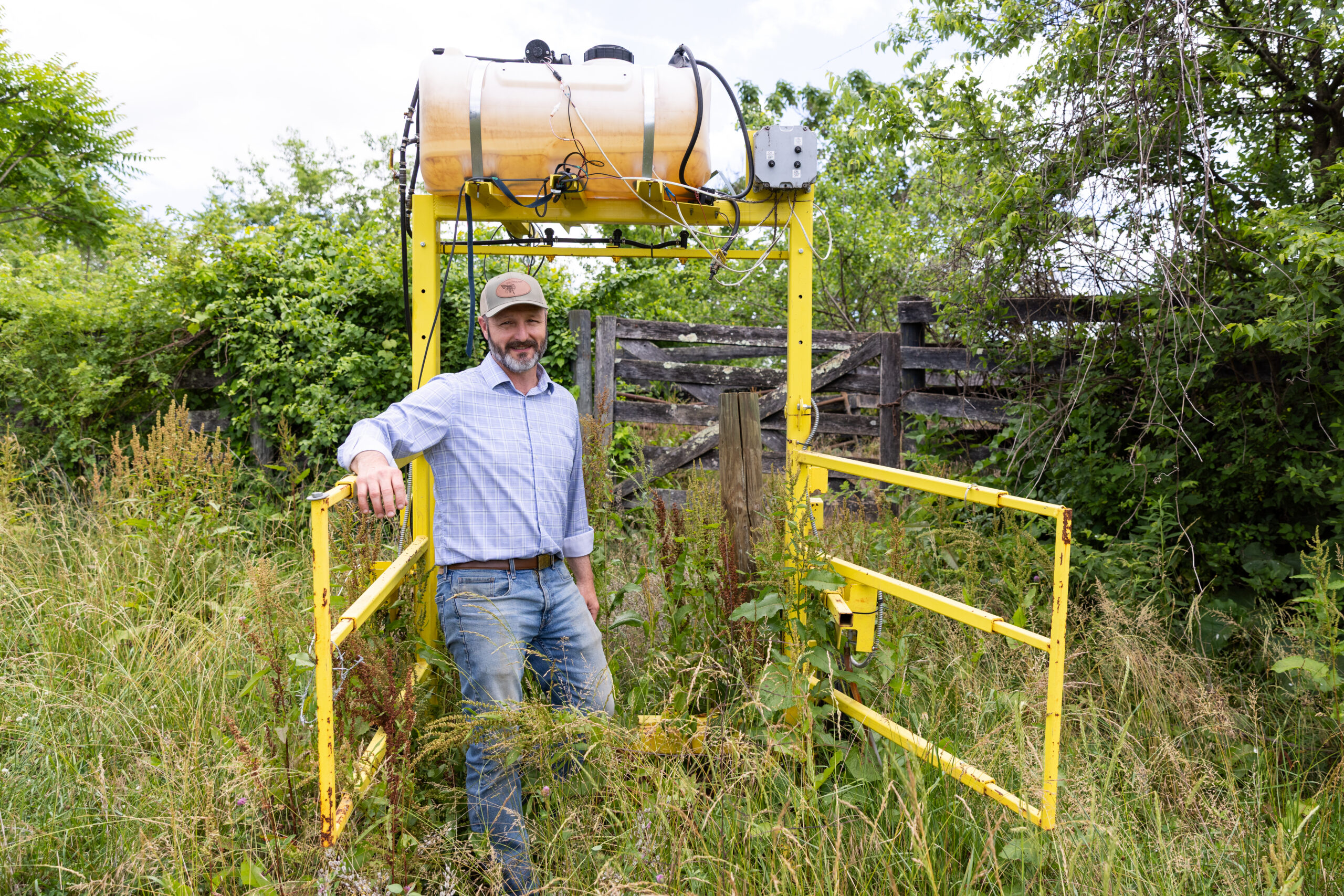
Genho said he’s tried most of what’s available when it comes to tick prevention. Eldon Farms purchased a walk-through spray system where cattle trip a sensor and get coated in pyrethrin, an organic insecticide, from all angles. But he said the coating doesn’t last long, and barely made a dent.
“You can knock all the ticks off of [the cow] that she has right now,” Genho said. “Put her into the next field and she just picks them right back up.”
Last year, Rose Hill Veterinary Practice in Washington conducted a vaccine trial at Eldon Farms — one herd received a new commercially-available vaccine, another served as a control group. Genho is still waiting on the results of the study, but anecdotally, said they haven’t seen a difference so far.
Jim Manwaring, a neighbor of Eldon Farms and cattle farmer at Red Oak Ranch near Five Forks, said he sprays his clothes with permethrin — a synthetic pesticide that can last on clothes through multiple washes — before heading into the fields.
He said his herd hasn’t had the same troubles Eldon Farms has — though he recalled a nightmarish experience when one of his bulls crossed over to Eldon property and returned covered in ticks.
“It was an awful thing to see,” Manwaring said.
Love said scientists are still trying to catch up to the invasive species, and are working on better treatments for tick-borne diseases and more effective ways to control populations. He cautioned that overusing the same chemical repeatedly can lead to ticks developing a resistance, making the chemicals less effective. For anyone spending time outdoors in tick-heavy areas, he said, DEET remains the most reliable personal protection.
“I think it’s a matter of the technology catching up to find ways to treat the diseases that are vectored by the ticks,” he said. “We’re not quite there yet.”
Genho said the biggest issue with Asian longhorned ticks is that their lifecycle is a bit unpredictable — which makes them, in some ways, harder to fight than a disease with a clear treatment.
“There’s no rhyme or reason to it,” he said, standing in a field where cows with no ticks on them had been covered days before. “It’s just completely unpredictable.”