

Hay crops down average 50%
‘Everything is dependent on water’
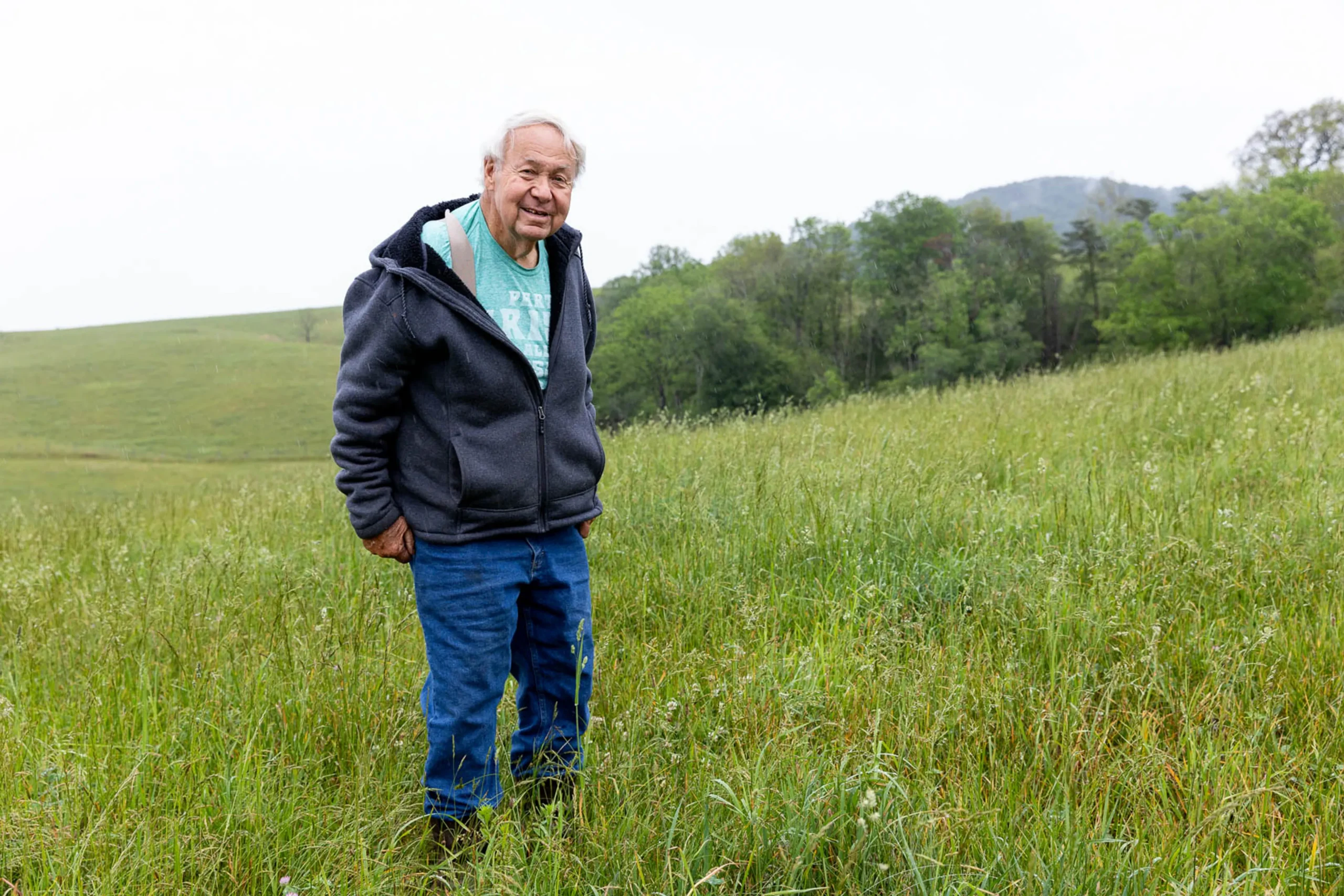
Tom Massie stands on a hilltop near Massies Corner, taking in a portion of his 150 acres of rolling hayfields as a misty rain falls around him, soaking into what was, before this week, bone-dry soil. He gestures to the tops of his knees, noting where the grass seed heads should reach at this point in the season. In this field, most blades are no higher than his boot tops.
“I don’t recall grass this short, ever,” Massie said. Massie has lived on and worked the farm his entire life, land his family has inhabited since soon after the Civil War.
The pastures where his livestock graze have also been thin, he said, and he’s moved cattle onto fields he’d hoped to cut for hay — grazing down what little was there rather than let the cows go without.
“I just figured it was worth more to the cows now than it was to bale,” he said in an interview Friday.
This year, for the first time in his life, he had to buy hay.
The recent rain in Rappahannock — more than five inches on average over the holiday weekend according to the Network for Environment and Weather Applications — has offered some relief, but not enough to pull the county out of a prolonged drought that has left hay farmers seeing starkly different results this spring.
Hay is the county’s primary field crop, Rappahannock’s agriculture extension agent Kenner Love said, making weak hay yields especially concerning for livestock farmers who rely on the crop to feed cattle and other animals throughout the winter months.
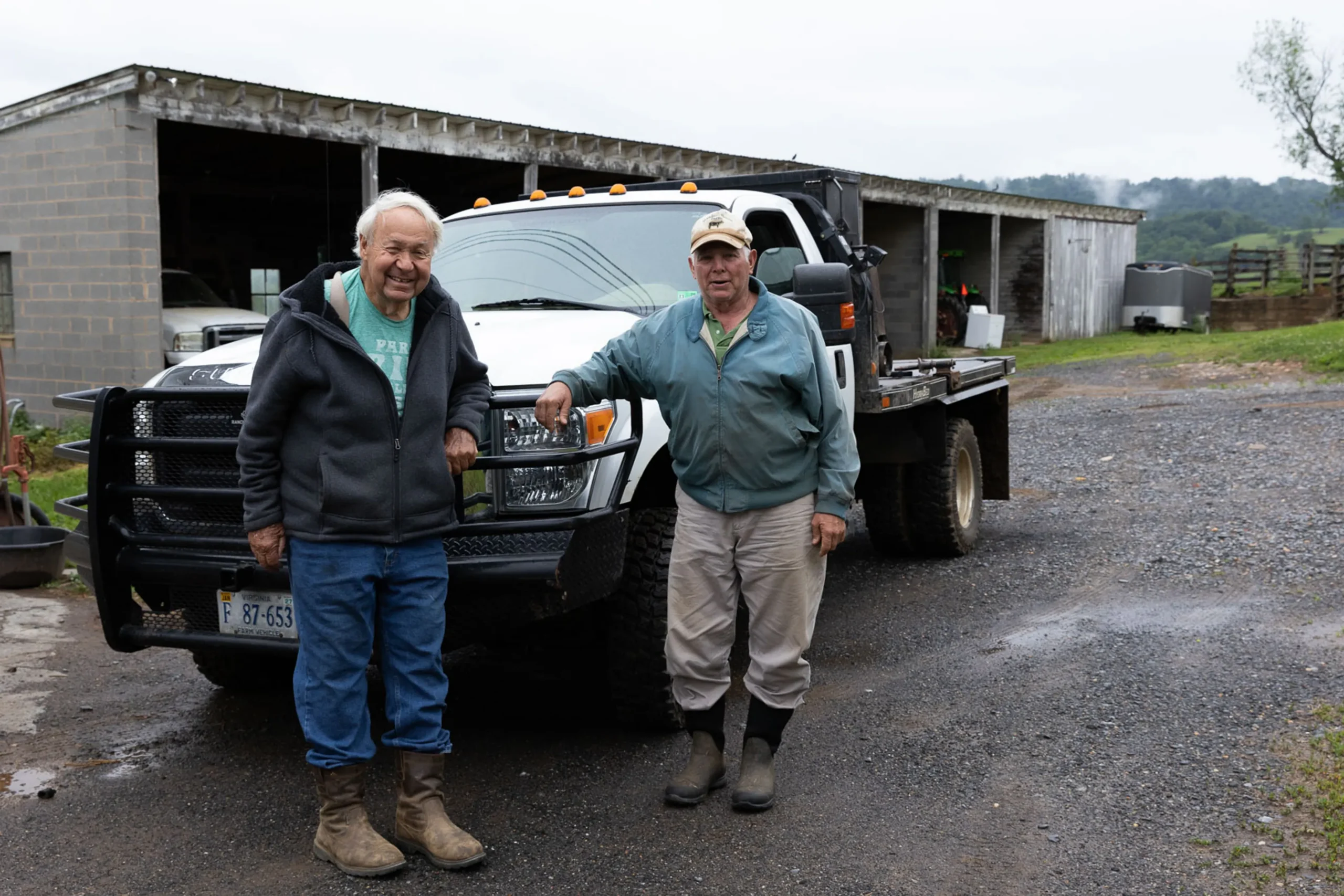
Tom Massie (left) and his nephew, Jim Massie, both hay farmers at Tom Massie’s farm in Washington. Both are expecting a low yield in their first harvest of the season. (Photo/Ireland Hayes)
Rappahannock has been in either a moderate or severe drought since September, according to the U.S. Drought Monitor, and the Virginia Department of Environmental Quality (DEQ) has urged Virginians to conserve water as groundwater levels across the Blue Ridge region have fallen well below normal.
Late freezes also did not help Rappahannock’s agriculture, devastating orchards and vineyards across the region. For the county’s hay growers, the cold snaps only compounded an already dry spring.
“These late frosts had an effect on grass growth, too,” Massie said. “The grass is tender and growing well, and then it gets burnt off.”
“You’re at the mercy of the weather,” Love said. “Yields are way down in general, no matter how well you manage it, because of lack of rain, and really the cool weather earlier on, coupled with the drought, has really diminished the hay crop. Estimates vary from farm to farm, but we’re probably looking at at least half a crop lost.”
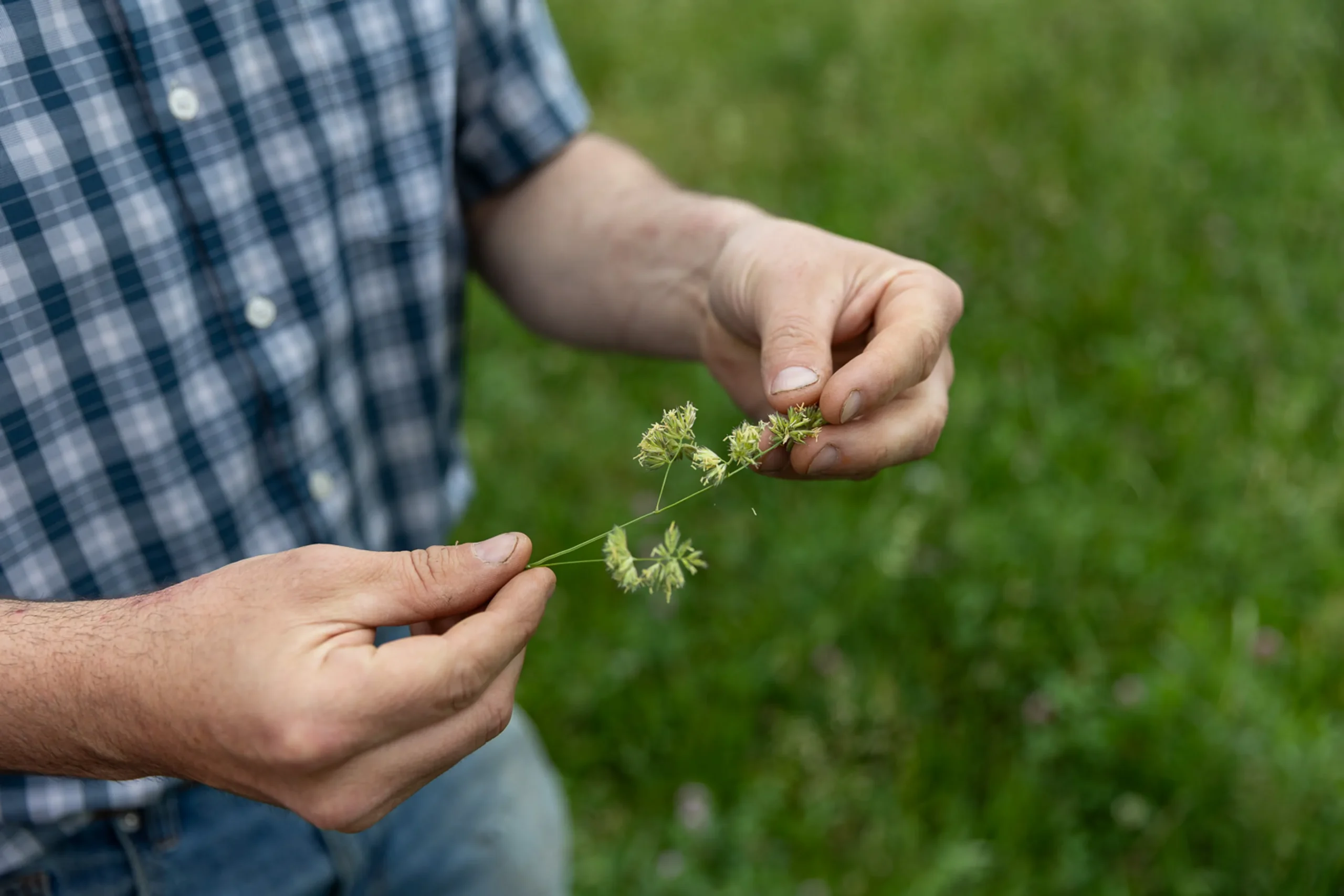
John Genho, farm manager at Eldon Farms in Woodville examines a piece of hay. Eldon’s crop stayed resilient to the drought, Genho said, attributing the stability to how it manages its land between cuttings.Ireland Hayes/Foothills Forum
Season of mixed results
Depending on where a farmer’s fields sit in the county’s varied terrain, this spring’s hay crop has looked dramatically different. Love said the uneven hay yields have depended heavily on soil type, terrain and how individual farms are managed.
At Eldon Farms in Woodville, farm manager John Genho said he is ready to cut about 150 acres of thick hayfields — and simply had to wait out the rain.
“For us, this hasn’t been a particularly unusual spring,” Genho said. He acknowledged that not everyone has felt the same.
“I think resilience is one of the most important things to build into any system,” he said. “You’ve got to expect that there are going to be shocks like this from weather that you have no control over.”
Genho credits much of Eldon Farms’ stability to how it manages its land between cuttings. Rather than cutting hay from the same fields year after year, the farm rotates between haymaking and grazing, which he believes builds organic matter and helps soil hold moisture during dry stretches — much like mulching a garden.
“I think you have more resilience to drought when you don’t make hay over and over and over again,” he said. “When you alternate between grazing and haymaking, it’s the same as mulching. The cows have stomped all that and basically created mulch over the soil.”
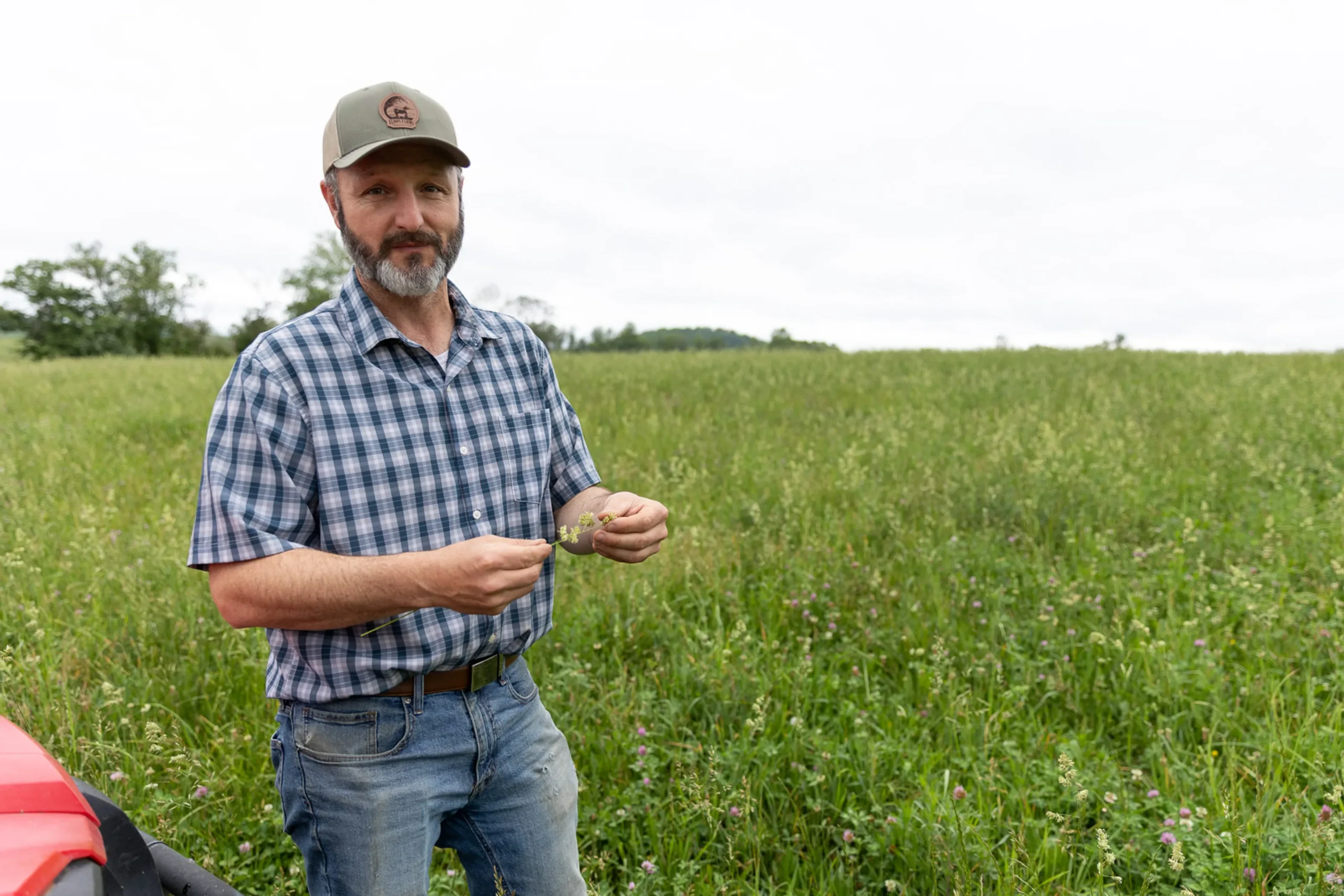
John Genho stands in one of Eldon Farms’ lush hay fields. “For us, this hasn’t been a particularly unusual spring,” Genho said. “When you alternate between grazing and haymaking, it’s the same as mulching. The cows have stomped all that and basically created mulch over the soil.” (Photo/Ireland Hayes)
But not everyone is in a position to farm that way. Massie said much of the terrain where he grazes cattle is so steep and rocky, he couldn’t run a baler on it.
“Some of my land is only useful to animals because you can’t get machinery safely on it,” he said.
Massie’s nephew, Jim Massie of historic Meadow Grove Farm in Amissville about six miles east of Massies Corner, said his hay crop is not looking great, either. He said he is experimenting with something new this year at his son David’s urging — rotational grazing — where cattle are given a small section of pasture at a time and moved through it gradually.
“[He’s] only giving 44 cows an acre and a half, and making them clean that up,” Jim Massie said. “It’s amazing too that once you leave them on it for a 12- to 18-hour period, how quickly the grass does come back behind them.”
‘What do you tell the people you usually sell to?’
When Rappahannock farmers run short on hay, many of them call Dee Frye, a career hay farmer in Etlan who said he does about 90% of his business in Rappahannock. This year, Frye doesn’t think he will have much good news to give them — his first-cutting yield is running at about a third of what he’d normally expect.
“Some people [grow hay to] feed their cattle and animals, and some have other jobs, but it’s crucial to someone who’s in the business to make a living … this is what I’ve always done,” said Frye, who started Hard Wind Farm in 1999. “I mean, what do you tell the people you usually sell to? … If I can’t get hay to people, they’ll go to wherever they can get it, and then that might end up as who they use forever, so that’s got me pretty concerned.”
The recent rains, while welcome, brought their own complications — coming down hard enough to pummel some of the hay flat into the ground. And the drought itself, Frye said, isn’t new.
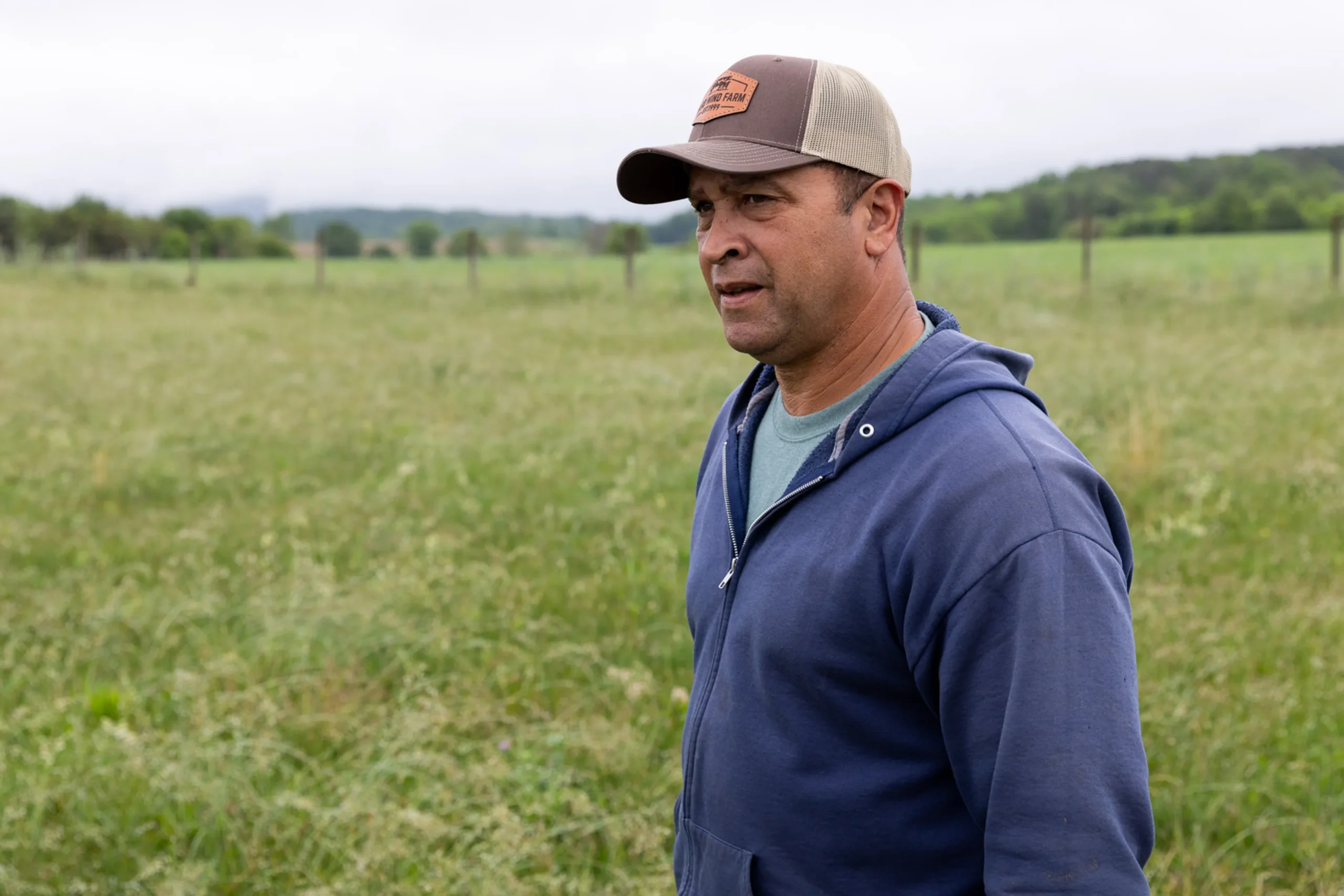
“We’re dealing with something that started three seasons ago … this thing has built up,” Frye said.
Mike Sands at Bean Hollow Grassfed in Flint Hill buys most of his hay from Frye, he said, but the pastures in which he grazes his livestock are struggling to thrive.
“From the side, they look all right; there’s tall seed heads, tall grass out there, but when you walk out in it, it’s pretty dead,” he said.
Sands said he “destocked” his herd last fall in anticipation of a hard winter, building up some stockpiles. He isn’t planning to purchase more sheep or cattle.
“We’re not gonna be bringing in more animals right now, I’ll tell you that,” he said.
Long summer ahead
Whether this season’s second and third hay cuttings recover depends largely on what the rest of the summer brings. Right now, the outlook is uncertain.
Bob Ryan, a Woodville resident and decades-long meteorologist with NBC4 and WJLA, said the recent rain is welcome, but is unlikely to signal a lasting pattern shift.
“There’s no indication that this is going to be a return to a ‘normal’ wet pattern,” he said. He noted that developing El Niño conditions could mean a hotter, drier summer ahead.
“Into July and August, there’ll be a lot more concern about dryness and the drought really scorching the farming areas,” Ryan said.
For now, farmers are watching the skies and doing what they can. Frye said he’s hopeful that the recent rain will stimulate a good second or third cutting, and he’s had seasons where the harvest late in the year can make up for shortfalls in the spring. “You just kind of have to play it by ear,” he said.
“Everything,” Tom Massie said, “is dependent on water.”