

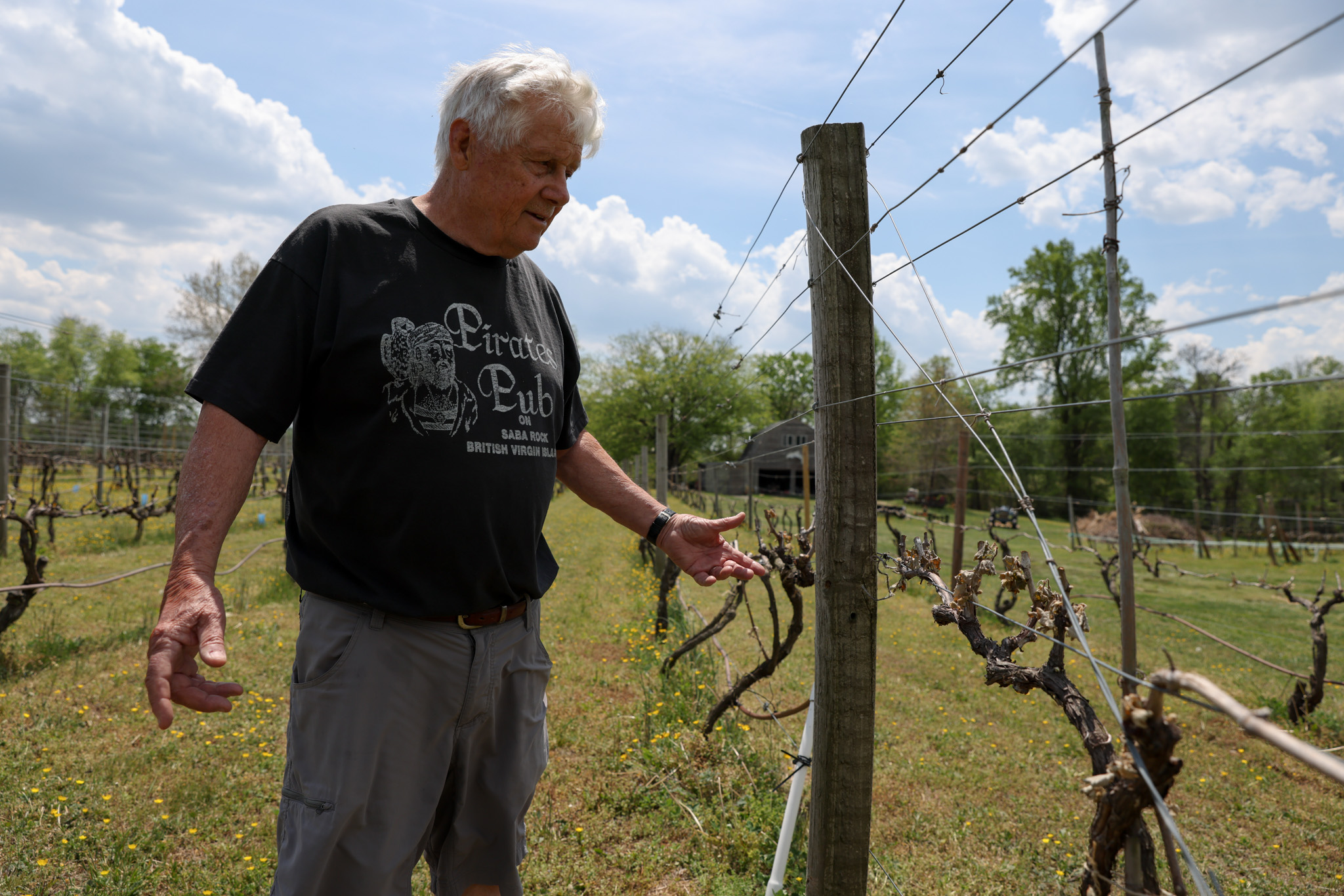
Bill Gadino examines rows of grapevines at his vineyard, Gadino Cellars, in Washington. “Ninety percent of my buds, wiped out,” he said after a late spring freeze damaged his crop. (Photo/Ireland Hayes)
‘Pretty much a total loss’
As Bill Gadino walked through his vineyard at Gadino Cellars in Washington, he stopped several times last Friday to pick dried, withering leaves off grapevines. “These had all emerged,” he said, examining the nubs left where fresh buds used to be.
“Ninety percent of my buds, wiped out,” he said. “They were all out, nice little green shoots, then not green the next day,” Gadino said. “I was expecting a great, great harvest.”
Mother Nature has been especially unkind to Rappahannock County this spring. Vineyards and orchards across the county are feeling the effects of several late-spring freezes and a prolonged drought wreaking havoc on budding crops and their growers’ livelihoods.
“The first freeze [this spring], the orchards were in bloom, and they lost crop. Then the second one, the remaining crop was killed … it’s pretty much a total loss, and the same thing with the vineyards,” Rappahannock County’s agricultural extension agent Kenner Love said. “We’re warming up earlier, these plants are responding to the warm weather and blooming, and then we’re not out of the woods with freezes.”
And those freezes are occurring against a backdrop of ongoing drought. According to data from the U.S. Drought Monitor, most of the state of Virginia is in a severe drought, with Rappahannock County sustaining either a moderate or severe drought since September.
“We’re hurting for water right now,” Gadino said.
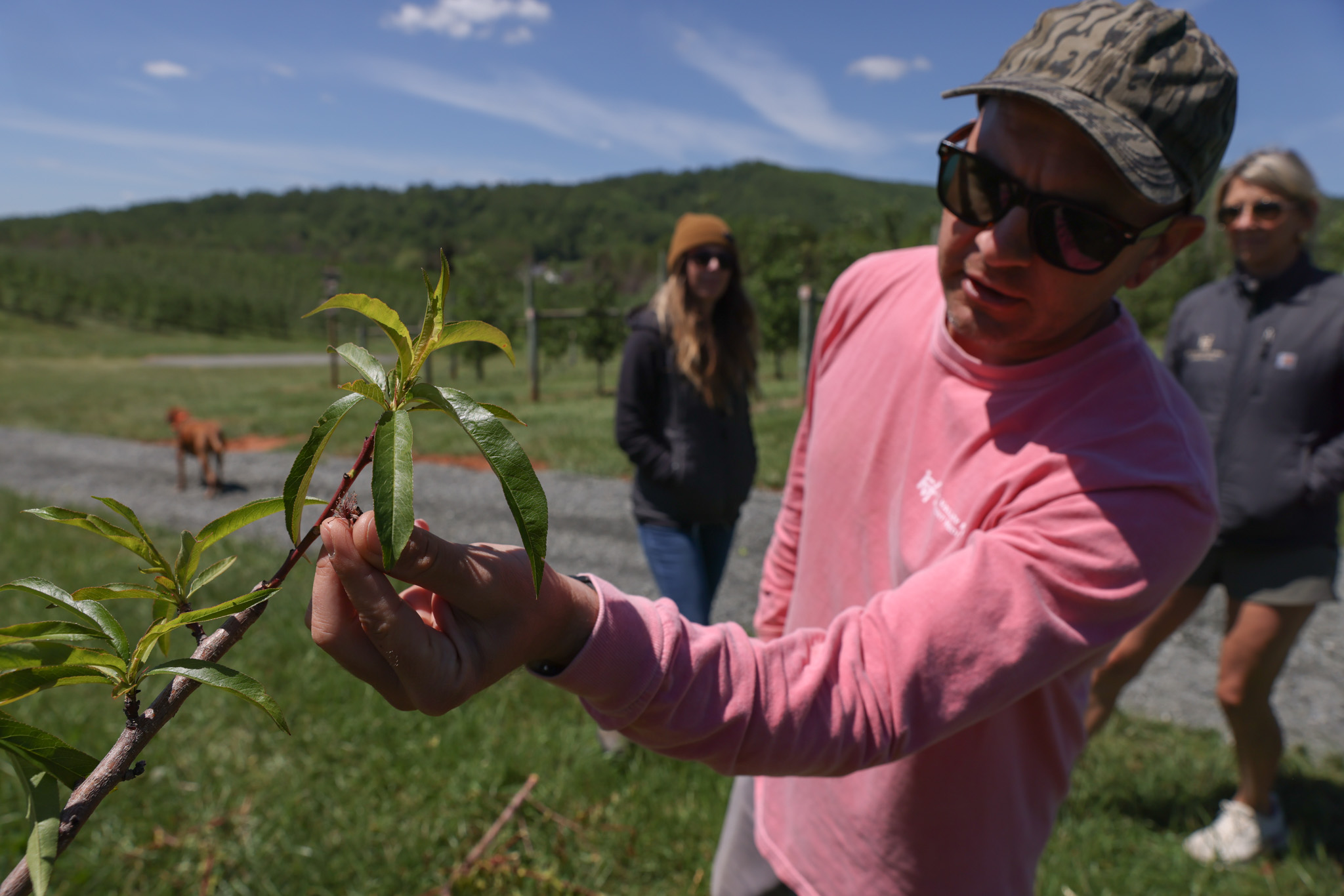
Brett Elford, tree expert and orchard manager, inspects dead blossoms on a peach tree at F. T. Valley Farm Monday. (Photo/Ireland Hayes)
‘Worst possible timing’
Earlier this month, Kathy Pelunkias, one of the owners of F. T. Valley Farm in Sperryville examined buds and blossoms in her apple orchard, the fresh petals already browning and shriveling at the edges. A freeze on April 8 had hit right as the blossoms were opening up, but there were still secondary blooms on the way.
Then came the second freeze last week. Farm and orchard manager Brett Elford said all hope for what was meant to be a “record-setting year” is essentially gone.
“This year we got hit twice, and it was the worst possible timing,” Elford said. “I’d never seen a bloom in the orchard that looked like this year, and that was just coming into peak bloom.”
Love said this is the second year devastation this widespread has hit the county’s orchards. Farmers sink significant costs into each growing season, and while some carry crop insurance, he said, repeated losses could be financially ruinous.
“Could you live two years without a paycheck? Not many people can,” Love said. “They’ve already invested in this year … you spent that money and there’s no way of retrieving that without having a harvest of the crop, so how long can you really stay in the business? That’s the dilemma. So, hopefully we’re resilient enough and pull through. But at some point — when do you throw in the towel?”
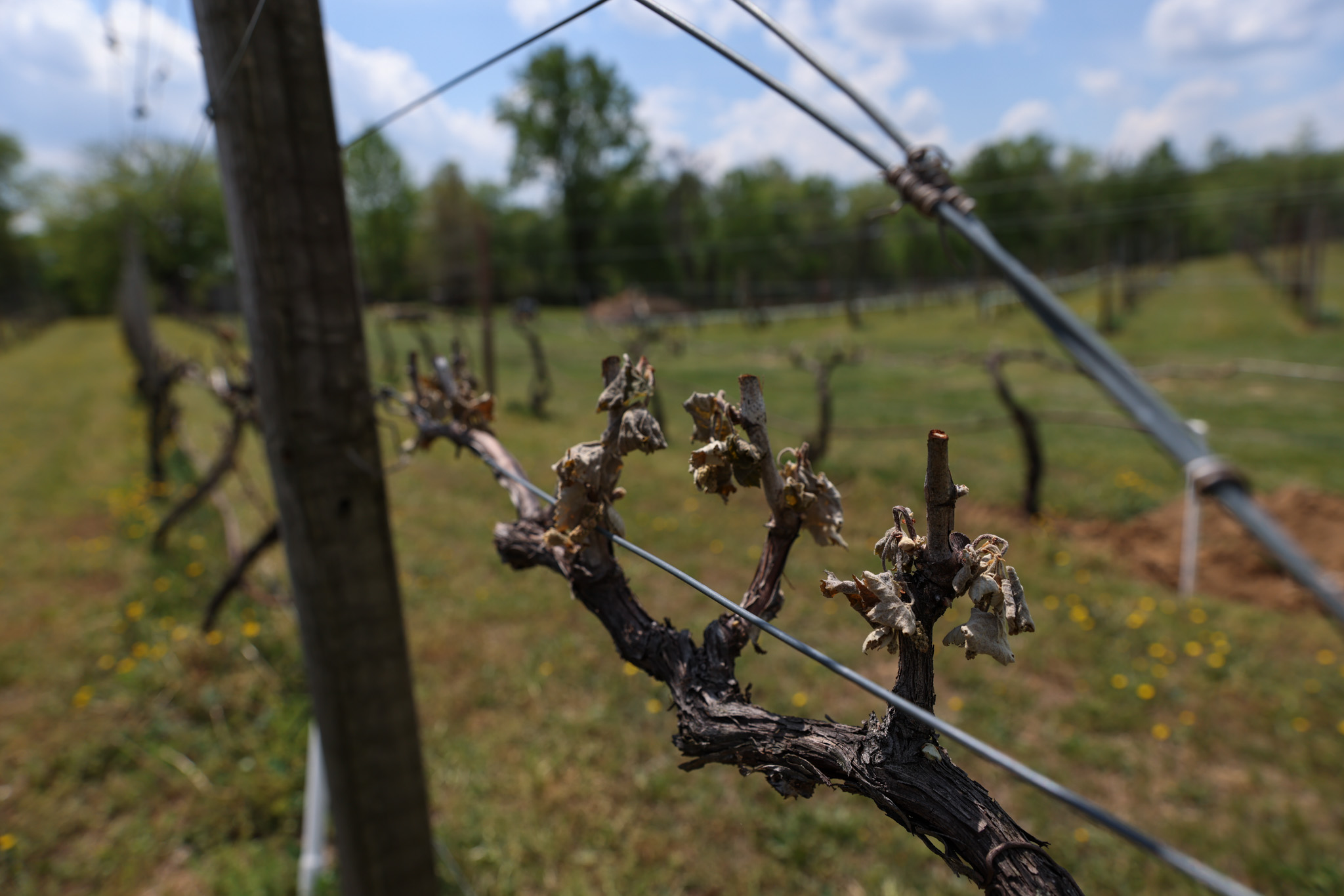
A grapevine covered in dry, dead leaves. (Photo/Ireland Hayes)
Other vineyards in the region reported varying levels of damage.
At Quiévremont Vineyard and Winery in Washington, owner John Guevremont said about half of the chardonnay crop was lost in lower-lying areas of the vineyard where cold air settles, while most other varietals saw minimal damage.
“The Monday-Tuesday freeze was not particularly unusual, though it seems as we are getting these freezing temperatures at the worst time, being bud break when the young leaves are most sensitive,” Guevremont said.
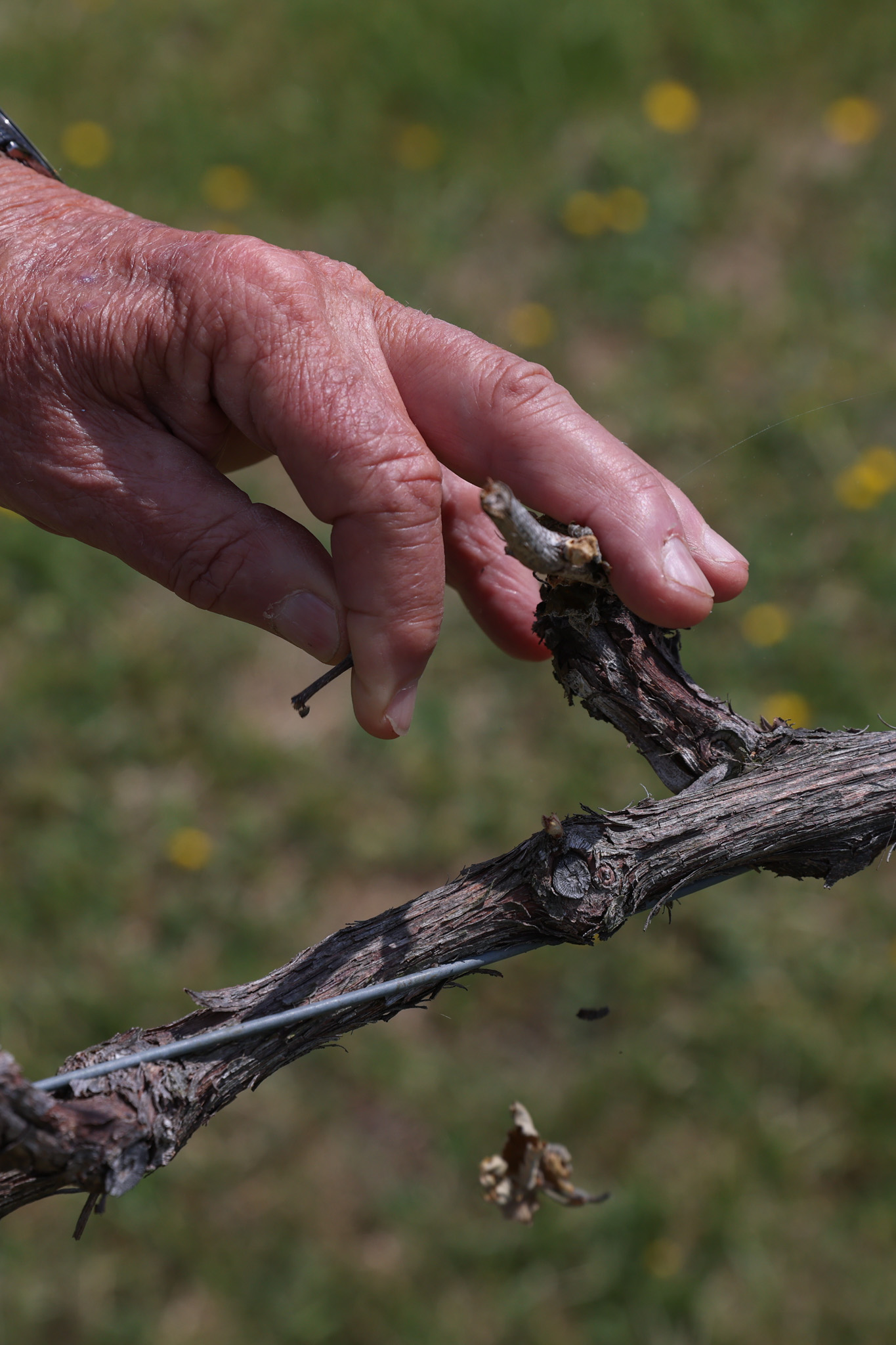
Dry leaves break up and fall away as Bill Gadino touches one of his grapevines. (Photo/Ireland Hayes)
For Guevremont, the secondary bud break has not only a lower yield, but isn’t harvested until later in the season increasing chances for pest and rot problems.
“Seldom do we harvest secondary fruit as the labor, pest control and processing makes this harvest not worth the effort,” he said.
What’s next?
Researchers are working on new technologies to help protect trees from future freezes, but they are still years away from a product being on the market, Love said. Research is also being conducted on more freeze-resistant trees.
“They’re looking at trees that are more freeze resistant, and they’re also looking at new technologies that can be applied to trees to protect them, but they’re not available yet,” Love said.
The F. T. Valley crew is now brainstorming ways to pivot in the wake of this season’s loss, including expanding offerings beyond the orchard. With a new ABC license in place, they are exploring adding a bar area, hosting events and live music, and developing other activities to keep the community engaged even without a full harvest. Elford said they also hope to still sell apples brought in from other orchards in the area that were not hit as hard by the freeze.
“We’re trying to figure out how to pivot and still keep the community involved,” Elford said.
Gadino said he hasn’t seen damage like this so late in the season since 2018, when a freeze came over Mother’s Day weekend. It could take two to three weeks, he said, to fully understand the extent of the damage and whether secondary buds will emerge.
Yet he remains hopeful the vines will still yield a harvest, though it would likely be weeks delayed and about half the size of what was expected — if another frost doesn’t wipe out what remains.
Time will tell.
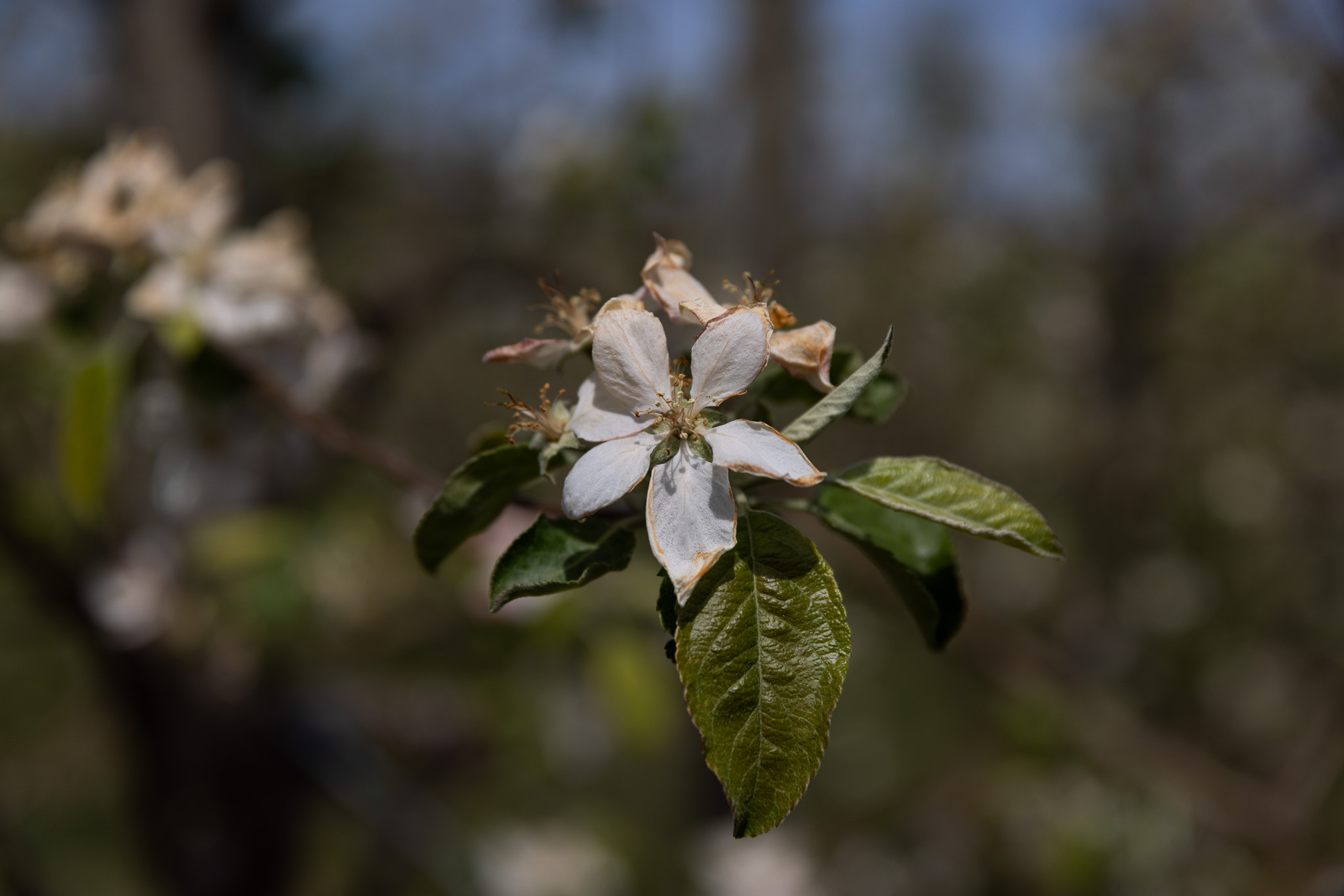
An apple blossom with browning petals after a freeze early this month damaged the first round of blooms at F. T Valley Farm in Sperryville. (Photo/Ireland Hayes)