

Amissville farmers raise questions about local laws
When Amissville farmers Matthew Boyer and Carlos Rodriguez got home to Charming Hill Farm from a vacation the afternoon of Feb. 10, something didn’t look right.
Animals that are normally kept in separate areas of the 25-acre farm were clustered tightly together in one corner of a field.
“Our cows, our sheep and our boy goats were all huddled in a corner against the fence, looking very stressed … We were like, ‘Did they break out? What happened? Why are they all together? They shouldn’t be all together,’” Boyer said.
Within a few minutes, he understood why — two pit bulls had gotten onto the property and attacked the livestock. They were standing in the field on top of a sheep tangled in electric net fencing. Boyer said he immediately recognized them — the same pair of dogs he had previously caught chasing his cattle months prior.
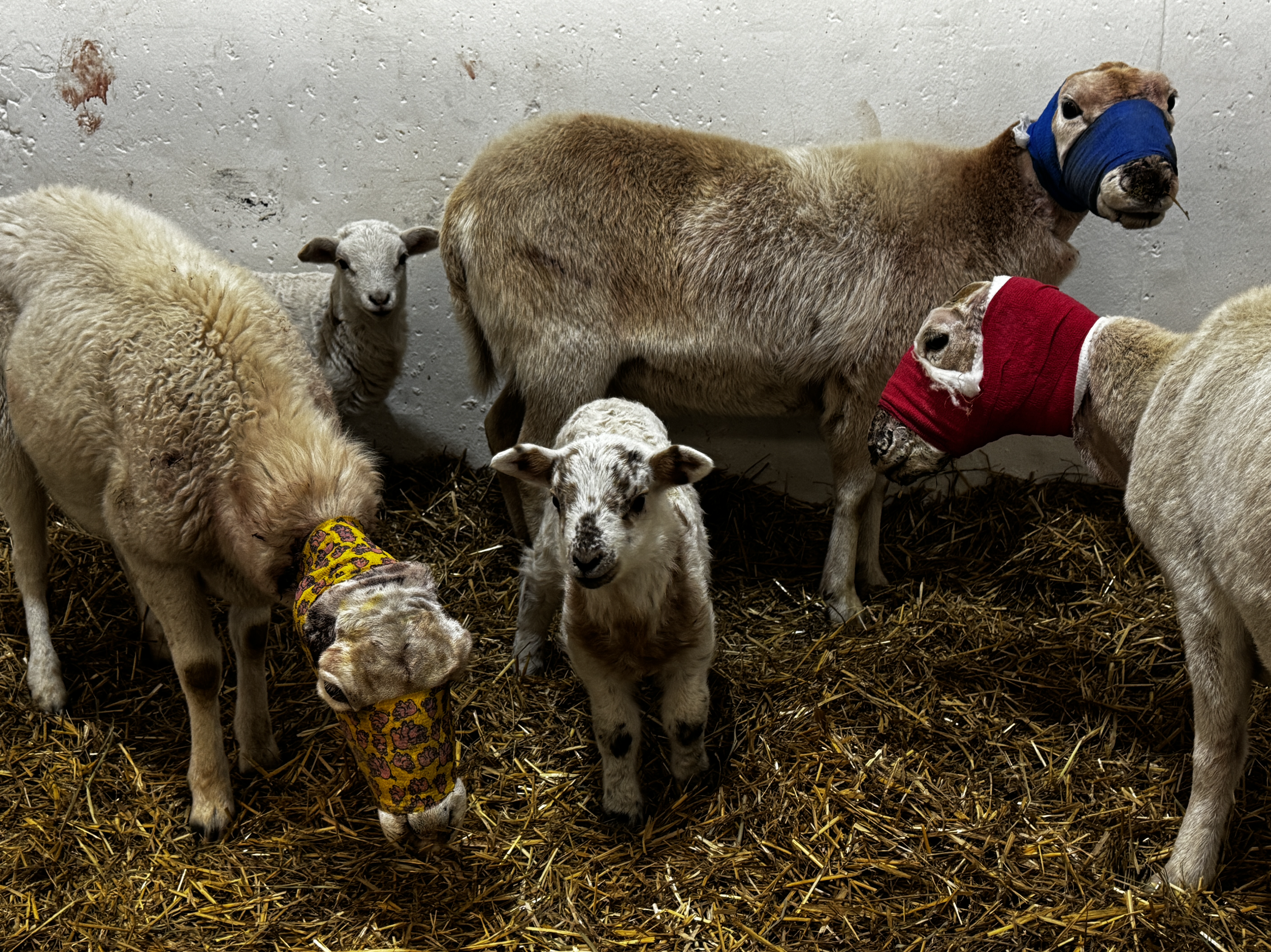
By the end of the day, he said, the toll was devastating: a week-old lamb, an ewe in active labor and four goats were dead. Boyer said some of the dead animals were unrecognizable. Several sheep suffered severe injuries and Martin, a well-known and loved miniature cow whom Boyer and Rodriguez bottle-fed since he was two days old, had his tongue ripped out. The attack was just weeks after the loss of an ewe in a recent ice storm.
Injured sheep from Charming Hill Farm bandaged and recovering at Rose Hill Veterinary Practice in Washington. (Photo/Courtesy)
All of his female goats — most of whom were pregnant — were miraculously unharmed, which Boyer credits to their guardian dog, Hamlet, who he said was able to fend the dogs off from that pasture.
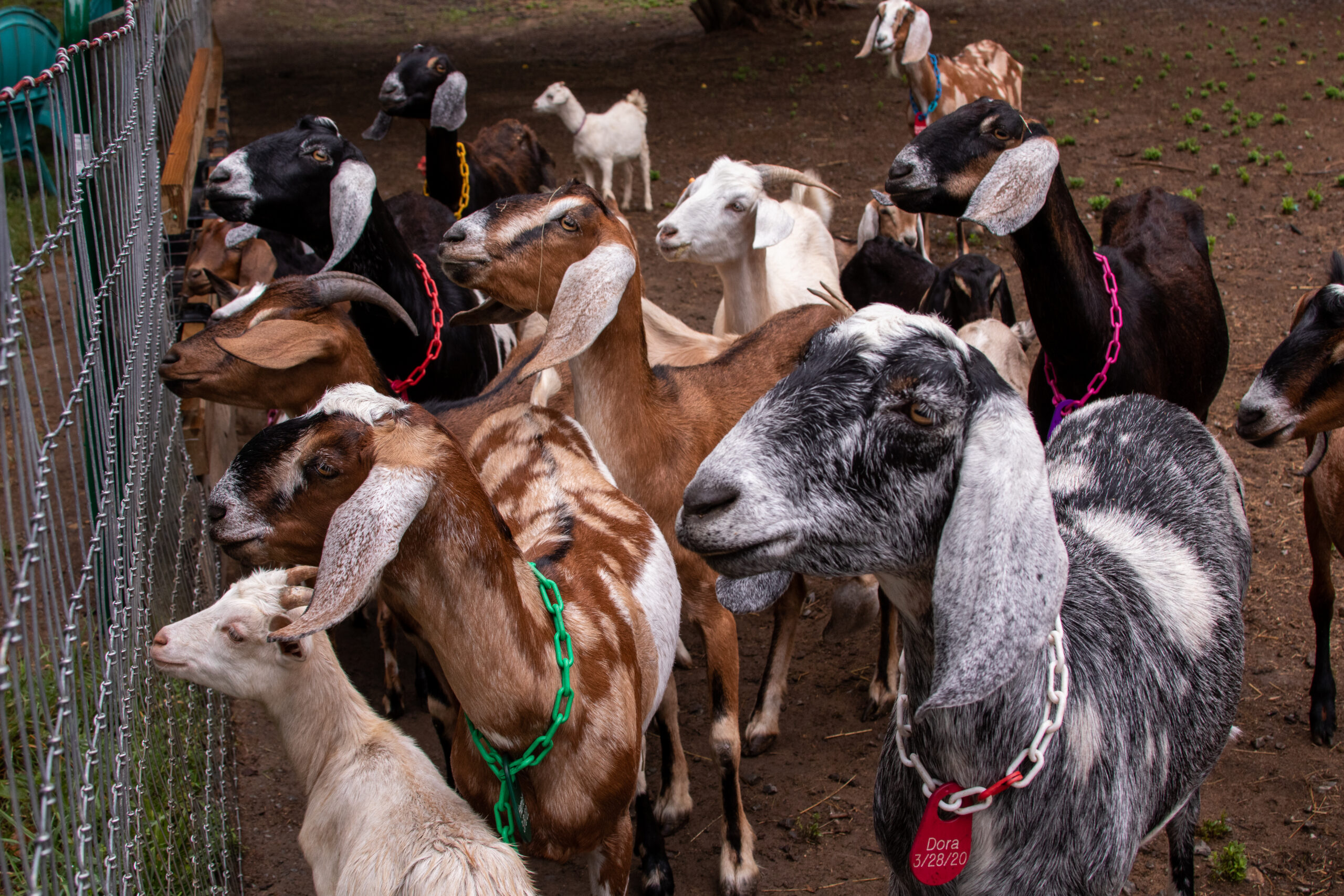
Many of the animals at Charming Hill Farm are raised by hand and known by name to visitors to the farm’s “goat cuddling” service. The farm is also home to a working herd of goats used for land-clearing services.
In all, over 100 animals call the farm home, and about a dozen were killed or wounded in the attack. “I think we have been in shock since it happened,” Boyer said.
A silver lining
Boyer said at the heart of this devastating story is a more positive one about a community coming together to take care of one another.
“When this tragedy happened, which was very dark and gruesome for us, it was just devastating, and we were overwhelmed by it,” Boyer said. “But since then … we have become overwhelmed again, but in a very positive way.”
In the days since the attack, after sharing the news online, hundreds of people made donations to help with vet bills or left comments of support for Boyer, Rodriguez and the farm.
After consulting with an attorney who advised him that obtaining restitution was unlikely, Boyer opened a GoFundMe fundraiser to help with vet bills and cover damage at the farm. In less than 24 hours, the funding goal was met.
The local support has been especially moving, Boyer said, with neighbors coming together to offer aid from home-cooked meals and feed for their animals to free talk therapy services.
“In a very dark world right now, this is a huge beacon of light,” he said. “The part that makes us most emotional is the community in Rappahannock County that has really come together and supported us … it makes us feel like we are doing the right thing by having this farm, because we always wanted it to be a place of community.”
All donations made to the farm, Boyer said, go into “the animals’ bank account,” and go directly to their care.
On Tuesday, Boyer said the injured animals are still under the care of Rose Hill Veterinary Clinic in Washington, and will be there “for some time yet.” Martin the cow is at home at the farm recovering as well, but is not out of the woods yet.
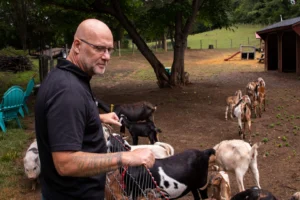
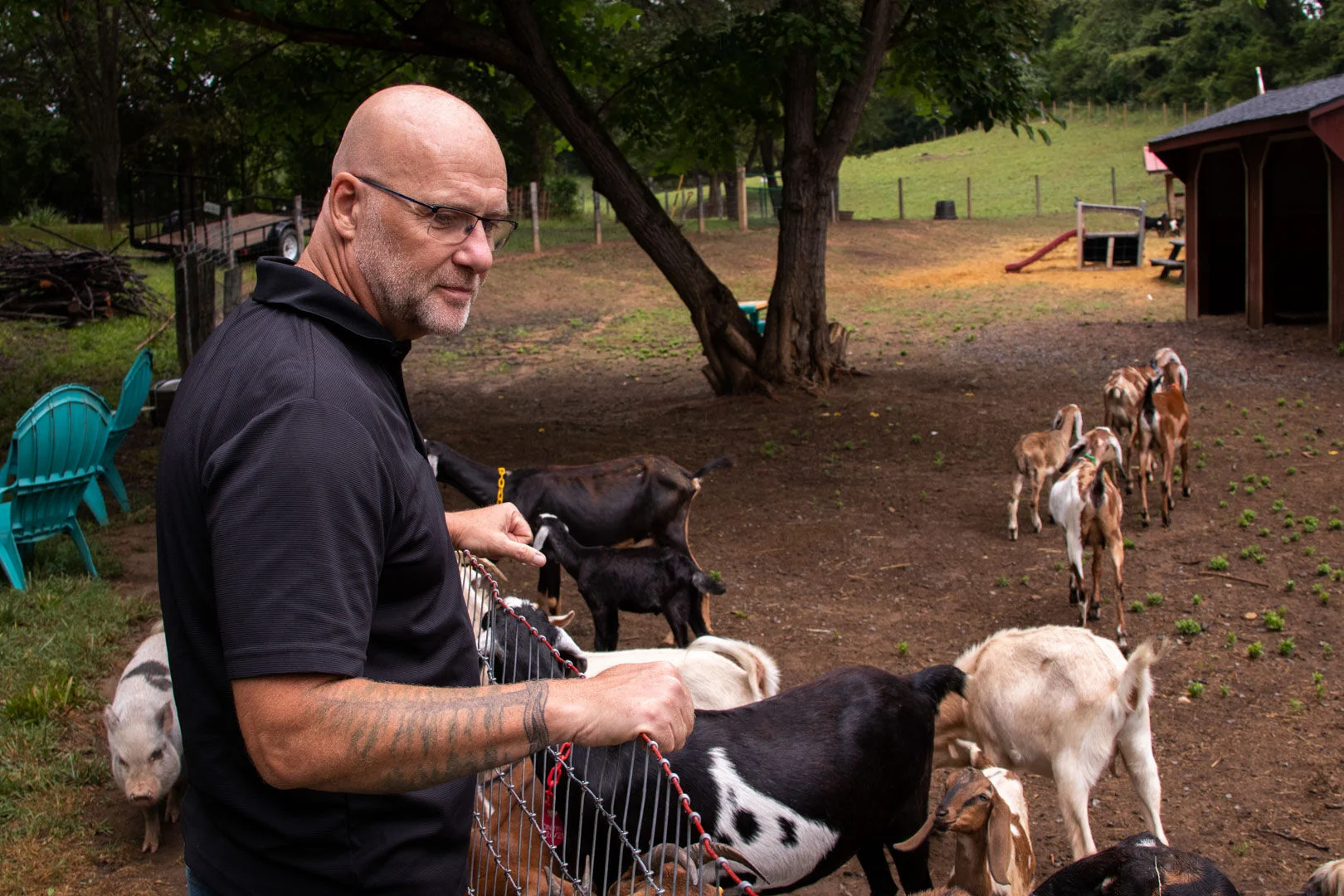
Farmer Matthew Boyer watching his goats in summer 2025. (File photo/Ireland Hayes)
‘The problem here was the law’
One of the first calls the farmers made when they interrupted the attack was to the Rappahannock County Sheriff’s Office (RCSO).
Criminal charges have been filed against the owners of the dogs — Glenn Cooper and Julie Hitt — who appeared in Rappahannock County Circuit Court Tuesday.
In the days following the attack, the two dogs were euthanized, paid for by Boyer and a neighboring farmer, Tony Otey, whose goat was killed by the same two dogs on Jan. 20.
Boyer said the owners were “deeply apologetic” about the attack and said they had been looking for the dogs since they escaped through a broken door latch.
“I told the sheriff that I would like to pay to have them euthanized because I didn’t want to have another sleepless night of these dogs getting out and killing my livestock,” Boyer said.
Hitt and Cooper said in an interview Tuesday that they had tried to surrender the dogs to the Sheriff’s Office after the first attack. At first, Hitt said the Sheriff’s Office agreed to take them, then said actually, they could not.
Hitt said they were trying to be responsible dog owners, but after losing her job two months ago, they did not have the means to put them down themselves.
“After the first incident with the goat, as soon as the cops came and told us that happened, we asked the animal control officer to please take the dogs, because we don’t want this to happen again. First, they said we could surrender them. And then we just got the run around,” Hitt said.
“So we tried to just contain them until we figured out what we’re supposed to do, and then this happened. It’s been a nightmare,” she added.
Sheriff Connie Compton said she has three deputies who are dual trained as animal control officers, one of whom works every day of the week. She said she believes it’s an effective system for animal control. “As far as euthanizing the dogs, we do not do that,” she said.
“Why should taxpayers have to pay to euthanize their dogs?” Compton said, adding that there are no local leash laws. “When you take on the responsibility of having an animal, you take full responsibility for that animal.”
She said that if the dogs were caught during the attack, then the dogs could legally be shot. “If the dogs have left the property and are no longer attacking animals, then you cannot do anything to them,” she said.
Commonwealth’s Attorney Art Goff said under Virginia law, law enforcement cannot seize a companion animal except “for the sole purpose of examining the dog” to determine whether it attacked or killed an animal.
The law does not allow dogs to be seized and kept if they kill livestock, Goff said, and a dog is only deemed a “dangerous or vicious dog” — which would allow them to be taken — if they attacked a person or another companion animal.
Goff added that the owners could have potentially surrendered the dogs to a shelter or pound. The owners also could not legally euthanize the dogs themselves “the old-fashioned way,” as they put it, under Virginia law.
“I don’t think we have the right to seize them in this particular case,” Goff said.
Boyer said he wishes more could have been done to prevent the attack on his farm, and he believes there needs to be a change in the law.
“I think the problem here was the law,” Boyer said. “Once the dog killed the other farmer’s goat, I feel they should have been seized.”
Julia Shanahan contributed to this report.