

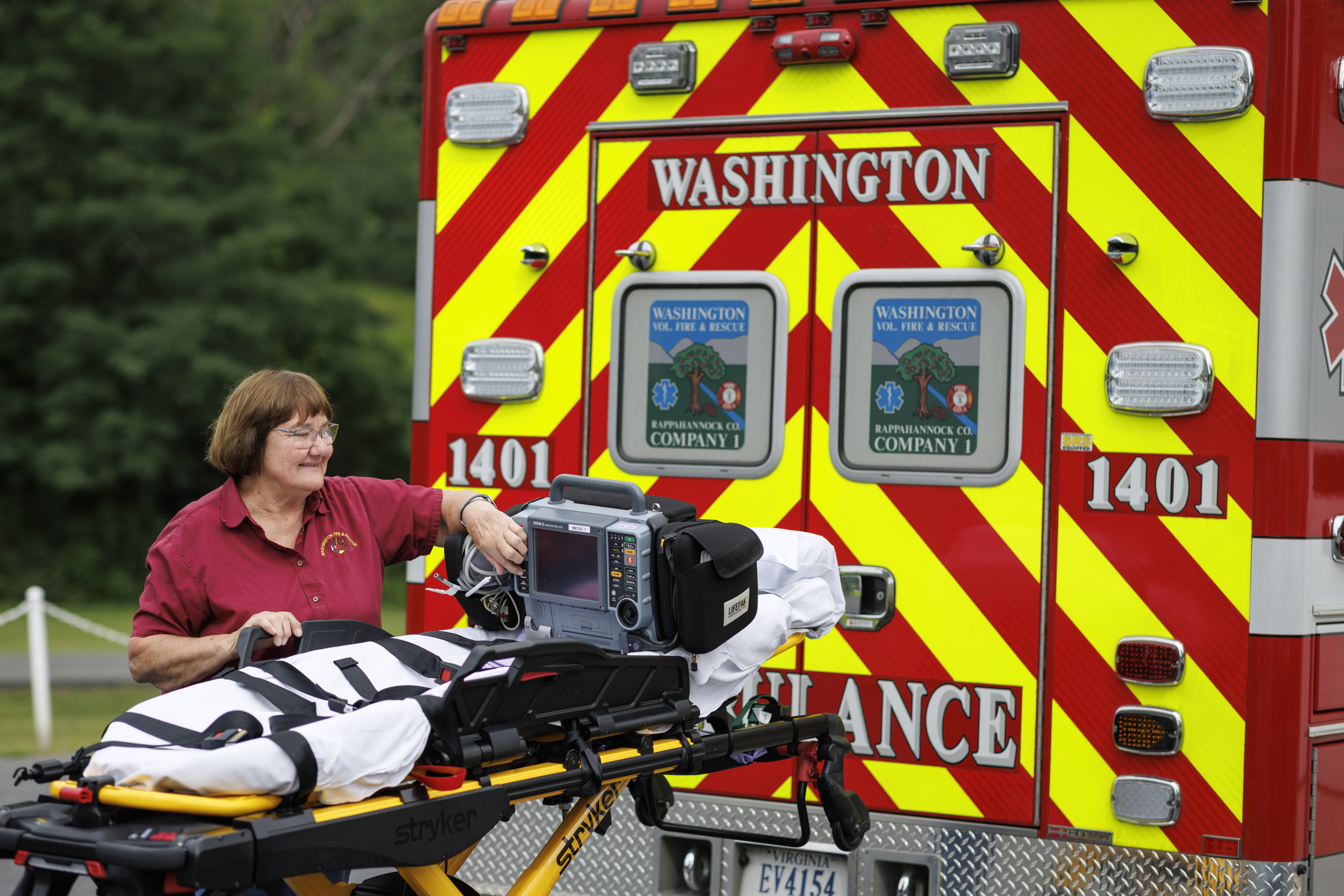
Ann Spieker has been answering fire and rescue calls in Rappahannock County for a long time. So long, in fact, that back in the day, she rode in the back of a station wagon equipped with just a cot.
“Yep, I’d be sitting back with the patient on the cot, and I’d be all bent over because the roof was right there,” she remembered. “Basically that’s all it was. It was considered an ambulance. But that was the only thing they had in those days.”
It was 45 years ago when Spieker, now 78, began running calls out of the Sperryville station. A year later, she got her certification as an emergency medical technician. She hasn’t stopped answering calls, although she admits to slowing down a bit. For one thing, no more fighting fires.
“I feel like I can keep running calls,” she said in a recent interview, “but there will be no more pickleball.” As recently as 2024, Spieker, a Washington resident, responded to 291 annual calls, the third most of any volunteer in the county.
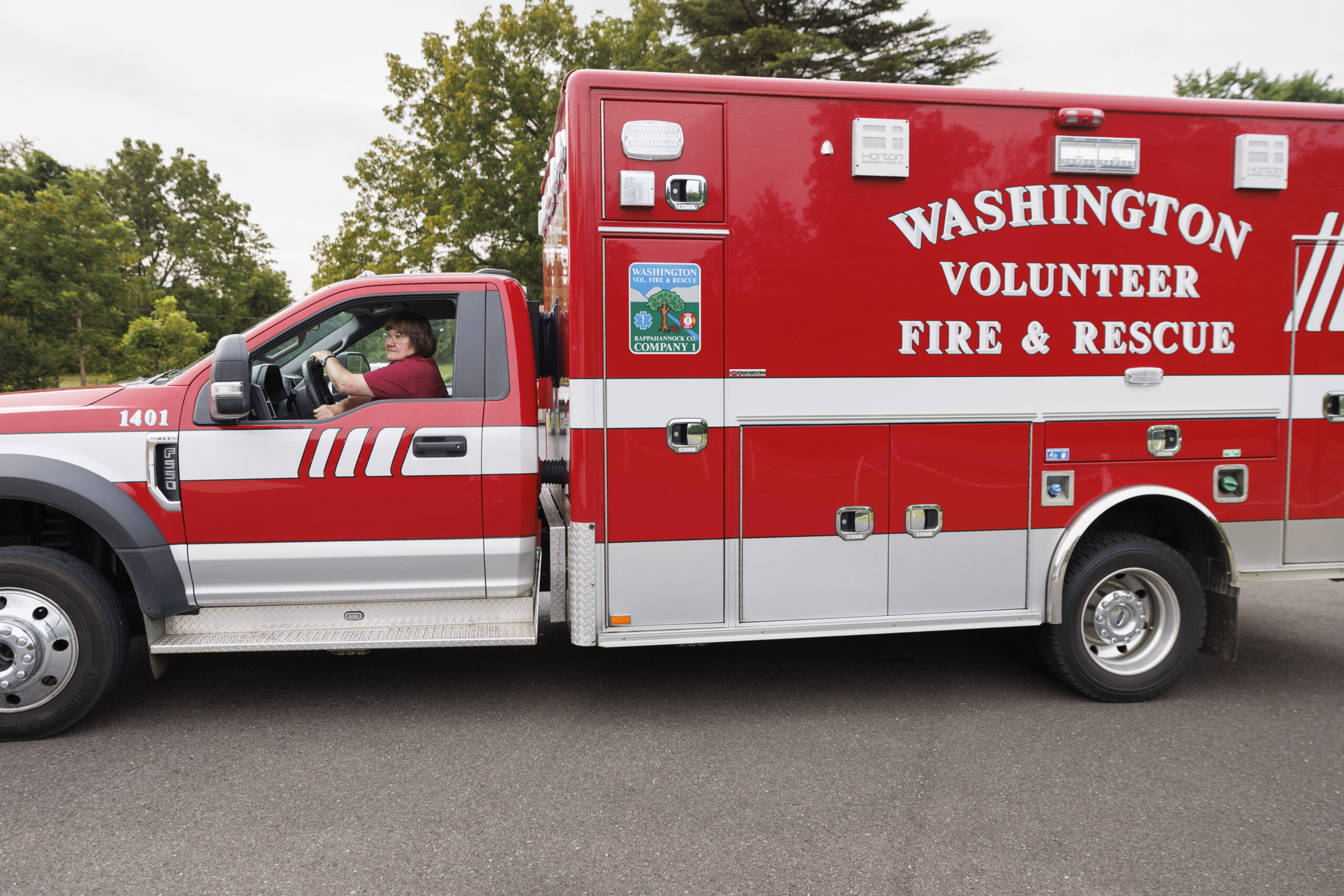
Ann Spieker responded to 291 calls in 2024, the third most of any volunteer in the county. (Photo/Luke Christopher)
The irony is that Spieker got into the fire and rescue business because she wanted to become a sports trainer at Rappahannock County High School, where she established its first girls’ cross-country and basketball teams. She needed to take an EMT course to become a trainer and the one being offered in the county, she said, required that she also had to become a fire and rescue volunteer. That’s how she began her first ambulance runs — transporting patients to the hospital in that station wagon.
In 1988, she switched careers and became a full-time firefighter EMT in Fairfax County. That same year, she moved to the Town of Washington’s volunteer fire and rescue squad. In 1993, Spieker was named “Rescue Person of the Year,” and ultimately, she would become the company’s chief for close to 15 years. In 2013, she was honored as Rappahannock News’ “Citizen of the Year.”
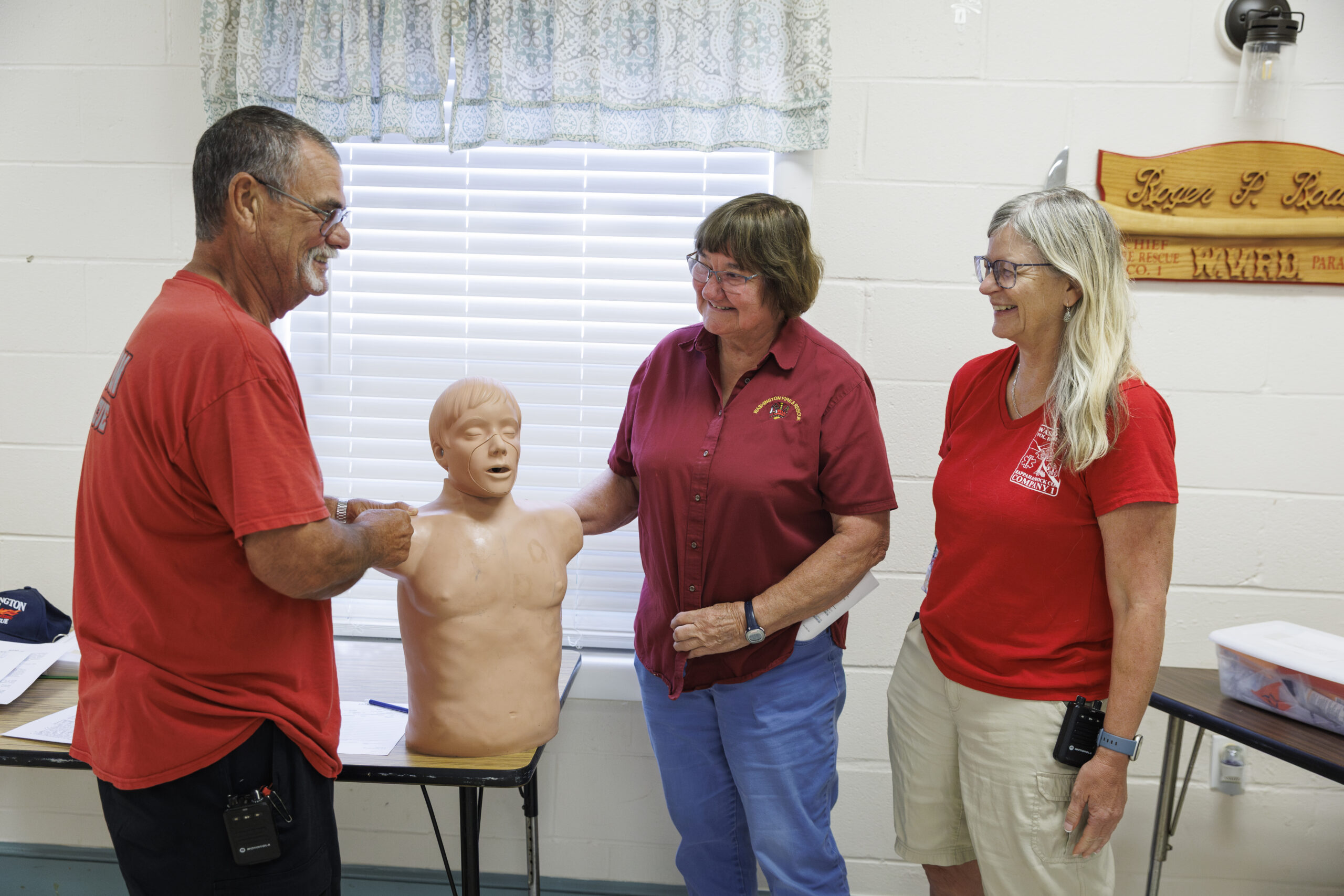
Assistant Chief and Paramedic Jackie Estes, former chief and Vice President of the Board of WVFR and Paramedic Ann Spieker, Emergency Medical Services Chief Lisa Palmer at the Washington Volunteer Fire and Rescue hall. (Photo/Luke Christopher)
Improvements in cardiac care
In her four-plus decades, Spieker has seen a lot of improvements, particularly when it comes to emergency cardiac care. In her early days, there were no monitors and other equipment to track the conditions of patients for whom each minute without treatment increased their risk of not surviving.
That’s especially challenging in a rural community like Rappahannock where it can be a 20-mile trip to the nearest hospital. “You’re biting your nails a little bit during the ride,” Spieker conceded. “You’re trying to do everything you need to do to stabilize them. You’re doing what you can to keep them alive.”
Another hurdle faced by fire and rescue crews, Spieker noted, is finding homes atop the county’s hills and in its hollows. The development of the Global Positioning System, or GPS, has certainly helped, she said, but getting to people in need would be easier if they posted their addresses at the bottom of their driveways.
“We thought we’d see that everywhere, but we’re always still running across places where people don’t have their driveways marked,” she said. “Then when you get up to the house, that’s where you see the address posted. That doesn’t do any good.”
Spieker added that something that does help first responders is “File of Life” forms. Available at the fire and rescue stations, they’re forms that can be put on a refrigerator to provide EMTs with a medical history, a list of current medications and emergency contact information.
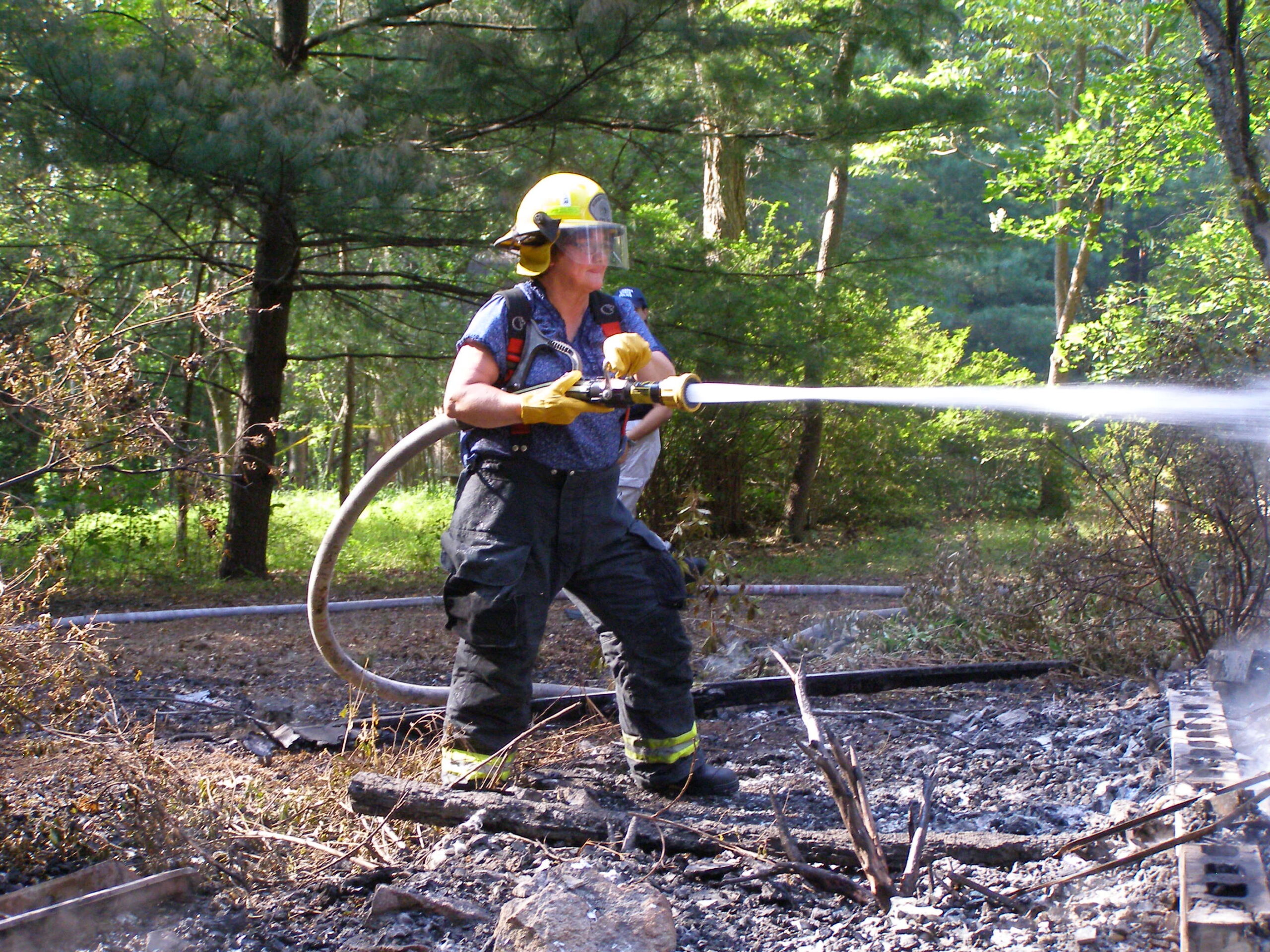
Ann Spieker during her firefighting days. (Photo/Courtesy)
‘Big thrill’
Since being diagnosed with Lyme disease in 2003, which made it difficult for her to keep her balance on a ladder, and more recently with polymyalgia, a form of painful rheumatism, Spieker has had to cut back on responding to calls.
But she answers some, and still is making a difference for people in their times of greatest need. “One of the best things is seeing how much you can improve the condition of a patient, and how sometimes you can help save their lives,” she said.
She mentioned a recent call where a man needed to be resuscitated. “It was something special to have him come back to us, then get to the hospital and then get to go back home. Things like that are still a really big thrill.”