

‘When there’s a call from the wild … you have to answer it’
In a single hour on a midsummer Monday, five new patients arrive at the Blue Ridge Wildlife Center: a crow, a hawk and three baby rabbits plucked from the clutches of a cat.
It’s high season at one of Virginia’s busiest wildlife hospitals where injured, orphaned and sick wild animals arrive in a steady stream. Eighty percent of the center’s more than 4,000 annual patients come through its doors between April and September, a season so relentless that the staff sighs in relief when it finally ends.
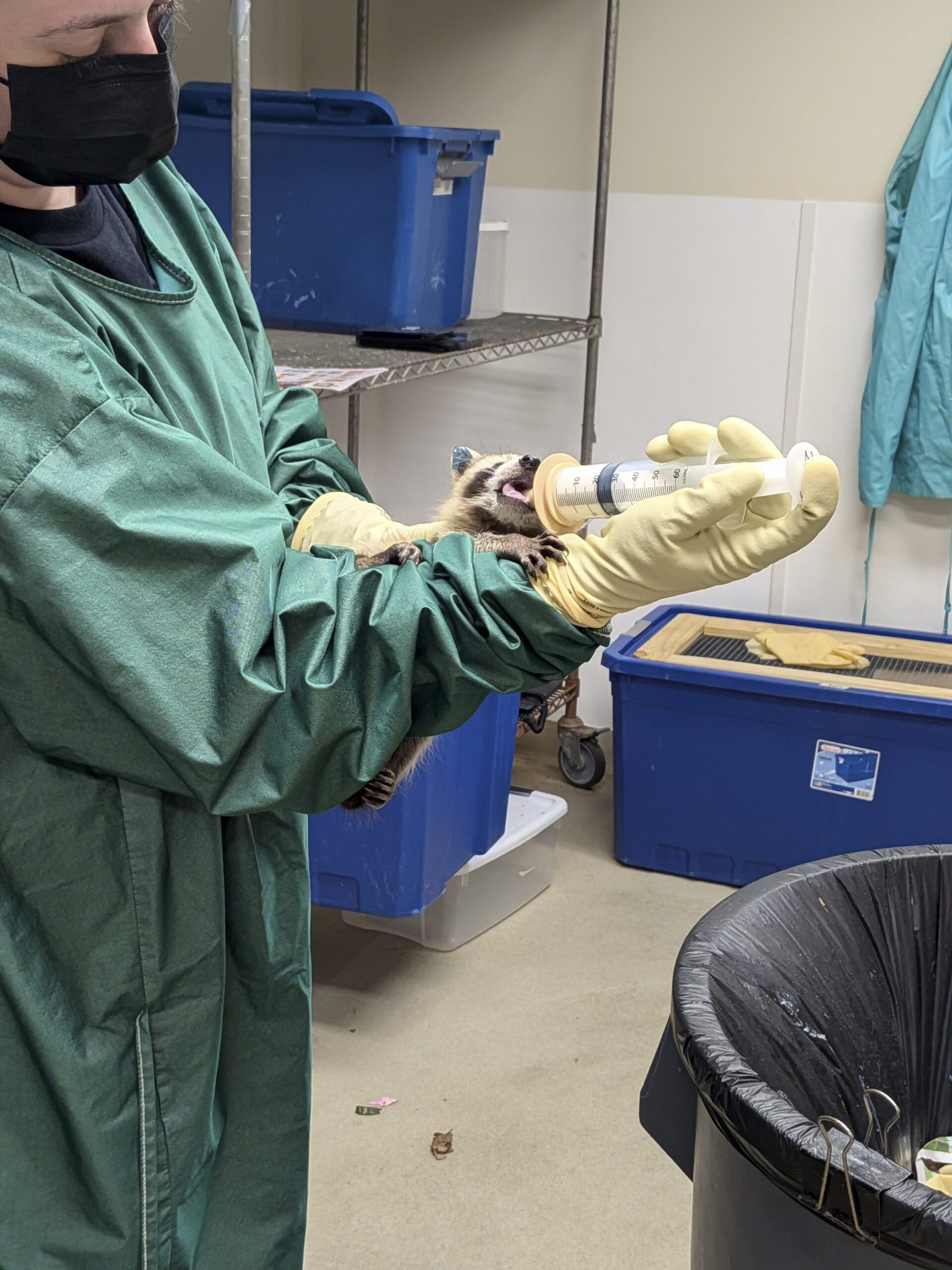
A rescued raccoon being fed at Blue Ridge Wildlife Center. By Kistin Davis
While a veterinarian checks out the newly arrived baby rabbits, a volunteer in the kitchen down the hall is flipping through a red binder full of recipes, prepping meals for the roughly 125 species currently in care there.
In the mammal nursery, a staff member readies midday bottle feedings for five orphaned baby raccoons — just a handful of the nearly 250 animals that were patients in the center’s care that day.
On 17 acres in Boyce, Va., about an hour from Rappahannock County, the nonprofit center treats wildlife from 40 Virginia counties. It also conducts research, trains wildlife professionals and educates the public.
What began as a wildlife assistance hotline in 2000 has grown into an 8,700-square-foot facility on a wooded conservation easement, with 10 staff members — including three full-time wildlife veterinarians and two licensed veterinary technicians — supported by 50 volunteers.
Still, most people don’t know it’s there until they need it.
Heidi Lesinski needed it when she found an injured bird by the road several years ago. She had been living in Rappahannock County for a decade but “we had no idea what to do with it. We just called whoever we could think of. We knew a wildlife rehabber in the area. She suggested the wildlife center.”
With the bird in a box, Lesinski made the hour’s drive and handed the wounded creature to staff members who treated it and returned it to the wild.
A few years later, Lesinski returned with a northern flicker with even more severe injuries. This one could not be saved, “but they were able to respectfully euthanize him. I was so sad,” she said.
But the visit changed Lesinski’s relationship with the organization. While there, she noticed the center’s nature walk. A circular path just beyond the hospital, the walk houses animals that can’t be returned to the wild. Instead, they live out their lives as ambassadors of their species, and they made strong impressions on Lesinski.
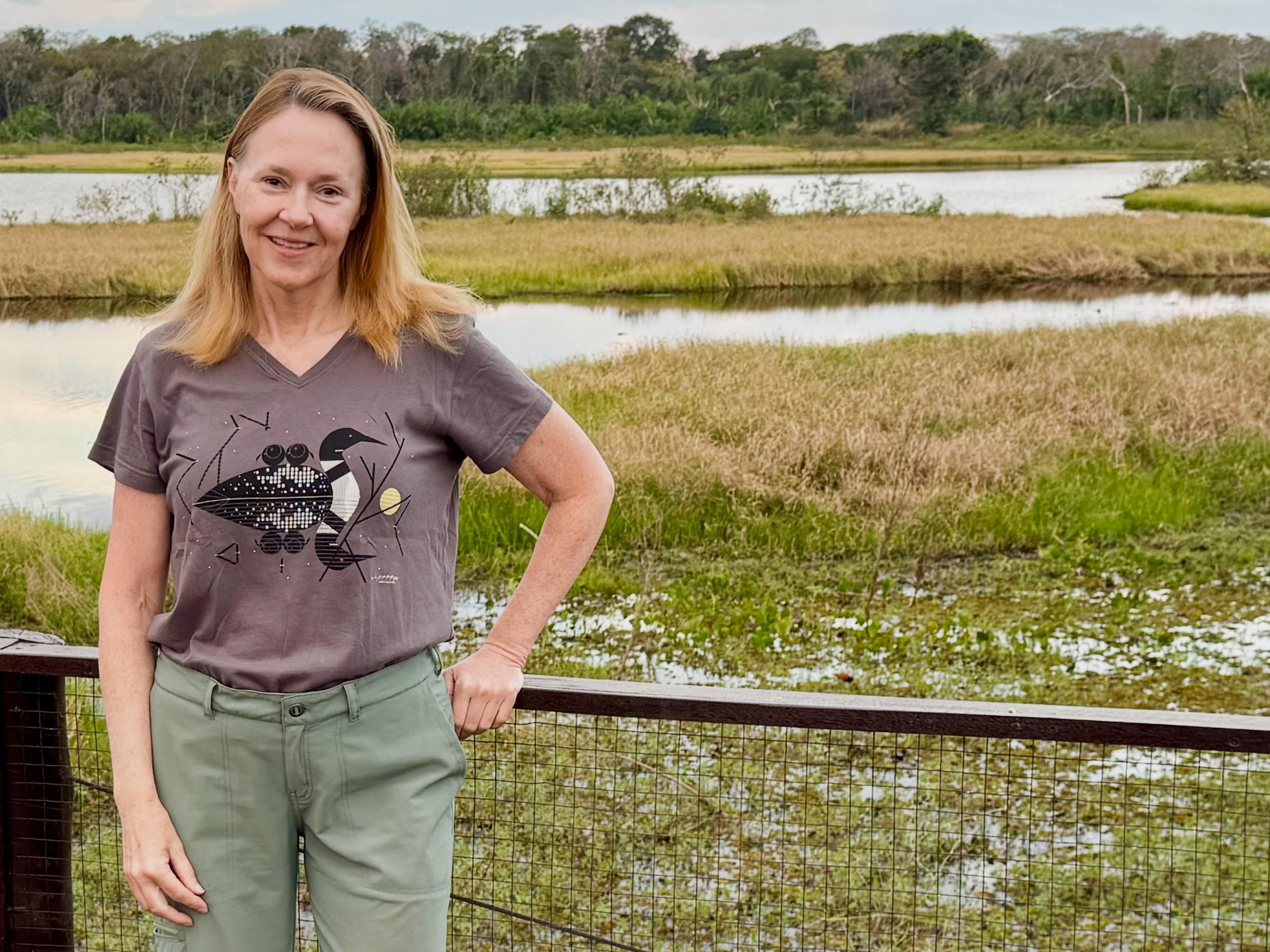
Heidi Lesinski, who is now on the Board of Directors of the Blue Ridge Wildlife Center, was introduced to the center years before when she found injured baby birds while living in Rappahannock and brought them to the center. (Photo/John Lesinski)
Today, Lesinski serves on the Blue Ridge Wildlife Center’s Board of Directors, helping give voice to the nonprofit.
“When there’s a call from the wild,” she said, “I guess you have to answer it.”
Saving injured animals
Overseeing the summer surge is Executive Director Annie Bradfield, who seems unruffled by the constant stream of patients.
Bradfield was 9 or 10 years old when she staged her first wildlife rescue. A groundhog was helping itself to her grandparents’ garden. Her dad said he’d “take care of it,” and by that he meant he’d shoot it, she said.
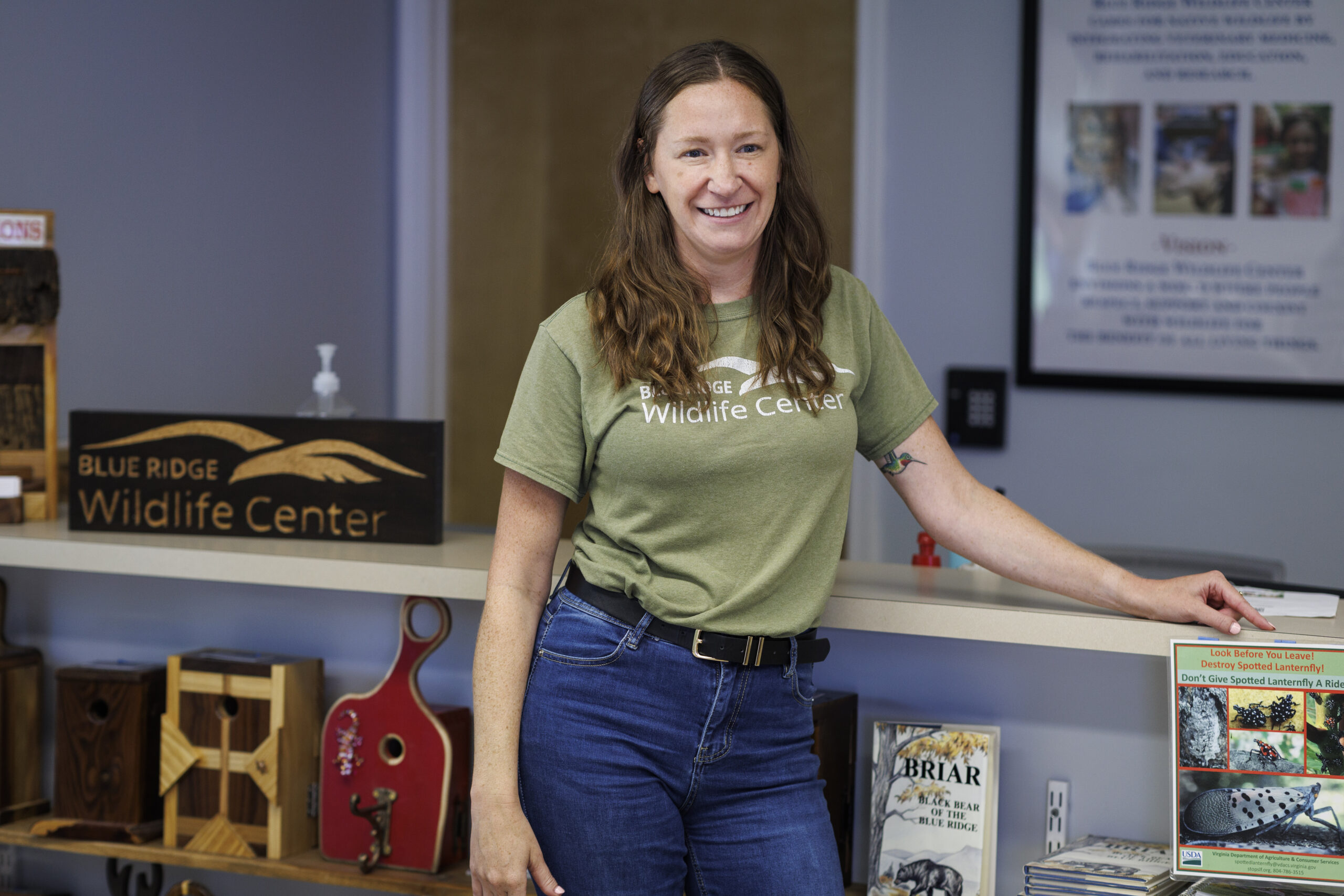
Blue Ridge Wildlife Center Executive Director Annie Bradfield at the reception desk of the nonprofit that treats 4,000 patients a year. (Photo/Luke Christopher)
“I climbed on the roof of the garage and threatened to jump,” she said. “He hasn’t shot one since.”
Decades later, she’s still standing between wildlife and potential harm.
That instinct grew into a career devoted to saving injured animals and changing the way people think about wildlife.
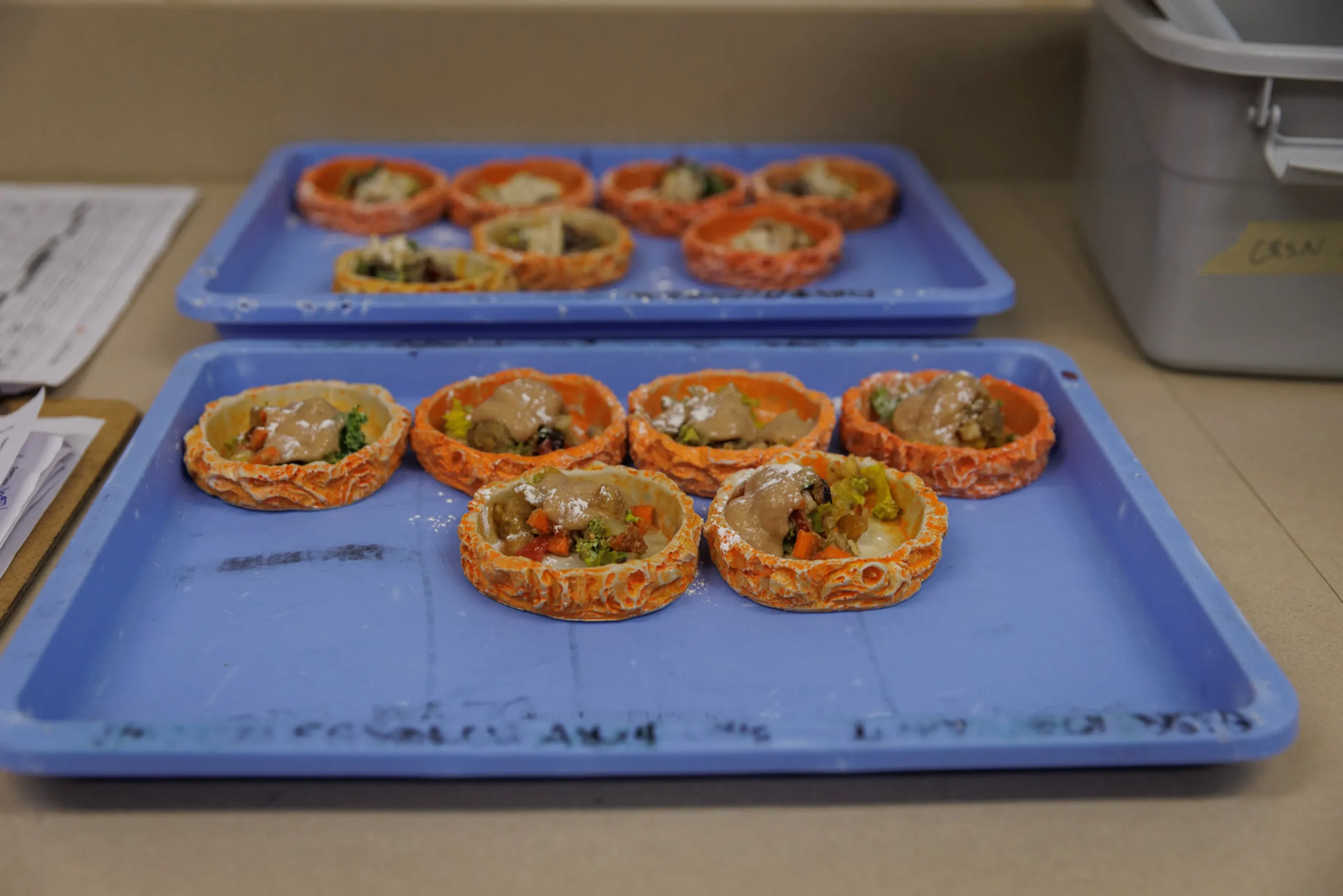
Each day a wide variety of species need to be fed. Each meal is carefully planned according to the age, condition and species. (Photo/Luke Christopher)
Releasing back to the wild
The center receives no government funding and operates solely through donations, half of which come from membership contributions. More than three-fourths of its annual support goes directly to programs.
Though wildlife medical care and rehabilitation are its most visible work, they only make up about half of the organization’s mission.
Staff conducts research on topics like tick-borne diseases, rabies, bird flu, West Nile virus and even COVID-19, all of which contribute to knowledge of zoonotic diseases, ecosystem health and wildlife rehabilitation.
The center also provides professional training that builds the wildlife workforce, annually hosting a dozen interns and fellows in veterinary medicine, rehabilitation and education. 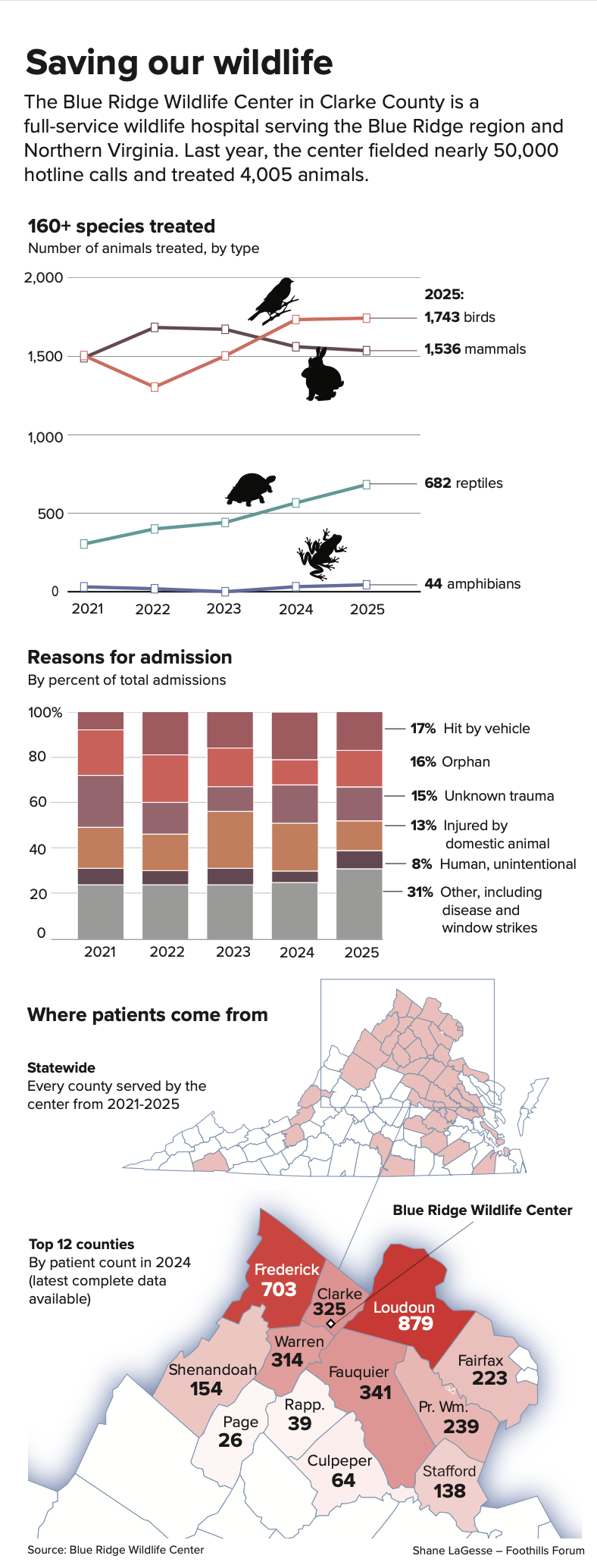
The injuries and ailments treated at the center are wide-ranging and often linked to human activity.
Wildlife are struck by vehicles, collide with windows, become tangled in garden netting or suffer from lead poisoning after scavenging animals killed with lead ammunition.
Outdoor cats attack birds and small mammals while lawn mowing can destroy hidden nests. Many orphaned animals aren’t abandoned at all; their mothers may be dead, nearby or displaced by well-meaning people.
And wildlife experiences extraordinary stress under human care, Bradfield said. “It’s like an alien abduction.”
Not all get to be released. Lesinski recalled memorable wildlife she’s met on her walk at the center.
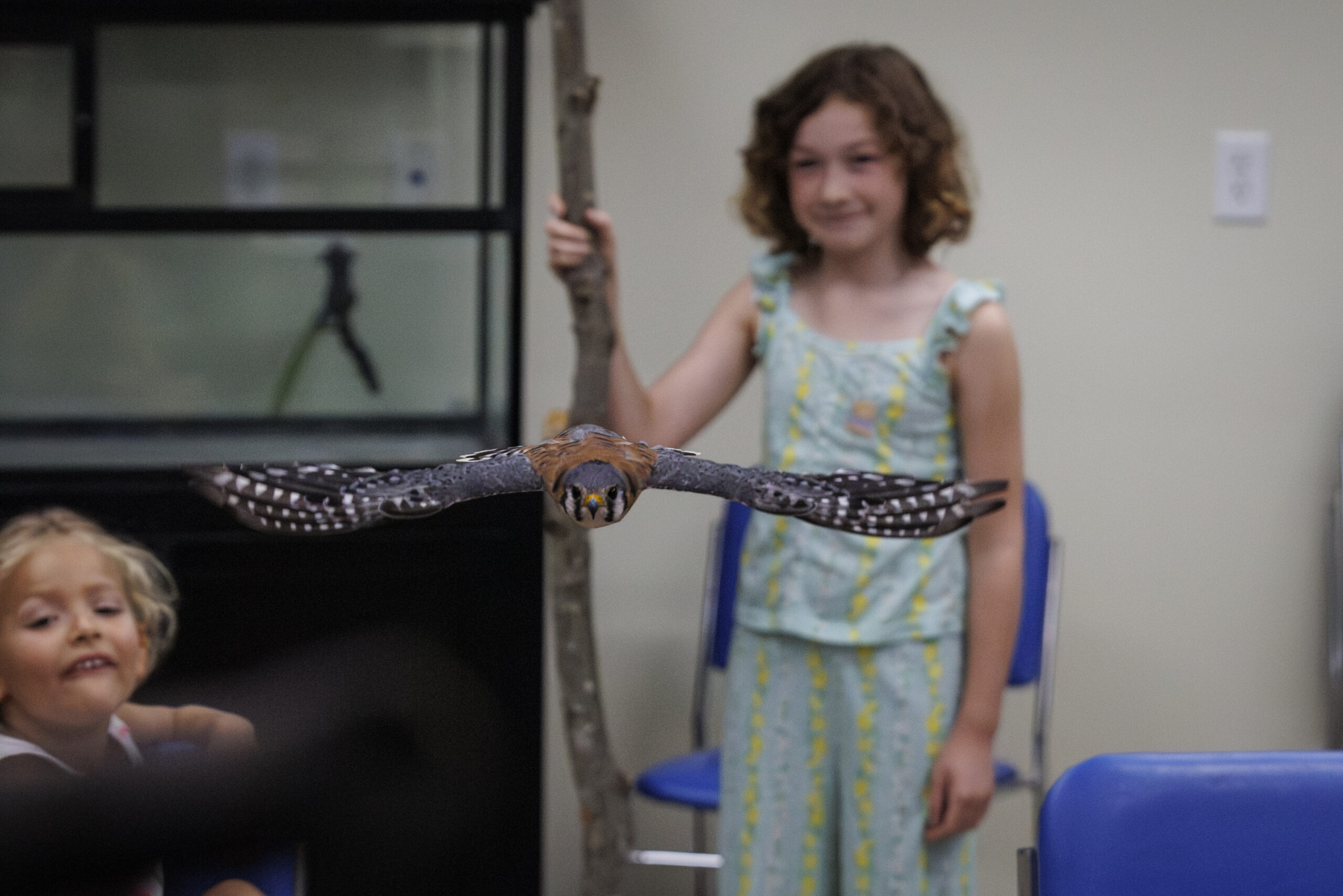
There was Kevin, an American kestrel who’d been swiped in Brooklyn by tourists who planned to take him home on an international flight; Bramble, a great horned owl who’d fallen from a nest at two weeks of age and been kept by humans during a critical stage of development; and a fox who’d been kept illegally and was nearly domesticated who required daily walks on a harness and leash.
Under the care of veterinarians and staff at the center, around 80% of mammals, reptiles and amphibians and 58% of birds that survive the first 24 hours of care are released back into the wild, according to the center’s data.
“We can’t save them all,” Lesinski said. “But we can save some, and we have to try.”
Those three baby rabbits — eastern cottontails — that arrived that midsummer morning were among the most challenging animals to rehabilitate with only a 50% success rate for rabbits injured in cat attacks.
But after a veterinarian developed a treatment plan, the palm-sized cottontails were among those saved. Two weeks later, they were fully healed and ready to return to the wild.
They were released into the deep green of the Shenandoah Valley where they quickly disappeared into the underbrush — exactly where they belonged.
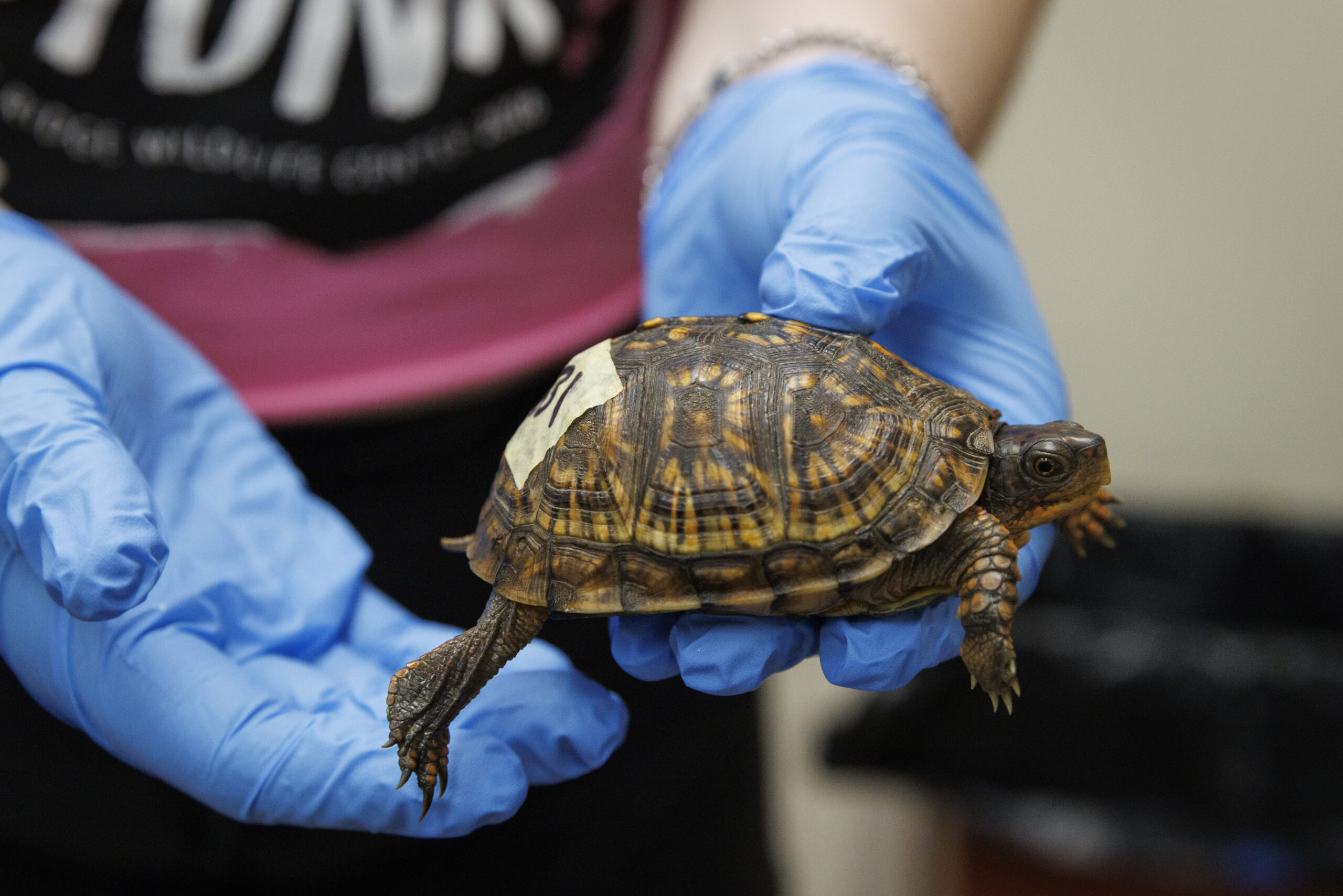
Maxwell Earle, a field biologist at Eldon Farms picks up a box turtle he found with an abscess on its neck.
Ways you can help wildlife
Keep your cat indoors. Free-roaming cats kill large numbers of native birds, mammals and reptiles. Keeping cats indoors protects wildlife—and keeps cats safer, too.
Use humane pest control. Avoid glue traps and rodenticides, which can injure or kill unintended wildlife, including predators and scavengers that eat poisoned rodents.
Don’t litter — even food. Apple cores, banana peels and other food tossed from vehicles attract wildlife to roadsides, increasing the risk of vehicle collisions.
Make windows bird-safe. Window collisions kill hundreds of millions of birds in the U.S. each year. Properly placed window markings, screens and other treatments can help prevent strikes.
Garden with native plants. Native plants provide the food, shelter and habitat that local birds, insects and other wildlife rely on.
Hunt without lead. Even tiny amounts of lead can be fatal to wildlife. Non-lead ammunition helps protect eagles, vultures and other scavengers that feed on remains left in the field.
Keep dogs leashed. Dogs can injure wildlife, disturb nests and separate young animals from their parents—even when they’re simply curious.
Check before you mow or trim. Rabbits, turtles, ground-nesting birds and other animals can be hidden in tall grass and brush. Check the area before mowing, trimming shrubs or clearing vegetation.
Slow down for wildlife. Be especially alert around dawn and dusk, when many animals are most active. If you see one animal cross the road, watch for others that may follow.
Don’t assume a baby is abandoned. Young rabbits, deer, birds and other wildlife are often left alone while their parents forage nearby. A baby by itself doesn’t necessarily need rescuing.
Don’t feed injured or orphaned wildlife. Giving a wild animal food or water without professional guidance can cause serious harm. Blue Ridge Wildlife Center specifically advises people not to offer food or water to wildlife being rescued.
Don’t attempt a DIY rescue. Well-intentioned intervention can make an animal’s condition worse. Observe from a safe distance and get advice from a wildlife professional before handling or moving it.
Call before you rescue. If you find wildlife that appears injured, sick or orphaned, contact Blue Ridge Wildlife Center for guidance. The center recommends observing from a distance, noting the animal’s exact location and contacting a professional before intervening.
Source: Blue Ridge Wildlife Center
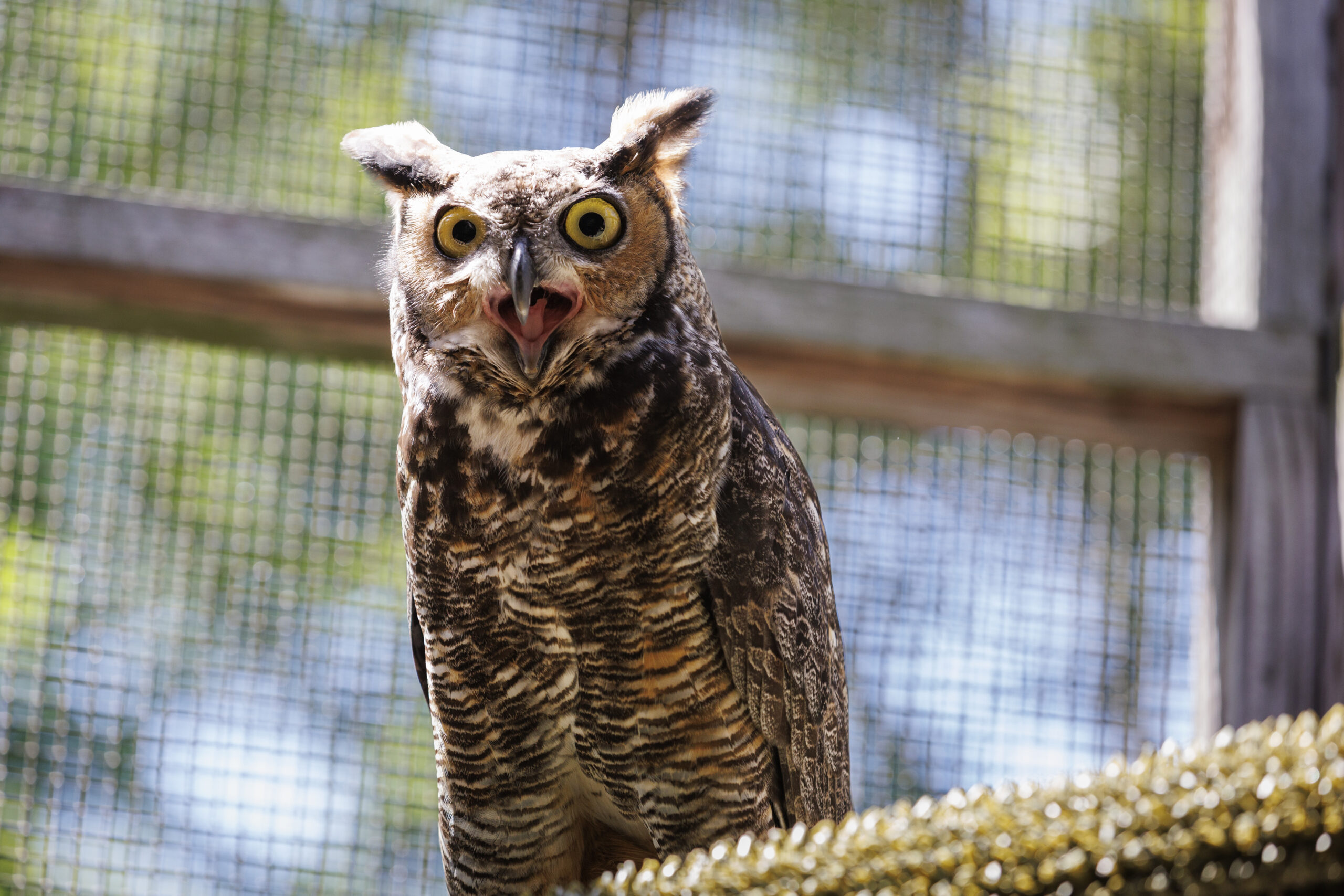
Bramble, a Great Horned Owl is one of the multiple ambassador species in the outdoor area.