

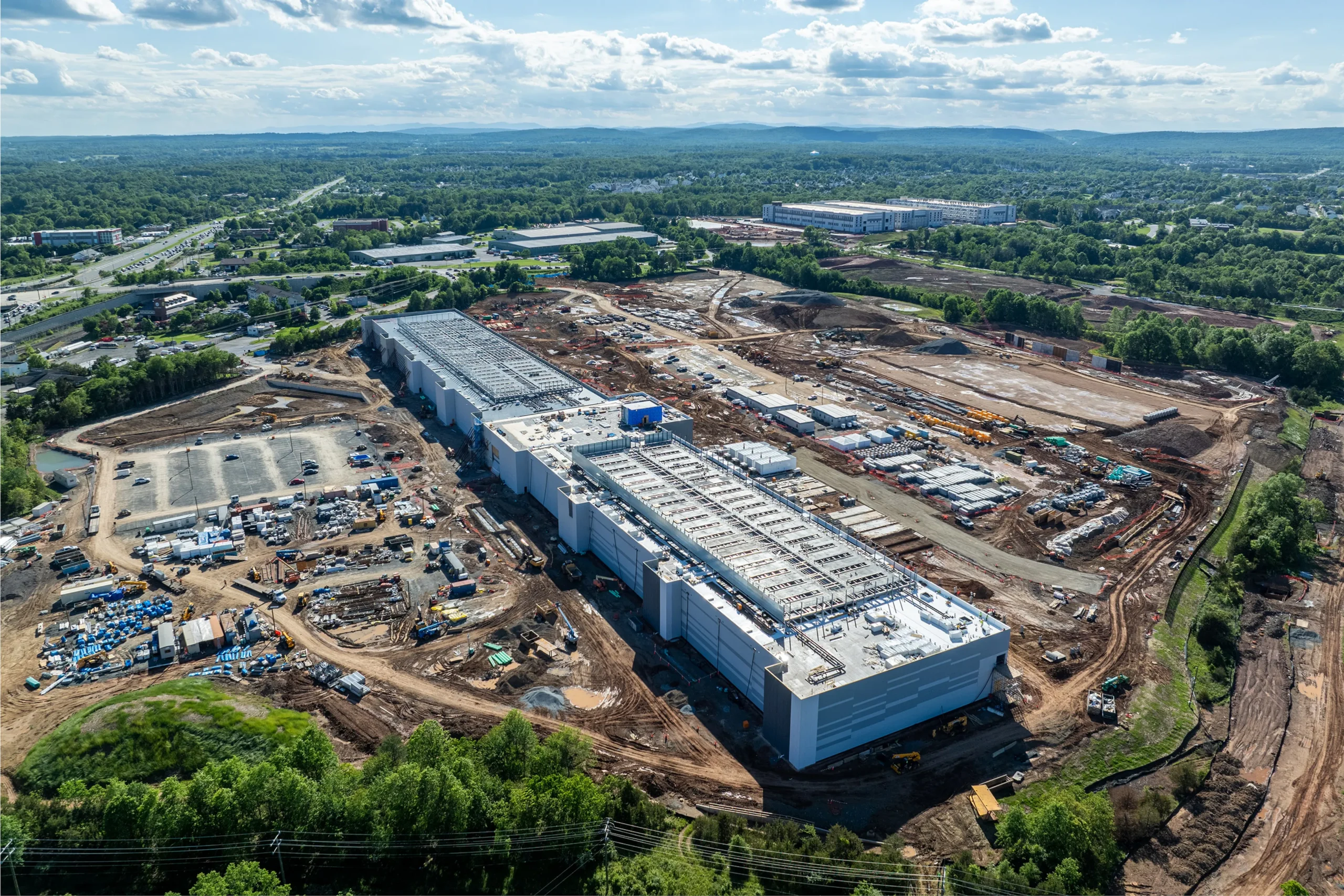
Speakers call for aggressive negotiation, local opposition and legal action
Lawyers and conservationists at the annual gathering of the Piedmont Environmental Council (PEC) Saturday urged communities to take a stronger stand against the rapid spread of data centers across Virginia, calling for both local opposition, and when necessary, legal action to lessen their impacts.
Keynote speaker Marion Werkheiser, a leading land-use and conservation attorney working at the cross section of conservation and development, called for protecting “places that matter,” from historic landscapes to culturally significant sites. She spoke to 400-some attendees at the gathering at Longwood Farm outside Warrenton.
Rappahannock resident David Aldrich, chairman of the PEC board, said that local communities should negotiate more aggressively with developers of large data center projects, seeking concessions that help offset demands on land, water and electrical power.
Virginia has become the world’s leading hub for data centers, the infrastructure that powers the rapidly growing artificial intelligence industry. About 400 are now operating in the state, most of them in the Piedmont, and another 200 centers have been approved or are in development.
Rappahannock County has made clear its intention to keep large-scale data center development at bay. Even so, it is not immune to the consequences including rising electricity rates, greater demands on water resources and the prospect of massive new transmission lines and substations to power the facilities in neighboring counties.
Aldrich characterized the prevailing mentality behind the push into artificial intelligence as “run fast and break things.” But he declared that the pattern of “leaving us with unmitigated damages must change.” He suggested that the technology giants building up AI infrastructure be required to help build “corridors of conservation” in the Piedmont to offset the spreading environmental intrusion.
Amidst the warnings, the speakers cited evidence of intensifying pushback. Chris Miller, PEC’s president, said that opinion polls “show a 45% swing in popular opinion” as citizens grow apprehensive, or outright opposed, toward artificial intelligence and the tech giants that are building it.
Werkheiser, providing further evidence, said that there are 78 jurisdictions around the U.S. that have imposed some type of moratorium or pause on data center construction, compared to just eight in 2025.
Werkheiser is the founder and chief executive of Cultural Heritage Partners, which provides legal, strategic and policy advice to communities facing loss of land, habitat and history. She explained that her work builds on two crucial laws that provide communities the tools to challenge powerful political and financial interests when development projects imperil landscapes and cultural legacies: the National Historic Preservation Act and the National Environmental Policy Act.
Critics, including senior officials in the Trump administration, have argued that the application of the two laws have unnecessarily slowed development, and have called for streamlining AI infrastructures by minimizing opportunities for public participation.
Miller cited reports that FBI officials “are investigating people who complain about data centers.”
Werkheiser argued that blocking every development project isn’t the goal. Instead, she said, the objective would be “to make responsible development the path of least resistance.”
She called on communities to form coalitions and partnerships before there’s a crisis. When major projects surface, she advised conservationists to pose two questions: “At whose consent? At whose cost?”
Miller told the group the 775-acre Longwood Farm epitomized the careful creation of “corridors of conservation” that PEC advocates. But, in light of the data centers’ voracious demand for electrical power, he pointed to the gently rolling farmland and asked, “Can you imagine building a transmission line through this farm?”