

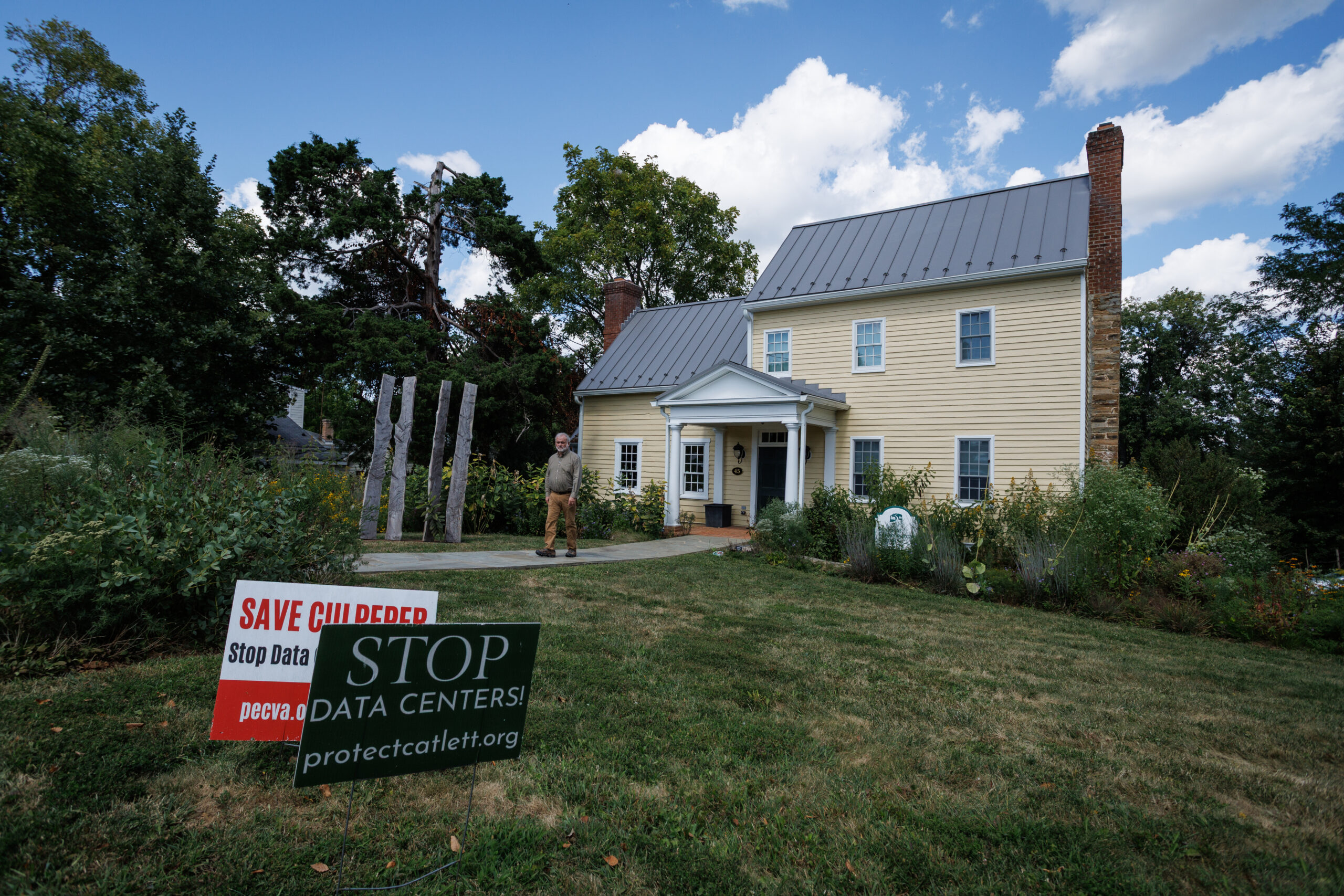
Virginia’s love affair with data centers is experiencing turbulence. The chief disrupter isn’t a wave of angry neighbors or land conservationists, but L. Louise Lucas, a determined 82-year-old Democratic state senator from Portsmouth, Va., who has pledged to undo a $1.9 billion tax break that helped entice the tech giants to plant some 600 centers in the state.
The General Assembly is crunching through a contentious budget negotiation this week, and one of the burning debates is the tough faceoff on the data center tax break. Many think the issue will require more time to sort out.
But even in a drawn-out budget impasse, many expect Lucas — the first woman and first African American president pro tempore (a Latin word meaning “for the time being”) of the Senate, and first African American to chair the Senate Finance and Appropriations Committee — to score at least a partial victory.
John McCarthy, Rappahannock’s former county administrator and the Piedmont Environmental Council’s (PEC) senior advisor and director of strategic partnerships, likens Lucas’ hold on Virginia fiscal matters to the influence of the Strait of Hormuz on energy prices.
“Louise Lucas is the gateway through which all significant fiscal policy passes,” he said, adding that on ending the tech companies’ tax break, “Lucas isn’t budging even a little.”
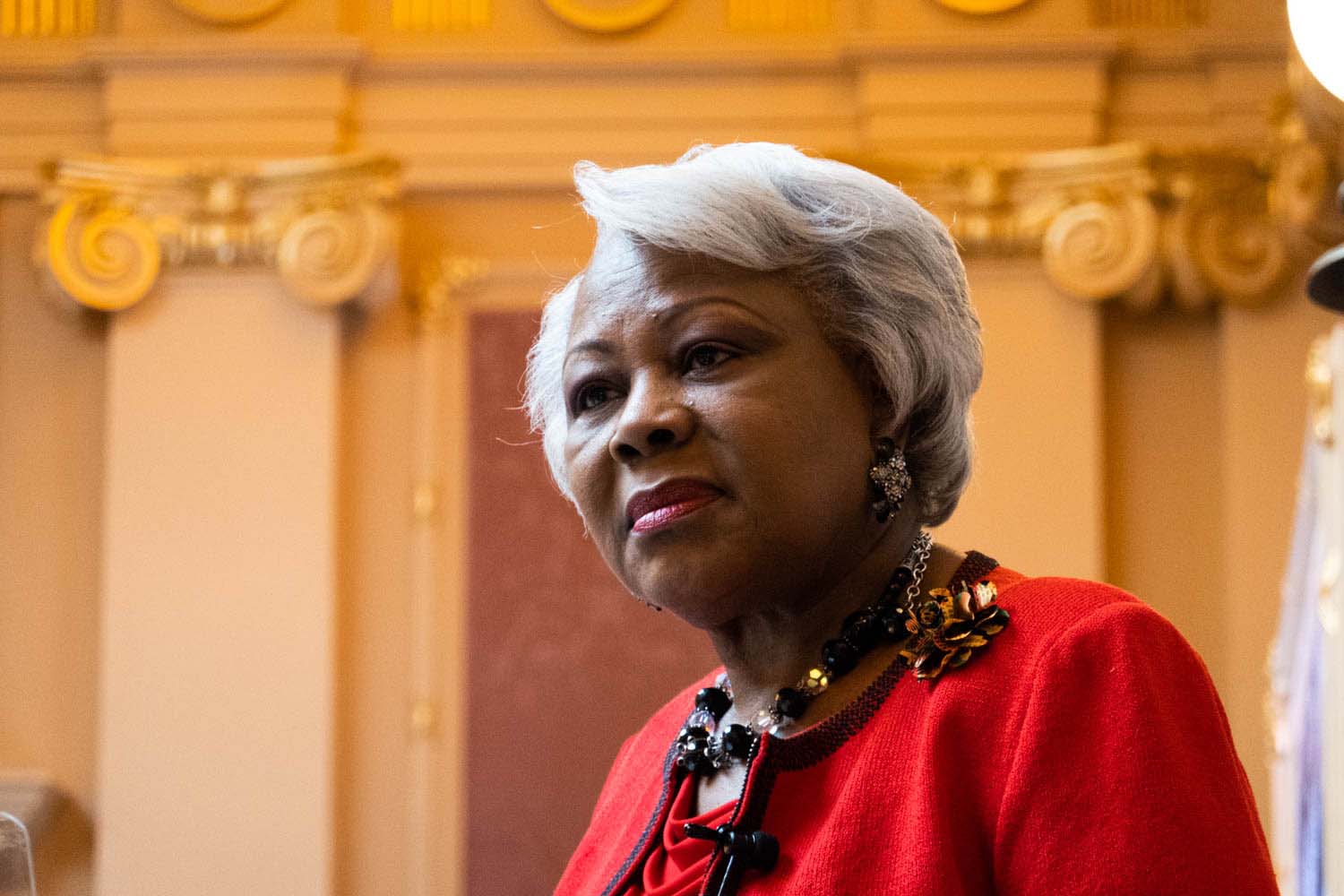
Virginia Sen. Louise Lucas, D-Portsmouth, opposes a data center-friendly tax break. (Photo/ Ned Oliver/Virginia Mercury)
Enticing tech giants
More than a decade back, when Virginia set out to attract businesses that would build the American prowess in artificial intelligence, the state promised companies an exemption from sales and use taxes for a range of investments made after July 2015. These include investments for computer equipment and software for processing, storage, retrieval or sharing data and also servers, routers, chillers and backup generators.
As the data centers proliferated under the tax break, the revenue losses for the state ballooned. Last year, state estimates show a loss of $1.6 billion for the state in sales taxes, plus another $300 million for local governments, which take in a portion of state sales taxes.
Lucas calls the enticement “a $2 billion handout,” rounding up the official $1.9 billion estimate of the revenue loss. During recent Senate deliberations, she said that if the tech giants paid the full sales and use taxes, which range from 5.3% to 7%, “We can invest in our workforce, K-12 education, higher education, all modes of transportation, and backfilled social assistance from Trump’s draconian cuts.”
Stakes for Rappahannock
Rappahannock County, fiercely protective of its low-density agricultural landscape, has the clear intention of blocking data center projects. Meanwhile, counties that welcome the investments, particularly Loudoun, put up with noise, environmental disruptions and obstructed viewsheds. But these counties take in hefty tax revenues — notwithstanding the sales and use tax break — so that data centers help them cover expenses such as school costs and public safety.
Rappahannock sees none of these direct tax benefits, but the county is economically affected by the data centers’ need for massively expanded electrical power, which is igniting jumps in electricity rates, along with proposals for towering transmission lines.
The state’s loss of sales tax revenue from data centers also hurts Rappahannock, whose Board of Supervisors is struggling to cover crippling increases in school employees’ health insurance, plus the costs of major capital projects, such as the planned new courthouse.
The state of Virginia is the second largest source of county revenue, exceeded only by general property taxes, the largest single contributor to the county budget. For the fiscal year beginning in July, the state of Virginia would provide 24% of the county’s proposed $36 million budget. (This contribution is spread across multiple programs.)
While county officials applaud the support from the state, they point out that year after year, the state falls short of what the county — particularly its schools — hopes to pull in. Lucas is arguing that by ending a tax break that advantages some of the largest corporations in the world, the state would be in a better position to support the diverse needs of its residents.
Disagreement reigns
Not everyone agrees. Virginia’s House of Delegates has opted to leave the tax break in place, and Gov. Abigail Spanberger remains cautiously uncommitted on the proposed rollback. She has cultivated a record of operating as a centrist, embracing growth and investment in the state. By reversing a tax break extended to an important industry, she could imperil her image as a business-friendly Democrat.
Senate Republican Leader Ryan McDougle views it as a matter of trust. Having made a promise to the tech companies, he argued during a debate, Virginia should “live by it.” Sen. Mark Obenshain (R-Page County, Harrisonburg) disdained Lucas’ rollback proposal as part of a larger “build absolutely nothing” program.
Chris Lloyd, a senior vice president of McGuireWoods Consulting, recently told a data center conference that because 37 other states have adopted tax breaks similar to Virginia’s, the state would put itself at a disadvantage if it dumped the arrangement. He argued that Virginia should depend on taxing a company’s final product, not its purchases of equipment and software to create that product.
But other businesses whose profits are taxed, are required to pay their sales taxes. Sen. Danica A. Roem (D-Prince William), who backs Lucas’ proposed rollback, has argued, “If you want to operate here, you’ve got to play by the same rules that everybody else does.”
Lucas has dismissed warnings that ending the tax break would drive tech companies to other states, arguing that companies are unlikely to dismantle data centers they’ve already constructed. She and others also point out that as the epicenter for data centers, Virginia offers an operating advantage arising from proximity to other data centers.
Formidable opponent
By any estimate, Lucas has a history of accomplishing things. In 1971, she completed an apprentice program at the Norfolk Naval Shipyard, becoming its first female shipfitter.
Entering politics in 1984, she has racked up a succession of “firsts.” Before becoming the first woman and first African American to hold the position of president pro tempore and the first African American to chair the Senate Finance and Appropriations Committee, she became the first African American woman elected to the Portsmouth City Council. Winning a seat in Virginia’s Senate in 1992, she has served 10 terms.
The burning question now is whether she will become the first Virginia lawmaker to dent the influence of big tech companies, whose data centers line ever more corridors of the Piedmont landscape.