

Teachers: Culture changed, no longer “family’ atmosphere
School officials: Routine turnover, retirements, better pay elsewhere
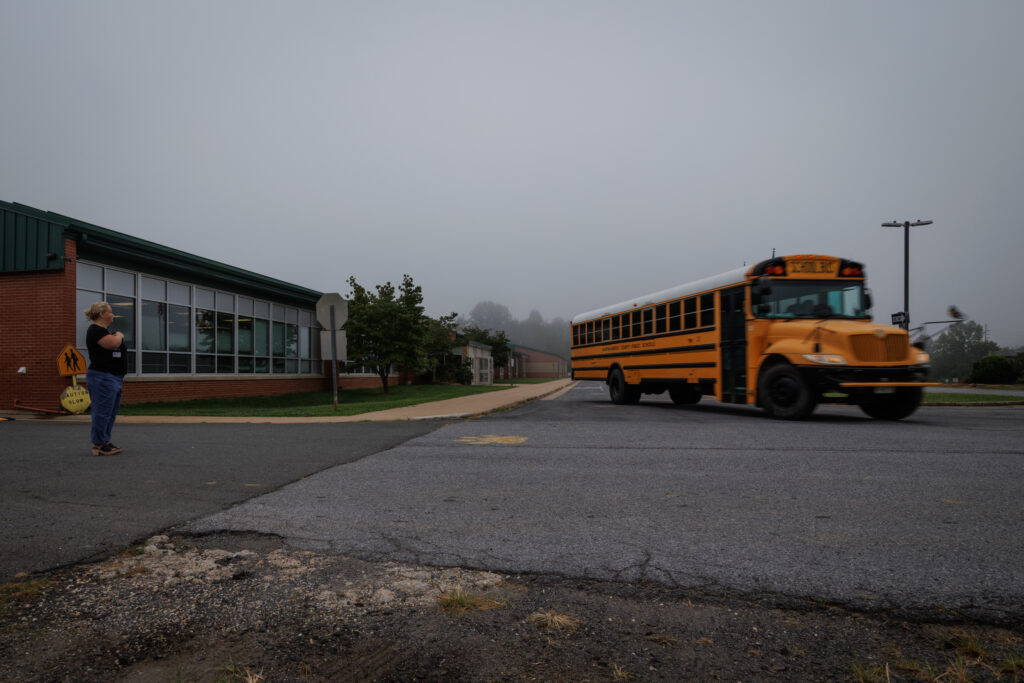
If the hallways of Rappahannock County High School could talk, they’d tell of an exodus of almost half of the teachers and aides by the beginning of the school year, driven in large part by an atmosphere that had “always felt like a family” and then didn’t.
The departure seemed to hit the administration by surprise and was “disappointing,” school officials said.
Fourteen teachers and three aides left either during the last school year or after it ended, amounting to about 50% of classroom employees, according to school data. That’s more than double what it was the previous year. Typical teacher turnover ranges from 10 to 16%, according to the National Center for Education Statistics. The teachers’ exit left the administration in a hiring frenzy to fill the positions which it finally did.
Why the large turnover? The explanation depends on to whom you talk. Superintendent Shannon Grimsley and Mary Jane Boynton, who was hired as the school’s principal in the summer of 2024, explained that some teachers left to make more money elsewhere, others for health reasons. Some retired. Others got out of teaching.
But interviews with a half dozen teachers who left, plus others still at the school, tell a more complex story. They asked not to be identified due to the sensitivity of the issue. While those who left acknowledged that they had other reasons for not returning, such as higher salaries, they also cited what they felt was a changed environment at the school, that it had lost a sense of community that made it a fun place to work. Otherwise, they said, they wouldn’t have left when they did.
“It’s not so much I wanted to leave, but nothing was enticing me to stay,” said one longtime teacher who chose not to come back. “I really enjoyed working with the students. I loved being part of that community and I’m seriously going to miss that. But it wasn’t the same place.”
Retaining teachers is one of the biggest challenges not only in Rappahannock but in education today, one that school districts have been struggling with for years due to low pay, burnout from heavy workloads, greater online teaching demands, more student behavior and mental health issues.

RCHS principal Mary Jane Boynton in the early hours of the first day of school in August, a trying time with school administration having had to deal with a turnover of nearly 50% of teachers and aides. Boynton said she was surprised when so many teachers decided not to return for the 2025-26 school year. (File photo/Luke Christopher)
A matter of principal
When Boynton interviewed for the principal position during the summer of 2024, a number of the teachers who are no longer there remember being impressed. “One of the things that struck me in her interview was that she talked about how her plan for this first year was just to observe and take everything in,” the longtime teacher recalled. Another agreed: “Yes, it was, ‘I’m not going to make any changes. Everything is awesome.’”
Boynton also had experience as a principal of two middle schools in the Prince William County Public Schools district, and there was hope that she would bring stability to the role at Rappahannock’s high school, which has had five principals, including Boynton, in the past 10 years.
But several of the departed teachers contend that things in the school started changing quickly, some involving rule changes for students, such as putting more restrictions on where they can gather on the campus, but most notably the replacement of assistant principal Karen Sanborn. A number of those interviewed said that really caught them by surprise, given Sanborn’s long association with the school.
A Rappahannock native, Sanborn had attended high school there, then taught at the school for more than 20 years, and most recently served as assistant principal for five years. When Sanborn returned from vacation at the beginning of the school year, she was told that the requirements of the assistant principal position were changing, that it would also include the role of career and technical education coordinator. Boynton gave Sanborn the opportunity to reapply for her old position, but lacking the newly required experience, she chose not to. Instead, Jodi Place, who had been on Boynton’s staff in Prince William, was hired.
“When I saw what happened with the Karen Sanborn situation, I started to have a bad feeling,” said one of the former Rappahannock teachers. “If you’re new in a community, something like that isn’t going to win the good graces of the community.”
For her part, Boynton remembers things differently. “People can read things the way they want, but we didn’t make significant changes.”
The departure of Assistant Principal Karen Sanborn, who taught at RCHS for more than 20 years, and was replaced by someone on principal Boynton’s staff from her former school, didn’t sit well with some of the teachers, one of whom said it gave her “a bad feeling.” (File photo/Luke Christopher)
Feeling undervalued
According to those former Rappahannock teachers willing to talk about the past school year, their relationship with the high school’s new administration didn’t improve. (Several others chose not to discuss it due to concerns about potential consequences, or that they simply wanted to put the experience behind them.)
“We weren’t perfect by any means,” said one ex-staffer with a long history at the high school. “But it always felt like a family. We’ve had a lot of turnover in the administration at the high school during my time. But we adjusted and moved on. Like a family, we kept going. But this didn’t get better.”
A common concern expressed by those who left is that they felt Boynton and Place seemed more isolated, that they didn’t have the same level of interaction with teachers and students that sustained the sense of community in the school. Former faculty members felt their input wasn’t valued, and that their feedback on school issues was too often dismissed.
“You don’t have to take everyone’s suggestions, but you’ve got to make people feel like they have a seat at the table,” one former teacher said. “You have to make people feel like their experience at the school had some value. You don’t have to accept everything they say, but you have that dialogue. And I think a lot of us felt that was missing.”
Several who left said it wasn’t unusual for scheduled meetings between a group of faculty members and the administration to be cancelled, and some contended that negative comments were removed from a regular survey gauging staff morale. “The impression we got is that they didn’t really care what we said,” noted one former teacher.
Personal attacks
Boynton provided a very different take on her relationship with the faculty. “In our building leadership meetings, they were very much involved in the development of the school’s continuous improvement plan,” she said. “I mean, nothing was done without their input, and for the most part, we very much took their feedback to heart.
“What we didn’t take to heart was when people became personally insulting and attacked personal character through anonymous surveys,” she said. These were monthly feedback surveys submitted by teachers.
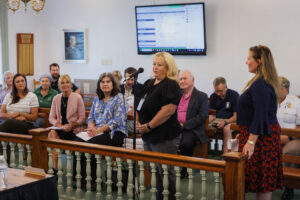
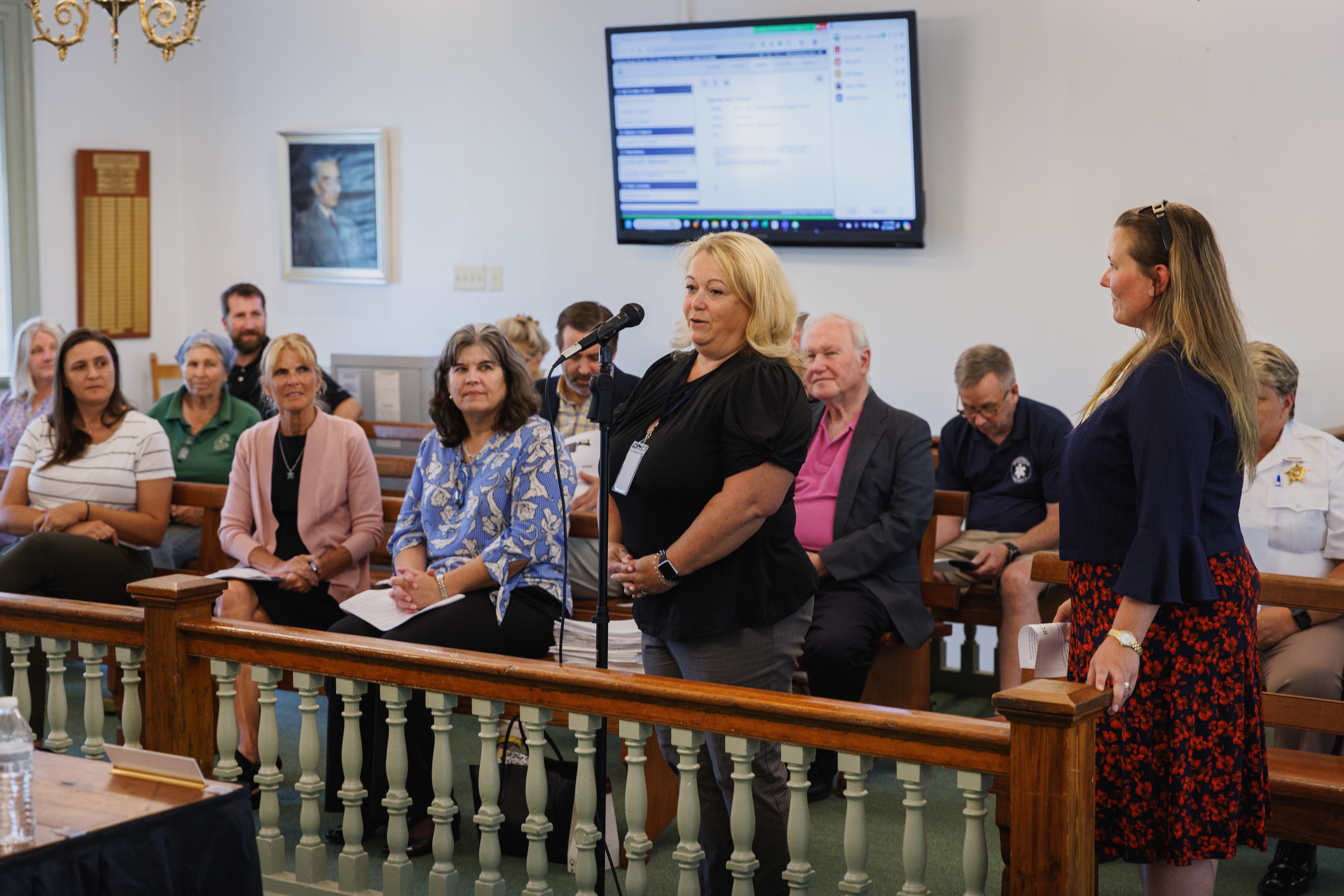
RCHS principal Mary Jane Boynton, who was hired in the summer of 2024, addresses the Board of Supervisors at a monthly meeting while Schools Superintendent Shannon Grimsley looks on from the right. Grimsley has often stated the school district is lucky to have someone with Boynton’s experience and ability at the high school. (File Photo/Luke Christopher)
Boynton’s impression is that any disgruntlement among the school’s faculty came from a “core group” who “were sharing their own version of life here at the high school,” adding that “a lot of it was personal attacks on me.” She believes that made it “very uncomfortable” for other teachers because her critics affected the mood in the building. “But,” Boynton said, “none of them ever came to me and had conversations directly with me about it.”
She also pushed back against suggestions that in an effort to slim the school’s budget, she hoped to get more higher paid faculty to consider other options. “The focus has never been to cut budget,” she said “The focus has been to make sure that the students in this community have the best possible opportunities they can have.”
Boynton said she was surprised when so many teachers decided not to return for the 2025-26 school year. “To be perfectly honest, when I was preparing the master schedule for this year, my plan included everybody who was here last year,” she said. “I did not ask, suggest or recommend that any of them not return. Those decisions they made themselves.”
Can a community be rebuilt?
Yet another perspective is that with her recent background in a much larger, less rural school district, Boynton came to Rappahannock with what one person described as a “different leadership style.” And while Boynton said she felt welcomed by the Rappahannock community, she acknowledged that she knew she was coming into a school with a long-standing faculty and a principal’s office that had been more of a revolving door.
For her part, Superintendent Shannon Grimsley has stood firmly behind Boynton, often stating that the school district is lucky to have someone with her experience and ability at the high school. Grimsley also reiterated that teacher retention remains a top priority at the school district and cited the Rural Education Achievement Community Health (REACH) ongoing survey that was launched recently to track teacher, student and parent attitudes.
“Honestly, the number of people leaving was disappointing. I’ve known and cared for many of those folks for 15–20 years, so anytime someone chooses to move on, it hits hard on a personal level,” said Grimsley. “That said, it’s also true that when a school goes through leadership changes — especially when expectations, structure and accountability shift — some people decide the fit isn’t right for them anymore. That happens in any organization. Still, losing that many at once is something we paid close attention to.”
She described Boynton as being “different” from previous principals. “She sets and holds expectations in a way that can feel like a big adjustment, especially in a small community where the culture has been shaped by the same people for a long time. But she is deeply committed to the success of our students and staff and to building a healthy, accountable school environment.”
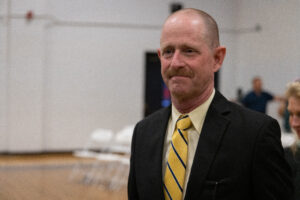
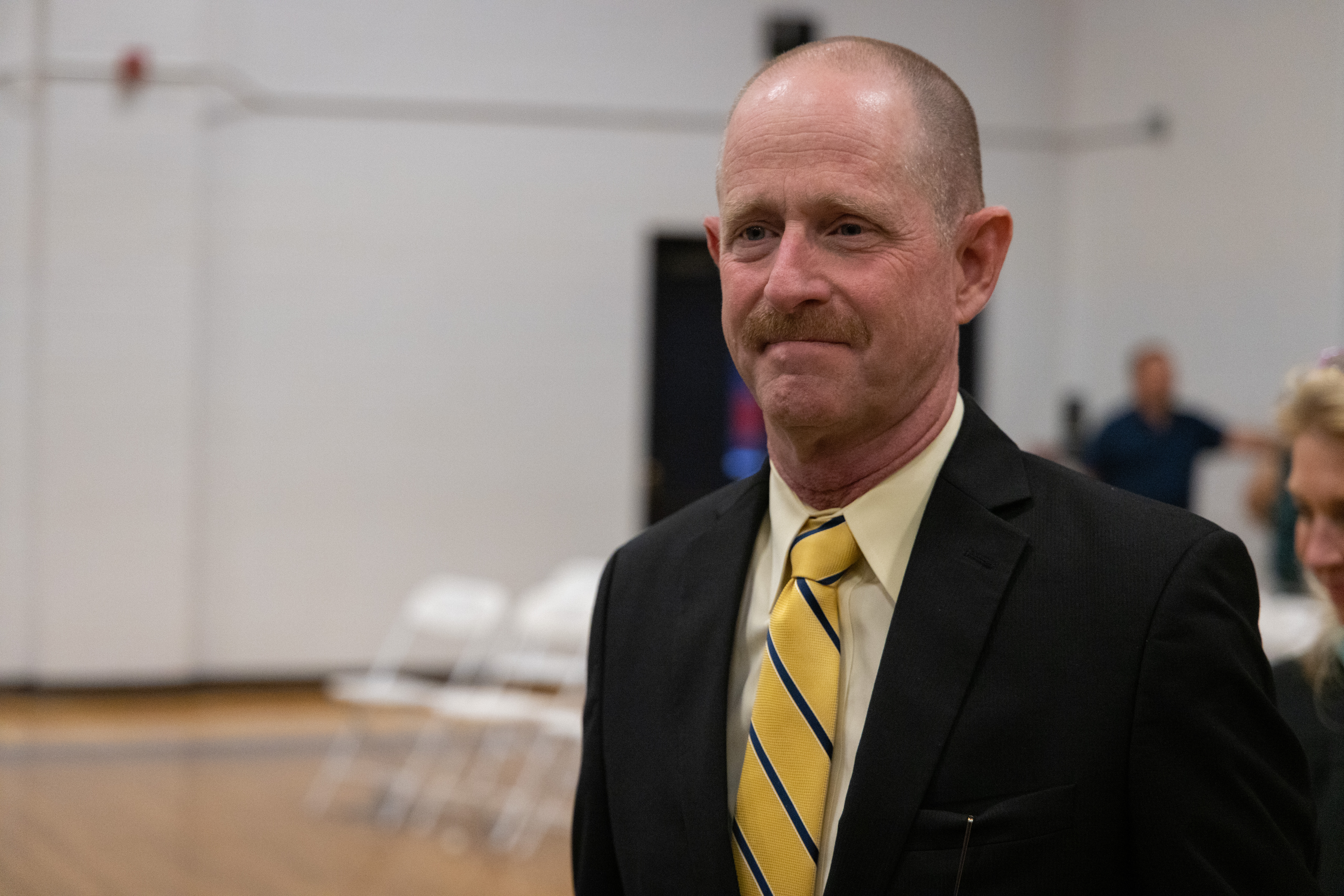
School Board Chair Wes Mills noted that when an organization brings in a new leader who wants to make changes, there will be people who disagree. “There were a few people poisoning the well,” he added. “That didn’t help.” (File Photo/Luke Christopher)
School Board Chair Wes Mills noted that when an organization brings in a new leader who wants to make changes, there will be people who disagree. “There were a few people poisoning the well,” he added. “That doesn’t help.”
Mills cautioned against a rush to judgment. “‘It takes years to develop trust, and takes years to see positive outcomes,” he said. “I think anybody who is reasonable waits and observes.”
One teacher who stayed but didn’t want to be identified said morale has improved this school year, albeit not dramatically. They’ve noticed that both Boynton and assistant principal Place are more visible in the hallways. The teacher also conceded, “People don’t like change. I understand that. Change is hard and it’s even harder if you don’t understand the rationale for it. If, from your perspective, it seems that things have been fine, any change can seem like a step backward.”
But this person suggested that it’s a reach to believe that all the teacher turnover was due to so many people making big career decisions at the same time. “You don’t get an exodus like that because we don’t pay our teachers enough. You can’t say it’s all a coincidence.”
Right now, the teacher said, it seems like the school has two different faculties — the newcomers and those who were part of the old community. “We pride ourselves on being a family, and the relationships that built this school community did not happen in 10 months. You’re not going to have the rapport, you’re not going to have the trust. I hope I’m wrong but I think it’s going to take years to rebuild that.”