

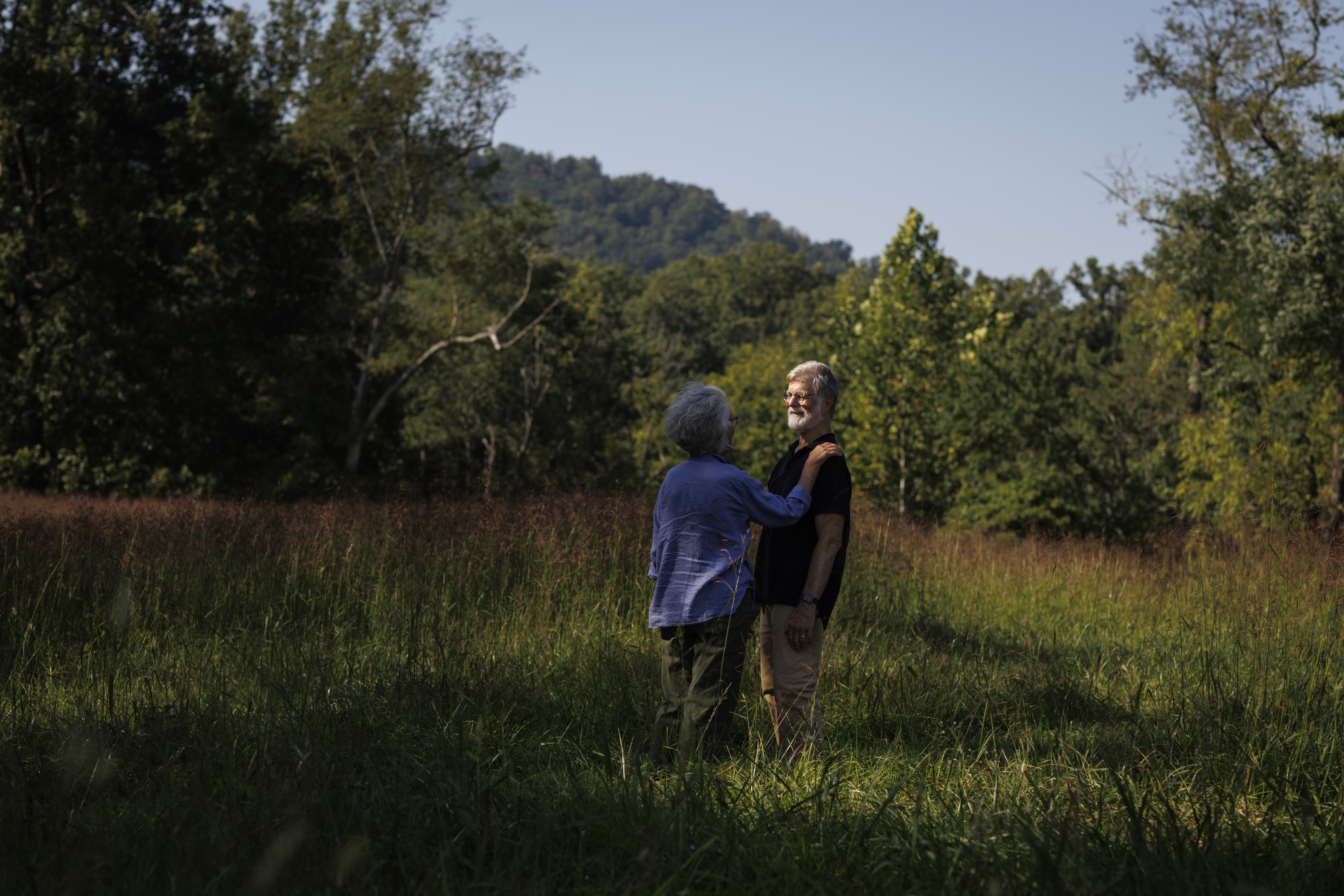
A soft breeze moves through the flower gardens surrounding Howard Coon’s Castleton home. Late afternoon sunlight falls on lilies, coneflowers and greenery that his wife, Jules, spent decades nurturing.
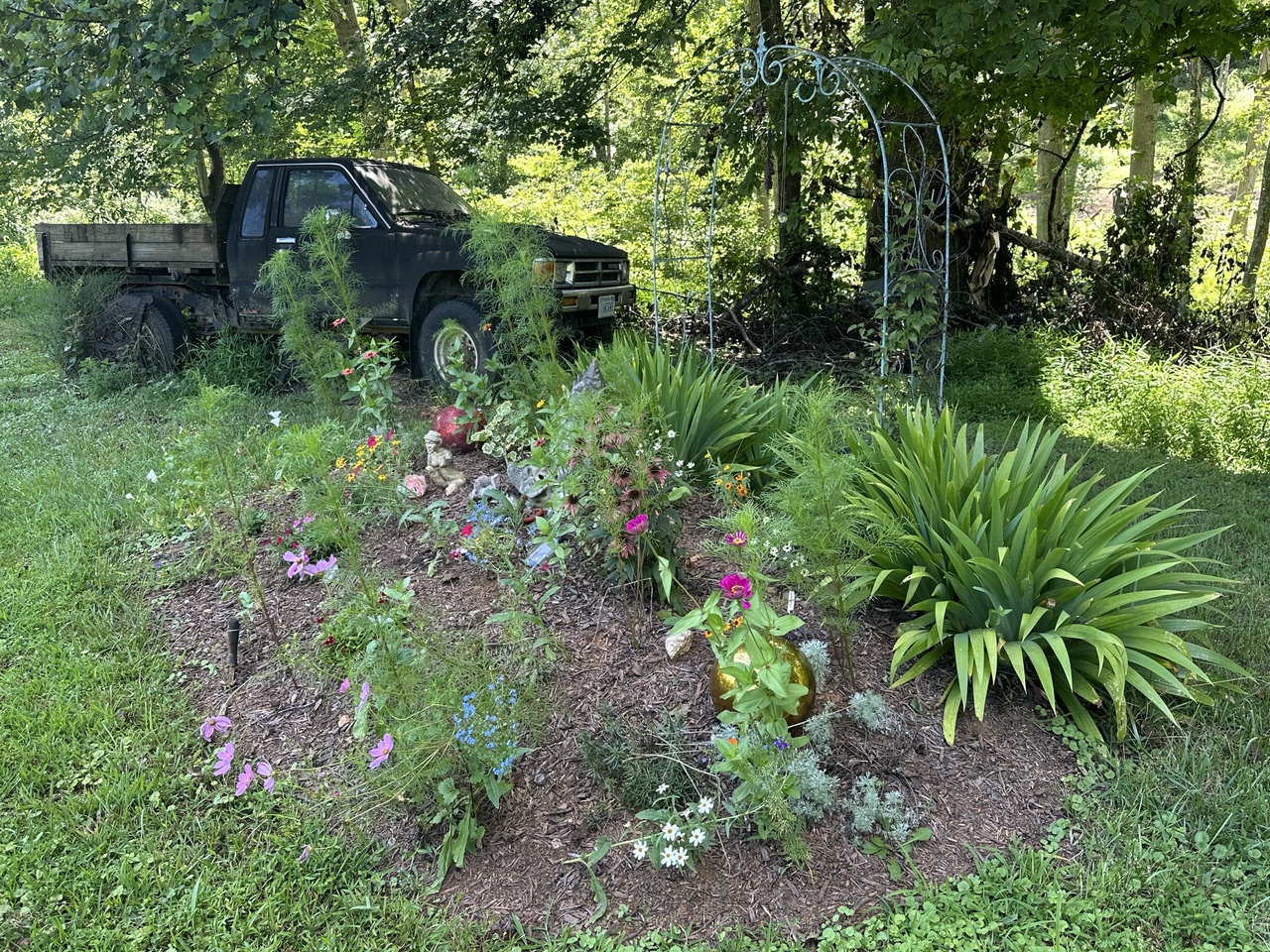
Wildflowers now grow above the spot where her family wrapped her in cotton cloth, carried her down a hill and gently laid her in the earth. A small Buddha rests among the flowers along with theatrical masks, perfume bottles and other mementos of Jules’ life.
“She wanted to go back to her flowers,” Coon said. “She wanted to go back to nature as quickly as possible.”
When Jules died, her family bypassed conventional burial rituals — no embalming, casket or concrete burial vault. After a funeral home refrigerated her body for four days, her daughters brought her home, bathed her with essential oils and perfumes and wrapped her in colorful fabrics she had collected.
“I think it’s both a letting go and, at the same time, a way of holding on,” Coon said. “With her grave right on the property, there’s more of a sense of continuity of spirit as I continue to process her passing.
“Biologically, chemically and emotionally, I think it’s the most wholesome way to help a loved one make that final journey,” he said.
The Coon family’s ceremony represents a growing interest in alternatives to conventional funerals and burials. From natural burial in biodegradable caskets or shrouds to home funerals and vigils, families are looking for ways to play a larger role in caring for the dead.
For many the question is: Can what happens after we die reflect the values that shaped our lives?
For Barbara Caceres of Flint Hill, the answer is yes.
“You want your death and the disposition of your body to have some consistency with how you’ve lived your life,” she said.
An avid gardener and composter, Caceres said avoiding embalming chemicals and returning naturally to the earth reflects the same values that have guided her life.
“The idea that you could use your body to regenerate — to nurture an oak tree — that feels like a living memorial,” she said.
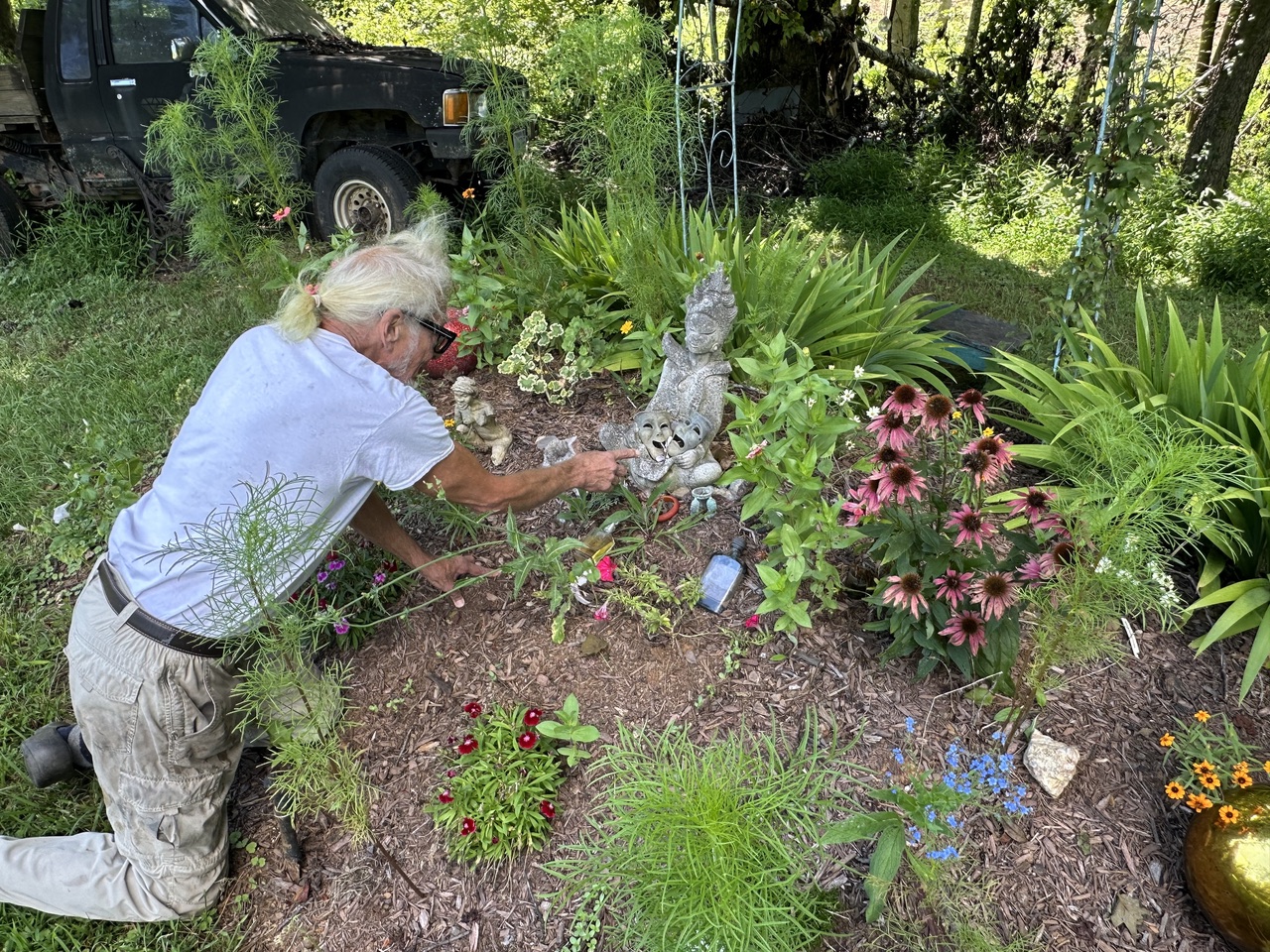
Howard Coon bypassed conventional burial and funeral rituals when he buried his wife Jules on their Castleton property among her beloved flowers and treasured possessions. “She wanted to go back to nature as quickly as possible,” says Coon. (Photo/Bob Hurley)
Range of options
Green burial has a range of options intended to reduce environmental impact. Bodies generally are not embalmed or cremated. Rather, they are buried in biodegradable caskets or shrouds in natural cemeteries or on private property.
While conventional burial and cremation remain most common, a 2026 National Funeral Directors Association survey found 61.4% of Americans — particularly millennials and Gen Z — are interested in environmentally friendly options.
Barbara Black participates in Rapp at Home’s “Ready or Not” project, where community members gather to discuss end-of-life issues.
“When we boomers started having babies, we brought childbirth out into the open — natural childbirth,” she said. “I think we’re doing the same thing with death … I think it’s healthy to be able to talk about it, really healthy.”
Black thinks a natural cemetery here would draw considerable interest.
“Many of us want to live out our lives and die here, and I think many would like to be buried here,” she said.
Virginia allows families to bury relatives on private property, subject to state and local requirements. Rappahannock County’s zoning ordinance does not require a permit, in most instances, although state siting requirements may apply.
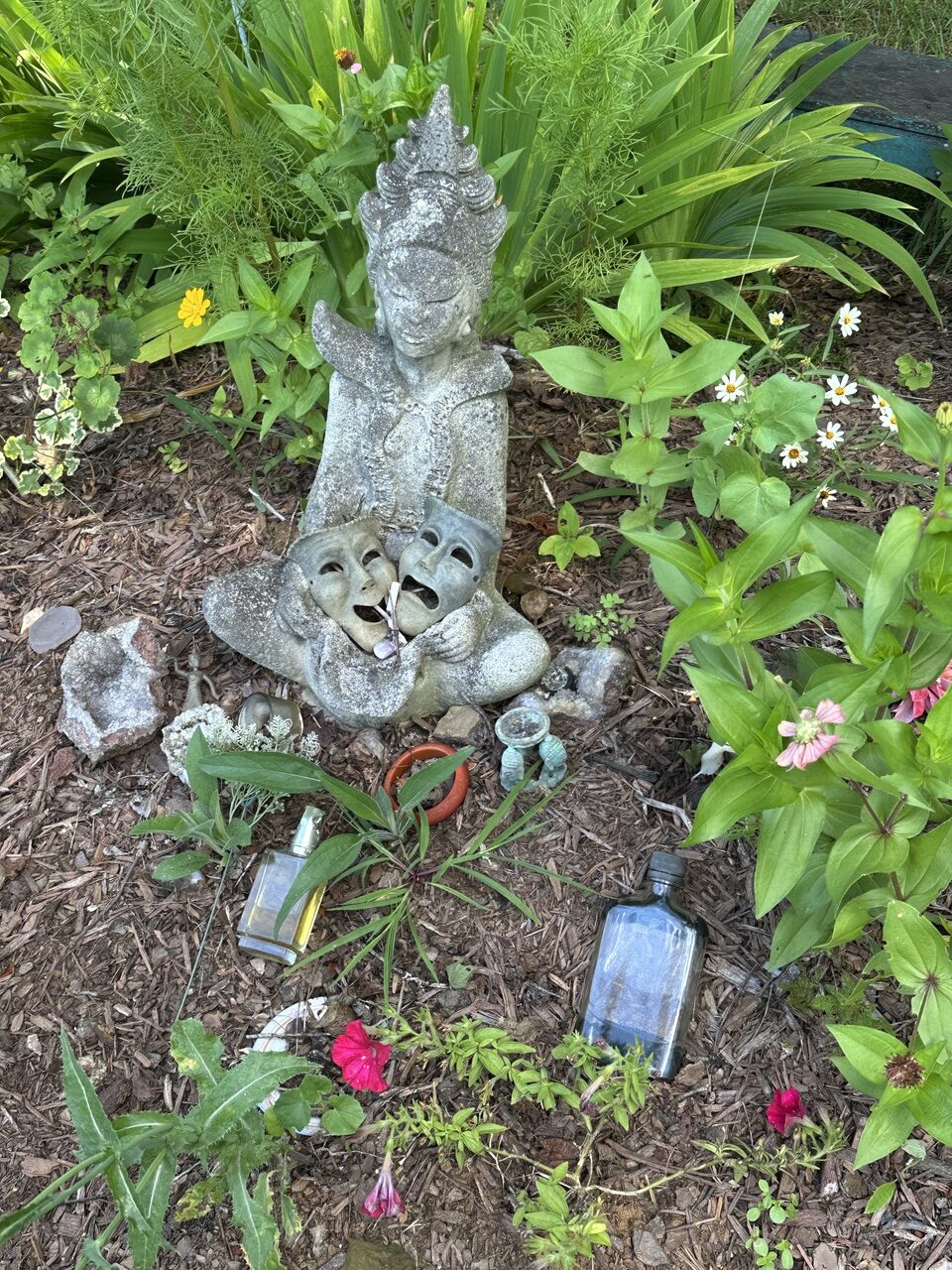
A small Buddha, theatrical masks, perfume bottles and other mementoes of her life rest among the flowers at Jules Coon’s gravesite. (Photo/Bob Hurley)
Natural cemeteries
If private land is not an option, several natural cemeteries are located in Virginia, including Cool Spring Natural Cemetery at Holy Cross Abbey near Berryville. Bodies cannot be embalmed and metal caskets and burial vaults are prohibited. Graves are marked with simple engraved stones taken from the cemetery grounds.
Demand has accelerated in recent years, cemetery staff said, estimating about 650 people have been buried there since it opened in 2012 and 1,300 burial plots sold.
Claire Cassel of Castleton and her husband, Derek, visited Cool Spring to explore their options.
“It was just the whole approach to death — putting your loved ones in a beautiful place that was peaceful,” she said. “It seems like you’re giving back to the earth.”
Walter Nicklin and his wife, Pat, are also considering Cool Spring where he has looked at a site overlooking the Shenandoah River he canoed as a boy.
“Having that connection is a big part of the appeal,” he said.
But the decision is not easy.
“I travel a lot,” Nicklin said. “I’ve got a daughter in France and a son in Australia. If I die in either one of those places, it would be hard to get my body back.”
Another drawback, he said with a chuckle, is the cemetery’s prohibition on alcohol.
“Whatever friends I have left may want to booze it up a bit as they send me off,” he said.
Human composting
Another environmentally oriented option is natural organic reduction. Commonly called “human composting,” it accelerates natural decomposition in a vessel using organic materials such as wood chips and plant material.
“The process is as old as the first organisms that died and decomposed on a forest floor,” said John Collins, a spokesman for Earth Funeral headquartered in Auburn, Washington.
“There’s no chemicals, no heat. It’s a completely natural and completely contained process,” he said.
Collins said that after 30 to 40 days, the remains become nutrient-rich soil that families can use to create memorial gardens, plant trees or share plants potted in the soil with loved ones.
Although human composting is not yet authorized in Virginia, Earth Funeral recently opened its first East Coast facility in Howard County, Maryland, serving families in the region, including Virginia.
Black said she and her husband, Matthew Black, have chosen the process for their final disposition.
“Human composting is a new, wonderful environmental choice to join the natural cycle and nourish the earth,” she said. “I think it’s great that people have choices, and this is the choice we have decided on.”
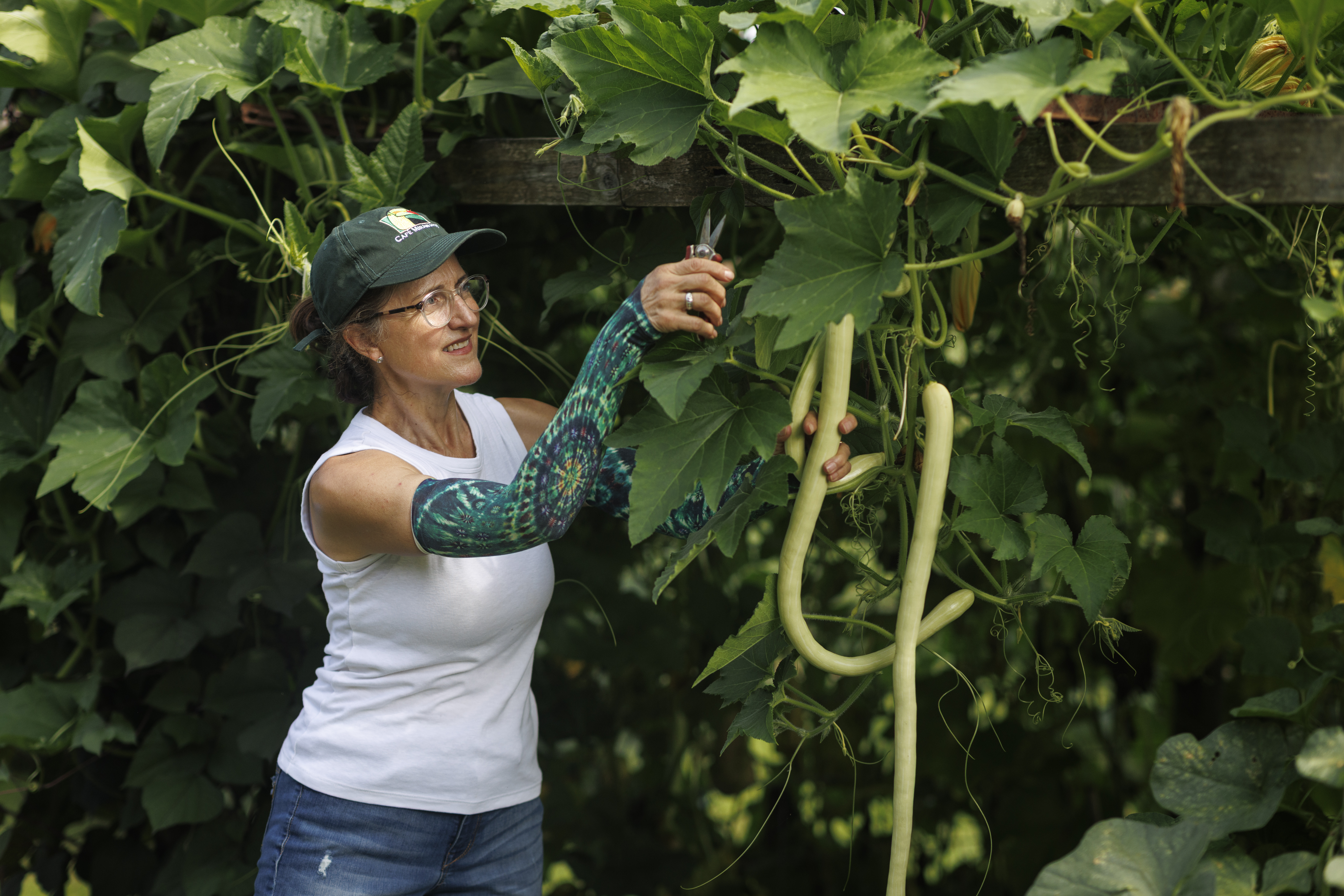
“Concrete vaults, heavy caskets, embalming and cremation all seem like ways to separate us from the natural cycle of life that applies to all living things. In both life and death I’d like to stay connected to that process we see all the time in the natural world, where death and decomposition gives way to rebirth and new growth,” said Caceres. (Photo/Luke Christopher)
Home funerals and vigils
For some, home funerals are less about rejecting funeral homes than returning to a time when friends and family played a deeper role in caring for the dead.
Susan Peterson of Huntly has participated in several home funerals and vigils in the county. When musician and playwright Julie Portman Reisler of Washington died in 2008, Peterson joined friends and family who kept vigil with her for three days, singing, reading and sitting beside her before she was cremated.
“She wanted to be at home and to be handled by people she knew and [who] loved her,” said her husband, Paul Reisler. “We sang to her for those three days. It was very beautiful.”
Peterson recalled other funerals here where neighbors and friends stepped up — one building a pine coffin, another digging a grave and others gathering to sing and comfort one another. “It’s not horrifying,” she said. “It’s not scary. It’s perfectly doable.”
That same connection to place shapes how Howard Coon thinks about his own death. He plans to be buried with Jules.
“I can’t think of any place I would rather stay than here with her,” he said.
Howard Coon among the lillies in his late wife’s flower gardens in Castleton. (Photo/Bob Hurley)
How to establish a family graveyard
Rappahannock County property owners can establish a family graveyard on their land in several zoning districts without obtaining a zoning permit, special exception or public hearing.
Under the county Zoning Ordinance, family graveyards are permitted by right in the following districts: conservation, agricultural, rural residential, residential, residential village and industrial.
According to Zoning Administrator Michelle Somers, there are no additional county regulations specifically governing family graveyards.
State law, however, restricts where graves may be located. A new cemetery generally cannot be established within 250 yards — 750 feet — of a residence without the property owner’s consent. Also, a cemetery or burial cannot be located within 300 yards of property containing shallow, driven wells used for a public water supply.
Private drinking-water wells are treated differently. Virginia Department of Health regulations primarily govern the permitting and construction of new wells rather than the siting of family graveyards. The state, however, can act if a burial poses a threat to a private well.
Property owners should contact the Rappahannock zoning office before selecting a burial site to confirm that the property’s zoning qualifies for a family graveyard. Non-church-related cemeteries are treated differently and may require a special exception.
Virginia law gives family members and descendants reasonable access to graves on private property, even after the property changes ownership. To ensure future access, families may want to document the graveyard’s location and boundaries in the property’s land records.