

Just 8 Rapp homes connected after 4 years
Will it meet Dec. 31 deadline?
Four years and $45.5 million into a nearly $100 million state grant to bring high-speed fiber internet to eight rural Virginia counties — just eight of the 1,435 homes targeted in Rappahannock have working service.
Rappahannock is hardly alone.
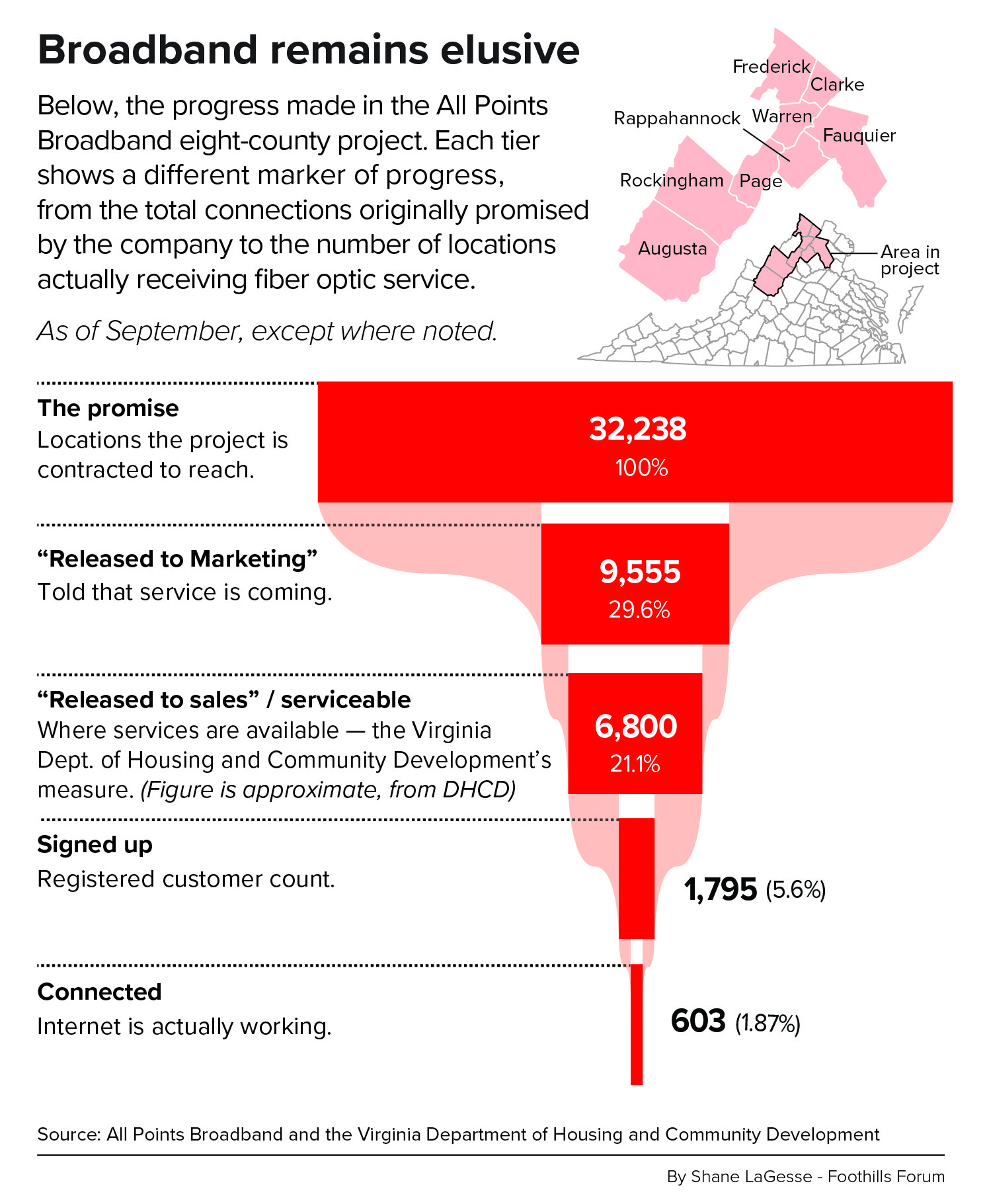
Across the Northern Shenandoah Valley consortium, only 603 of the 32,238 targeted households have working fiber, according to Tom Innes, All Points Broadband’s senior vice president for business development.
That comes to just under 2% of households the project is meant to reach.
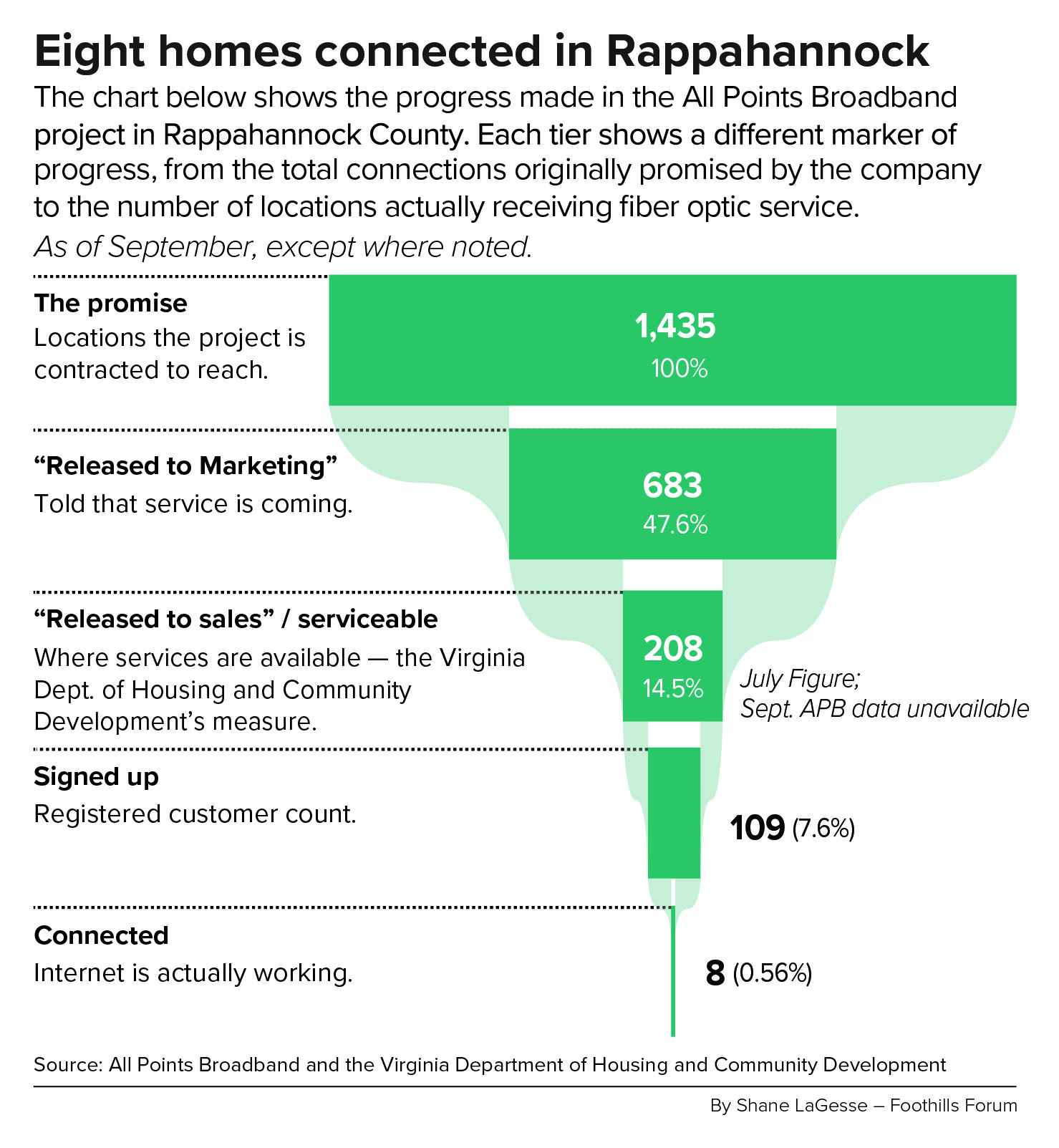
With a little over three and a half months to finish what has taken years to build, All Points would have to make roughly 6,700 locations serviceable each month across eight counties to meet a Dec. 31 deadline set by the state.
But serviceable locations are only one measure of what remains:
- Some 818 miles of last-mile fiber remain to be built by Dec. 31, some of which has not yet been released to construction, according to All Points.
- Roughly 7,100 utility poles still need to be moved or replaced to make room for the fiber by the end of November.
- Some 363 miles of route are still awaiting Virginia Department of Transportation permits by the end of November.
All Points says it can do it.
“The milestone table … commits the project locations to being serviceable by December 31, 2026,” Innes wrote in an email. “We have the resources and partnerships in place to meet those commitments.”
But he said third-party permitting — including utility pole attachments and VDOT right-of-way approvals — is “one of the most significant variables in a project of this scale.”
All Points works with Rappahannock Electric Cooperative and the Virginia Department of Transportation to secure approvals in the sequence needed for construction, “but the pace of that work is not entirely within our control,” Innes said.
The Dec. 31 deadline is itself a reprieve: The Northern Shenandoah Valley Regional Commission, which holds the state’s contract for the eight counties and funnels their money to All Points, requested on June 30 six extra months based on All Points Broadband’s “updated milestone projections,” said Executive Director Brandon Davis.
This is not the first time the clock has been reset, but it may be the last. Under the current rules, the federal pandemic-relief money behind the project must be spent by year’s end or returned to Washington.
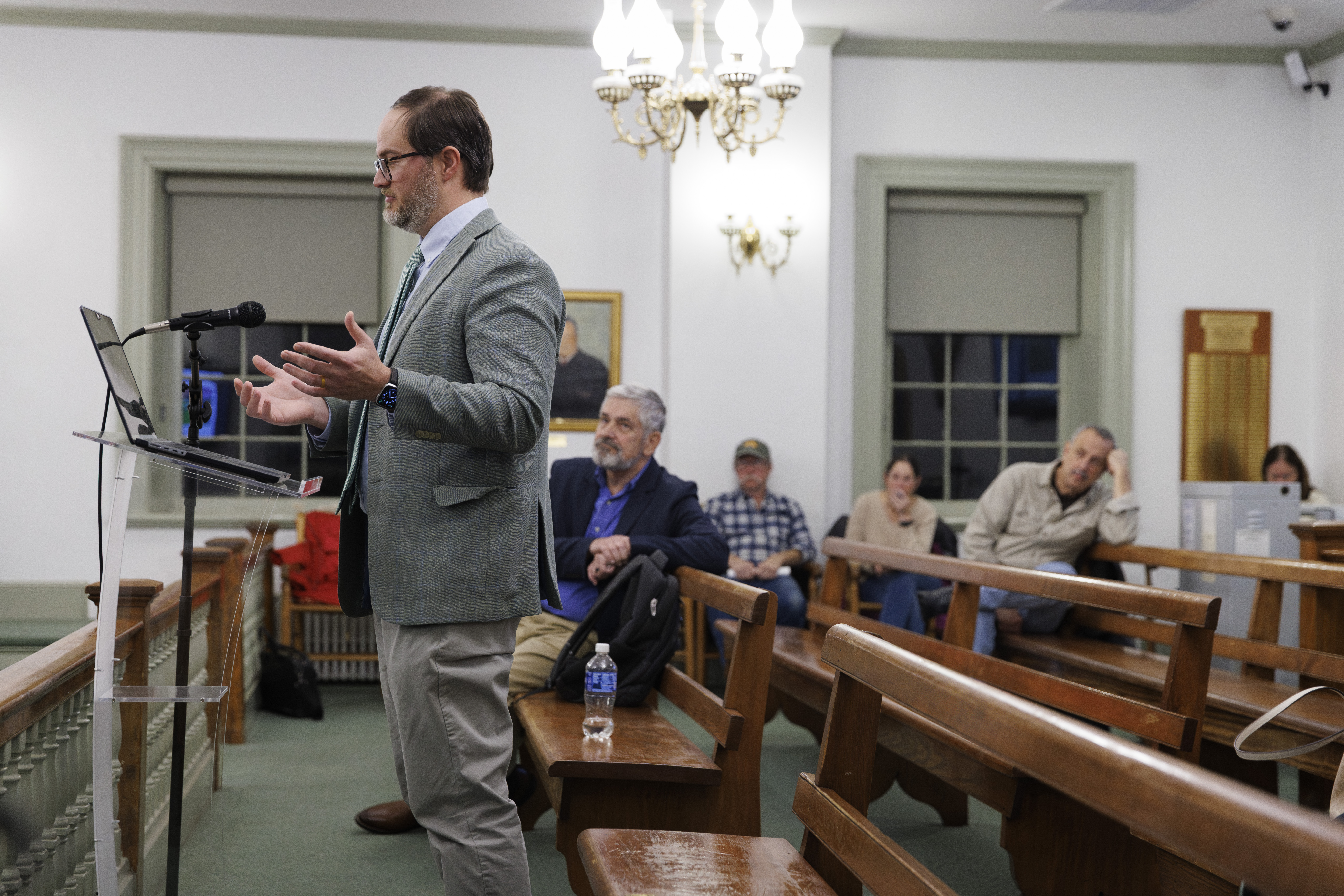
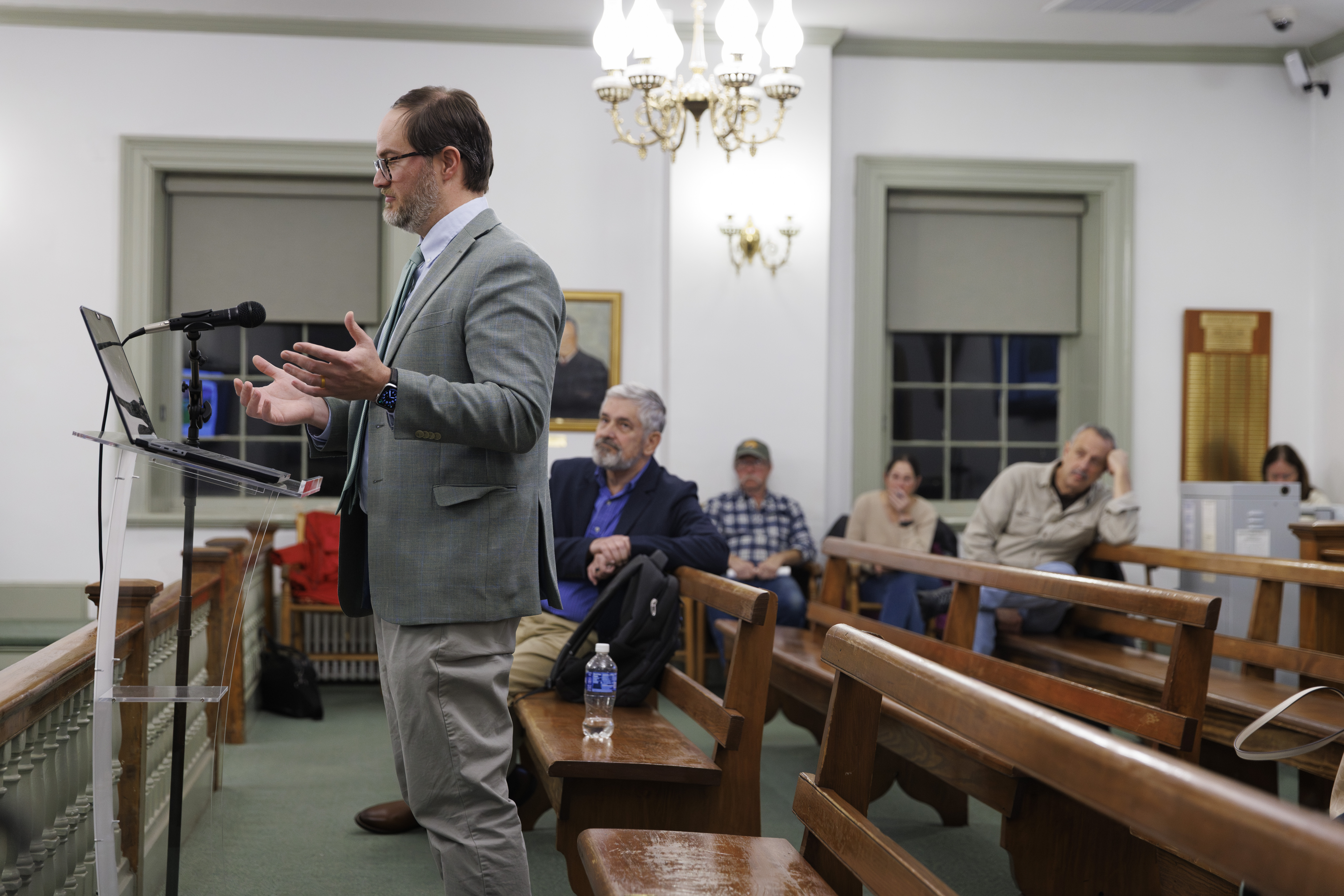
All Points Broadband Senior Vice President Tom Innes addresses the Rappahannock County Board of Supervisors and answers questions for almost 90 minutes at the evening session of the supervisors’ meeting in January 2025. (Photo/Luke Christopher)
Some officials doubt the six-month extension will be enough.
“My lingering concern is how many people are hooked up and how many people are they going to be able to get hooked up by Dec. 31,” said Hampton Supervisor Keir Whitson.
If All Points doesn’t finish, there seems to be no Plan B. Clarke County Administrator Chris Boies said only that the county “will need to pursue different options for resolution.” Asked if Rappahannock has a backup plan, Board of Supervisors Chair Debbie Donehey, who also chairs the county Broadband Authority, said: “The answer is ‘No.’”
The extraordinary demands of the final three and a half months are only the latest chapter in a story that began long before All Points Broadband arrived.
A 20-year effort
For nearly two decades, Rappahannock County has been trying to solve a problem: how to get reliable high-speed fiber internet to homes scattered across mountains, hollows and hundreds of miles of winding country roads.
Over the years, there have been committees and consultants, zoning changes and feasibility studies, negotiations with internet companies, state grants and federal pandemic money, regional partnerships, changing plans, missed milestones and extended deadlines since the county appointed its first Broadband Initiative Committee in 2007.
Fast forward to 2021, in the depths of the pandemic, Congress sent funds to rural America to pay internet companies to build in places where none would venture.
In counties like Rappahannock, where houses can be miles apart, the corporate arithmetic never worked, so big Washington stepped in to help the likes of little Washington get it sorted out.
The American Rescue Plan Act, a $1.9 trillion relief law passed that March, allocated tens of billions toward closing the rural digital divide that had been laid bare by the pandemic — the largest federal bet on rural connectivity since the New Deal wired the countryside for electricity.
“It’s really this kind of economic development program where there’s a capital investment into a market that is otherwise not commercially viable,” said Rappahannock County Administrator Garrey Curry.
Before Virginia’s share of those federal dollars — distributed through the Virginia Telecommunication Initiative — landed in December 2021, Rappahannock County had approached Orange County, which at the time was building its own network. It also reached out to internet providers Shentel and Firefly.
“Nobody wanted Rappahannock County,” said Donehey. “We were told that nobody would take on such a dispersed housing situation.”
In the end, three companies responded — All Points, Shentel and Madison Gigabit. Only All Points was willing to build.
“It was a scary leap,” Curry said.
And not one favored by all.
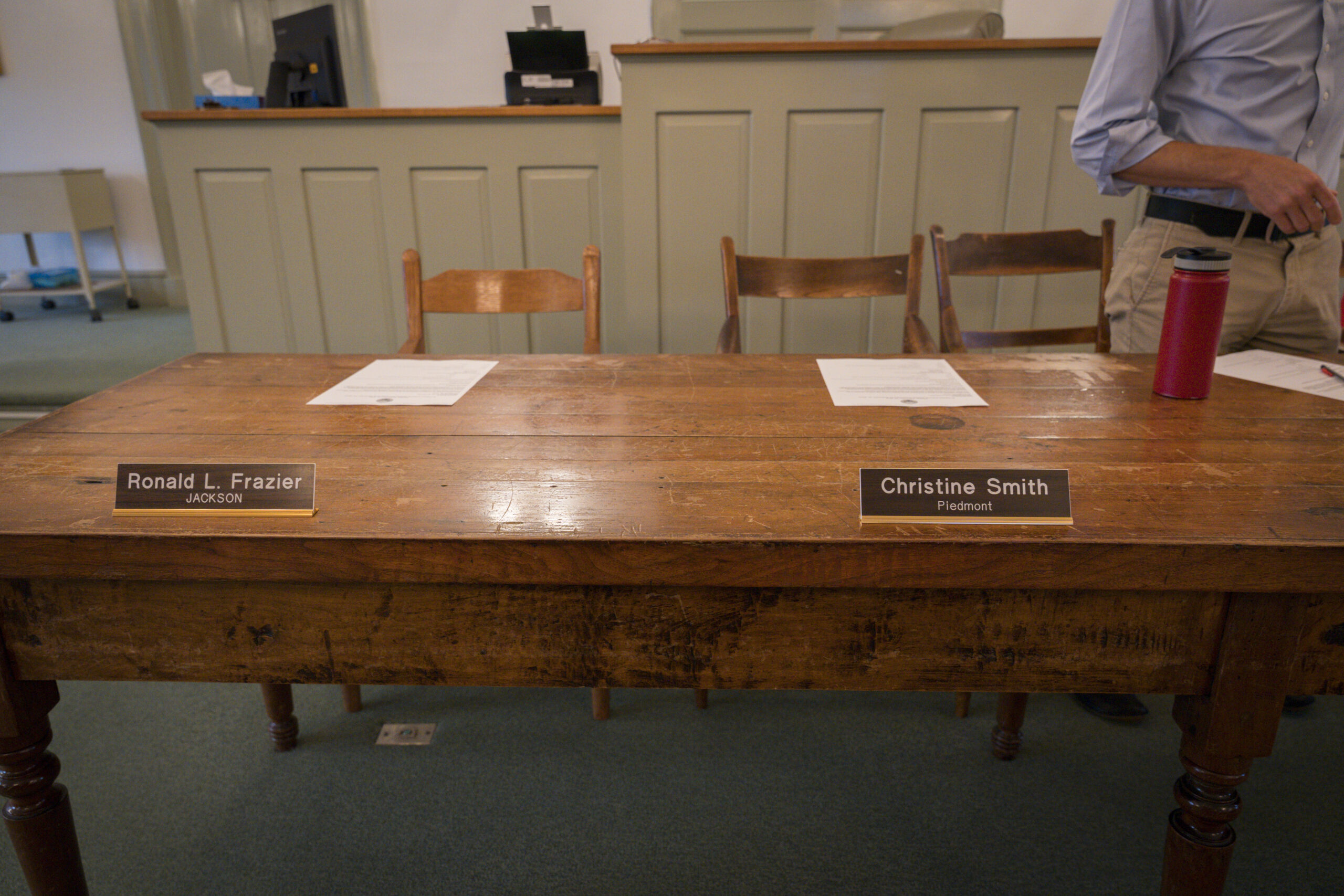
Piedmont Supervisor Christine Smith and Jackson Supervisor Ron Frazier did not attend the Sept. 26 Broadband Authority meeting, leaving the body without a physical quorum and impeding their ability to vote on the payment before its Oct. 1, 2022 deadline. (Photo/Luke Christopher)
Warnings from naysayers
On May 2, 2022, when the county supervisors voted to adopt a resolution binding Rappahannock to the eight-county project, then-Jackson Supervisor Ron Frazier and then-Piedmont Supervisor Christine Smith voted against it. The motion carried 3-2.
Frazier, whose career was in construction, running bucket and digger trucks that do things like setting poles in the ground, said he had studied the cost projections. He noticed the work in each county was to cost almost exactly the same amount as the Virginia Telecommunication Initiative grant each would receive, and Rappahannock’s — rockier, more spread out — came in cheaper than Warren County, which is flatter, more developed. “That’s physically impossible,” he said.
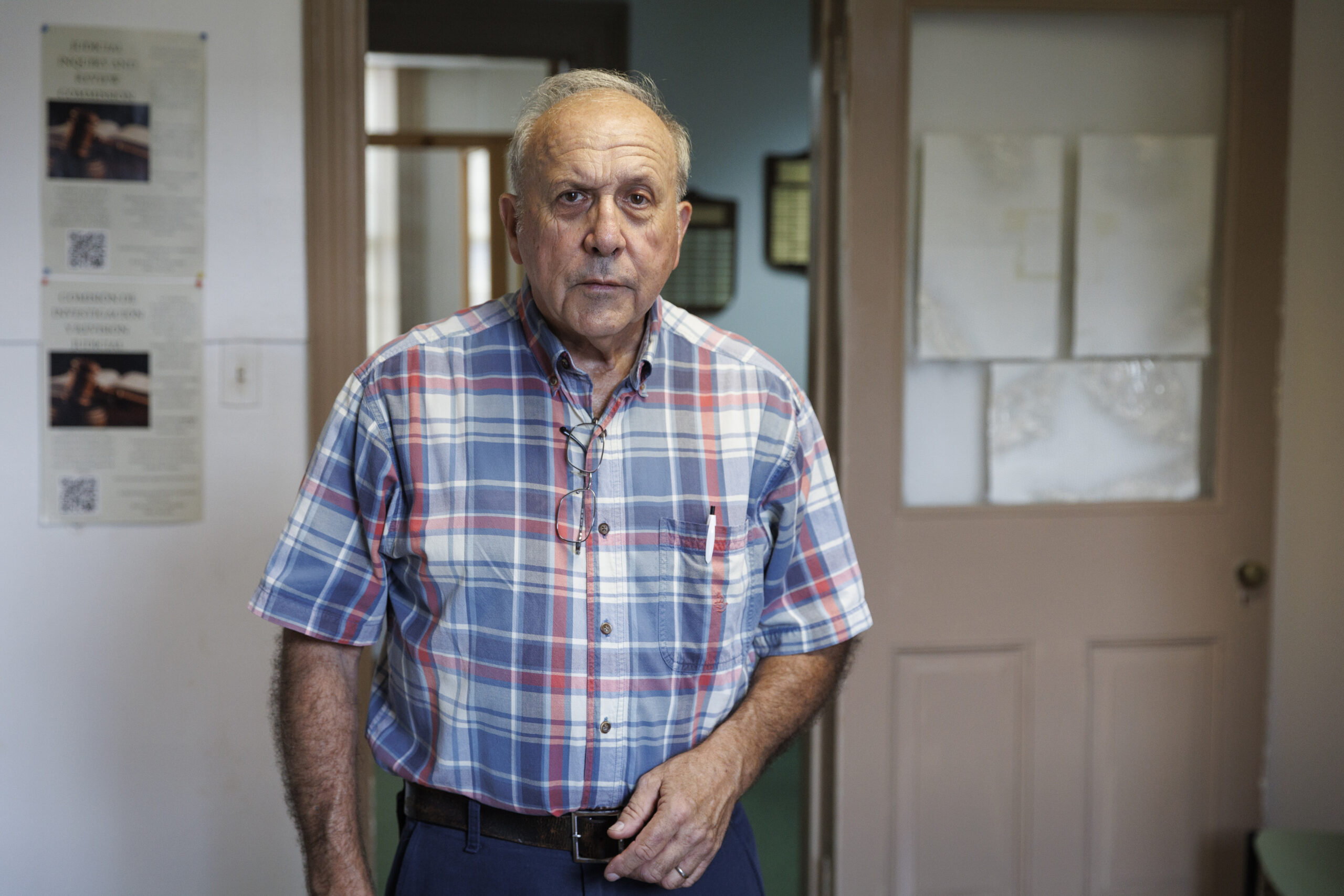
Former Jackson District Supervisor Ron Frazier at the county courthouse before Sept. supervisors meeting in which he spoke during public comment. (Photo/Luke Christopher)
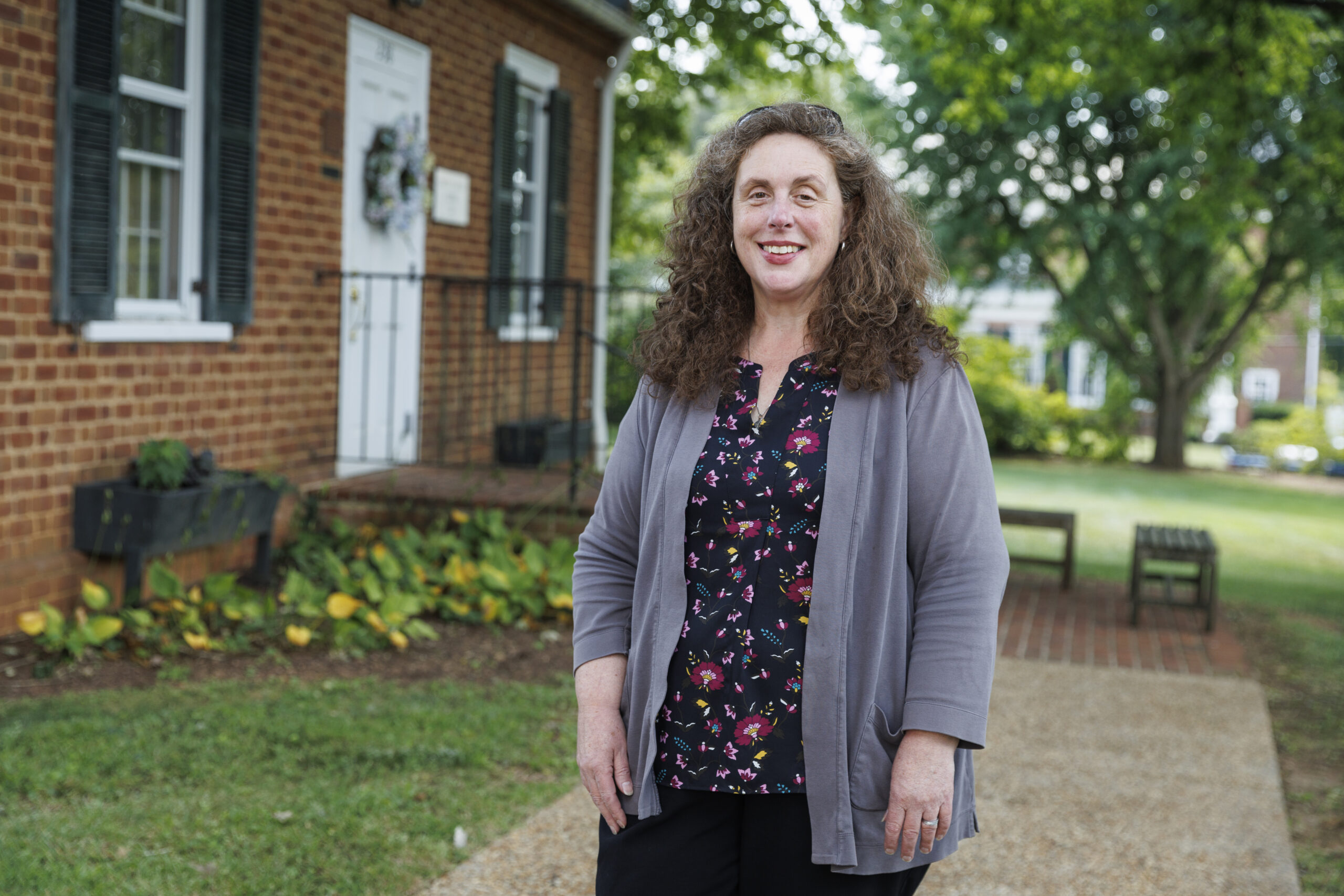
Former Piedmont District Supervisor Christine Smith at the county courthouse before Sept. supervisors meeting in which she spoke during public comment. (Photo/Luke Christopher)
Smith also opposed the project, for reasons, she says, that still hold. Back in 2022 she had warned the agreement locked the county into a huge financial commitment without a clear plan — who would be connected and when; no firm deadlines the company had to meet and no real protection for taxpayers’ money if things went wrong.
“All of those things,” Smith said, “are still true.”
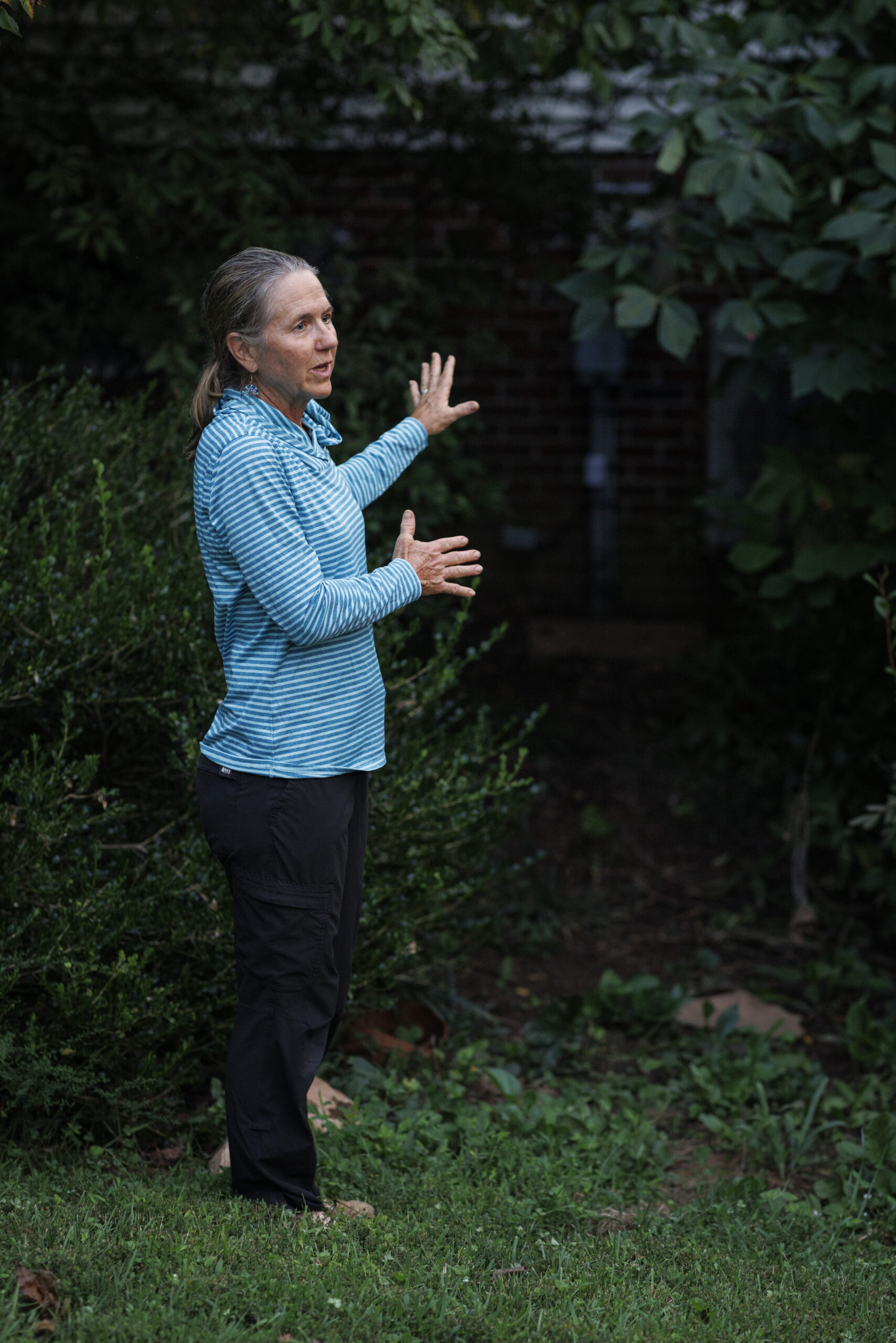
Janet Davis explains how All Points Broadband contractors accidentally cut into her existing provider’s line, leaving her without internet for three days. (Photo/Luke Christopher)
Too little, too late?
Looming over All Points Broadband’s Dec. 31 deadline is a question no milestone table addresses: How many people will still want fiber if, and when, it finally arrives?
The delay has created its own competition. Starlink, which beams broadband from satellites to small dishes, can be set up by a homeowner in an afternoon.
Like many local residents, Paige Flink grew tired of waiting for fiber. She has run Starlink at her home in Old Hollow, outside Sperryville, since 2022, and doesn’t see things changing.
“Nothing has come down Old Hollow, so we’re in no different place than we were before,” she said. She’d try All Points if it reached her, she said, and if the cost of running the line from the road to the house wasn’t prohibitive. “At this point, I’m worried that it’s never going to make it,” she said.
Janet Davis, who has run Hill House Farm & Nursery near Woodville for 30 years, waited two years for a connection that never came. Crews came and went — burying cable, then boring through rock — until one finally ran a line, which Davis said cut straight through her Piedmont Broadband cable.
“I don’t really think they looked at any good topographic maps of this county,” she said. “It’s like an engineer never designed the plan.”
Davis and her husband are staying with Piedmont Broadband for their home. “I know that I can call them, and they immediately fix or do something for me,” she said.
At her nursery, it’s Starlink out of necessity, since the business runs on it. “There’s no incentive for me at all to switch over,” she said.
Even the county’s own leaders have made their peace with the delay. Hampton Supervisor Keir Whitson is a Starlink user, as are many of his constituents.
“As protracted a process as this has been, it has allowed Starlink into the market,” said Whitson. “And so the pressure that had been on me as a local representative — a lot of that pressure on me has been relieved because people have options.”
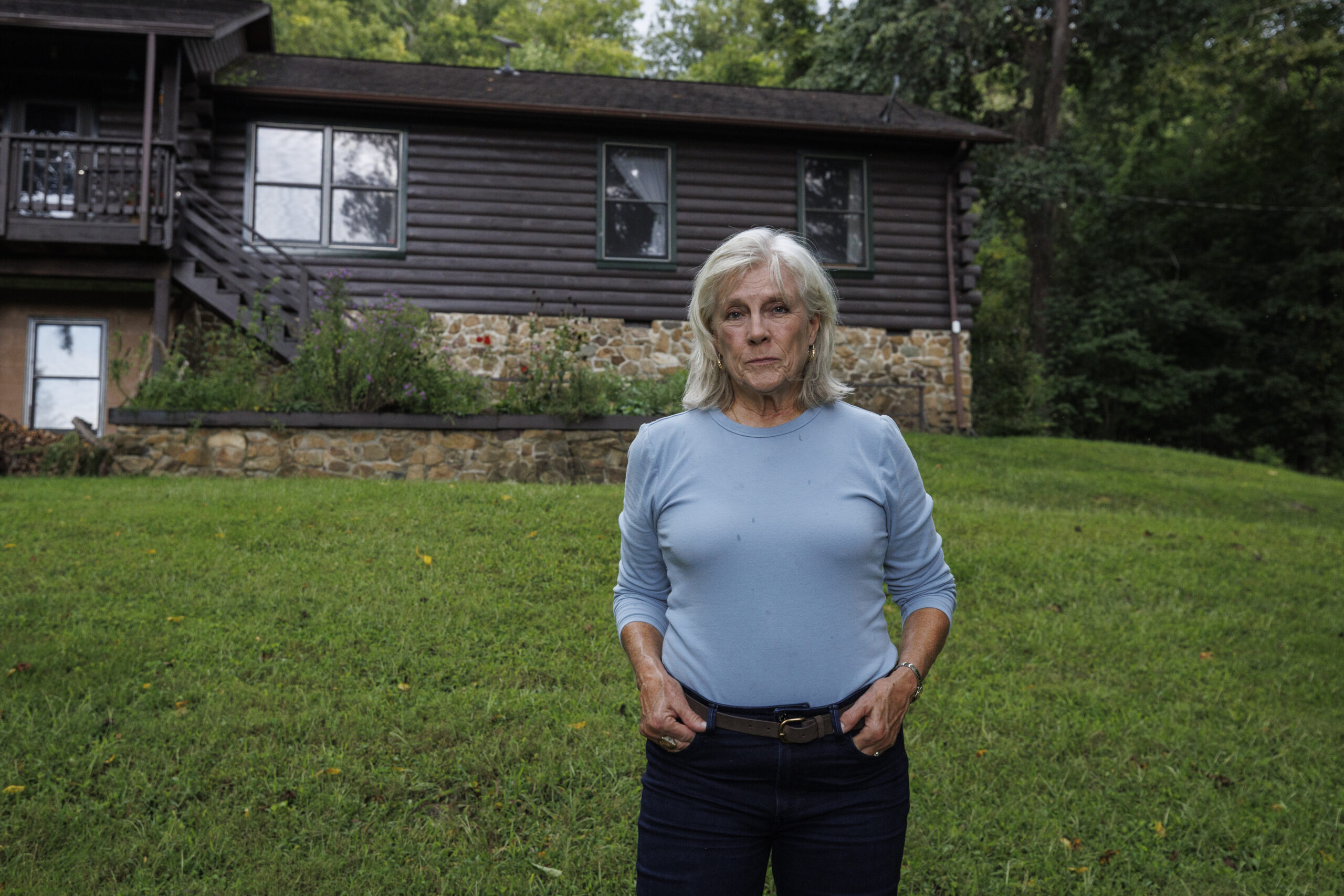
Living in the challenging topography of Old Hollow Starlink is the best option for Paige Flink. (Photo/Luke Christopher)
Challenge of tracking funds
And then there’s the money, which — despite moving faster than the fiber connections — has been almost as challenging to track. Of the roughly $5.9 million the Rappahannock County Broadband Authority put up, $3.5 million came from the Chuck Akre family’s Fagus Foundation, $1 million from the PATH Foundation and $1.39 million from county and school pandemic-relief funds.
“It is an amazing story,” said Curry, “that regional and local organizations stepped up to the table together with us, leveraging ARPA [American Rescue Plan Act] funds to afford the local match.”
For Whitson, the funding structure itself is a relief. “There’s no local tax money in this project — zero, zilcho, none. And if there was, this would be a very different conversation. If we had local tax money in this project, I would be much more focused on holding All Points’ feet to the fire,” he said.
But the leveraging Curry described came with a caveat. The federal pandemic-relief money behind the project had to be spent and accounted for by a deadline county officials were concerned the All Points build might not meet.
So on April 21, 2025, the Board of Supervisors voted 4-0, with Donehey absent, to solve the problem on paper. It applied the county’s $1.03 million of American Rescue Plan Act money to day-to-day running costs it had already paid — covering income the county lost during the pandemic, which the federal rules allowed. The county’s own money went to broadband instead.
Curry calls it “a difference without distinction,” and says it was “mostly a staff convenience effort with a side of December 31, 2026 protection.”
To the two supervisors who voted “No” in May 2022, that distinction is the point.
“I think $6 million is a lot of money to spend for eight completed installations,” said Smith. “Even if they had been able to complete the project … is that enough to justify a $6 million budget — when that’s just the county funds, not including the state and federal and All Points’ own dollars? A million dollars of that was COVID relief funding from the county which, being such a small county, we could have spent in an unrestricted way.”
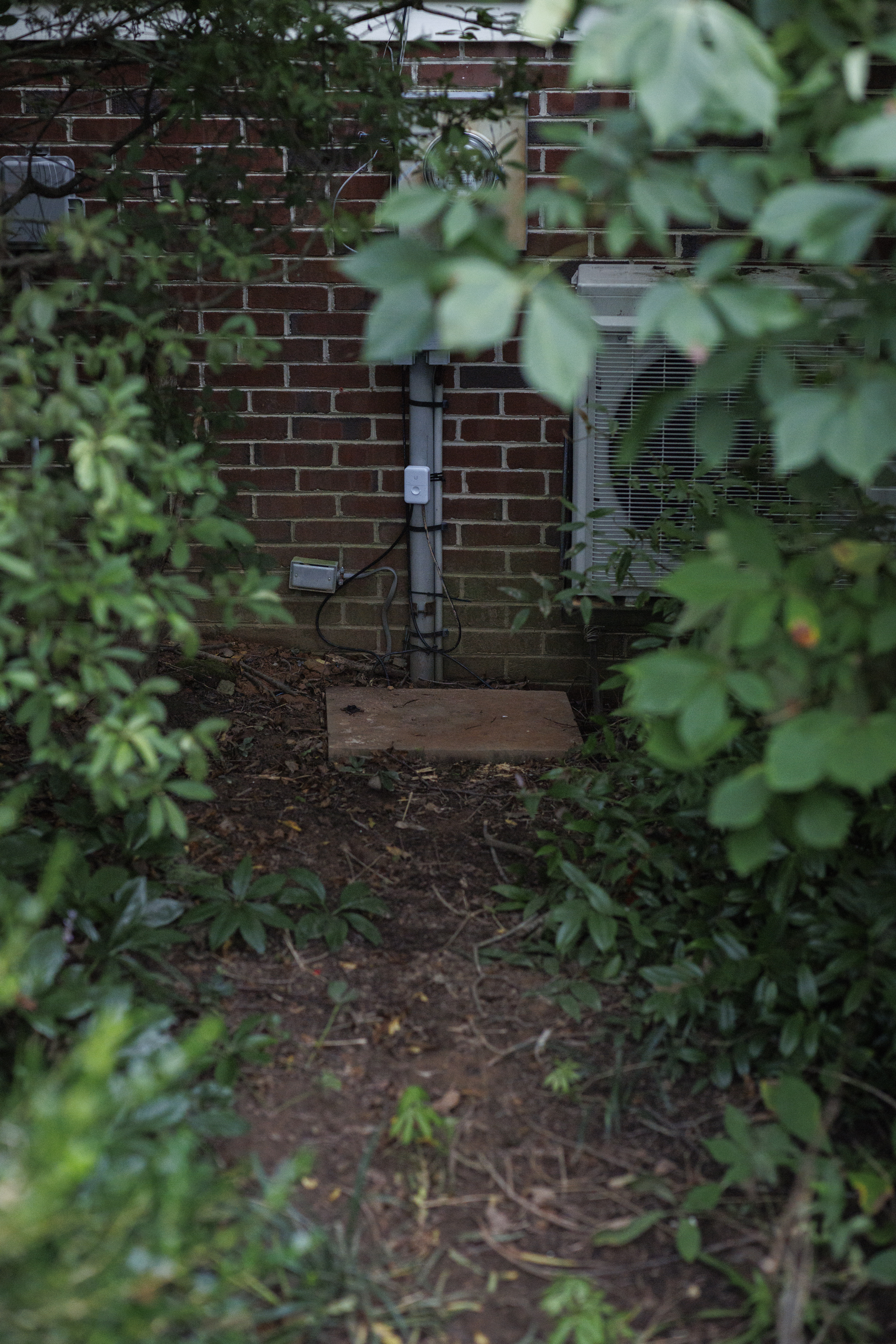
Janet Davis’ connection area where All Points Broadband contractors accidentally cut into her existing provider’s line, leaving her without internet for three days.
County’s broadband funds sat idle
For four years, the Rappahannock County Broadband Authority’s money largely sat untouched. The county’s first payment — $1.4 million made in late June — covered only design work, not construction or actual connections. On Aug. 31, the county paid out another $1.5 million, this time for actual construction work — $1.45 million for 46.2 miles of fiber installed along the roadway, and about $68,000 tied to 208 addresses the infrastructure could now serve. Meanwhile, the broader project has spent $45.5 million while connecting only 603 homes.
The authority has earned hundreds of thousands of dollars in interest on the idle funds, including $500,000 it withdrew earlier this year. Curry says it will go to something broadband-related — perhaps helping new houses connect to the network once the initial, federally subsidized $99 connection fee for new subscribers expires.
Across the eight counties, $45.5 million has now been paid out — up from $34 million in July, an increase the Virginia Department of Housing and Community Development attributes to significant fiber construction over the summer. That is close to half the grant, against 603 homes connected.
It is the outcome Frazier warned of when he studied the numbers and voted “No.”
Told that four years and millions of dollars have produced eight connected homes, he took no satisfaction in the current state of things.
“I wish I had been wrong for the county’s sake,” Frazier said. “But I’m not.”
Rappahannock’s long road to broadband
2007: County appoints a Broadband Initiative Committee | The county amends zoning rules, allowing wooden poles for internet service. The committee disbands.
February 2011: Cell tower approval | The Board of Supervisors approves an AT&T bid to erect three cell towers.
July 2012: AT&T tower plan abandoned | Board of Supervisors hears of possible federal funds for rural broadband.
December 2014: Cabling project begins along U.S. 211 and U.S. 522 | Part of a project by Texas-based PEG Bandwidth to use cell towers for higher-speed 4G internet.
July 2015: Regional realtors host a broadband forum | Event takes place at the high school to raise awareness of increasing agricultural, health care and tourism dependence on the internet.
Fall 2015: Survey results shows broadband as top issue | Response to Foothills Forum’s countywide survey ranks internet and cellphone service as Rappahannock’s top two issues. More than 8 in 10 say the internet is important.
July 2016: The Rapp News shines light on the issue | The Rappahannock News publishes “Rappahannock’s Digital Dilemma,” a three-part Foothills Forum series on broadband; topography, density and chance combine to limit local internet connections.
July 2017: The county revives the Broadband Committee | The committee brings in the Center for Innovative Technology to explore private/public partnerships and available technologies.
November 2017: Committee identifies stumbling blocks | A survey by the Broadband Committee finds 14% of respondents have no internet; 70% say internet service is inadequate or unreliable.
June 2018: Library and schools get fiber | Telecom Shentel extends fiber optic cable to the county library, elementary school, high school and School Board administration building.
February 2020 | Cell towers tabled | After a contentious public hearing, the Board of Supervisors votes to table two towers proposed by Community Wireless Structures.
Spring 2020: COVID-19 exposes need for high-speed internet | Students must sit in parking lots to connect to Wi-Fi. Videoconferencing is the new norm.
September 2020: Funding for new cell towers | Supervisors commit $175,000 in federal pandemic relief to Piedmont Broadband for two new towers near Battle Mountain and Aaron Mountain. “I don’t see how we pass the opportunity up,” says Supervisor Christine Smith.
December 2020: Broadband Authority is formed | The five-member Rappahannock County Broadband Authority is created as a legal entity capable of entering into contracts and agreements on behalf of Rappahannock County.
June 2021: Seven counties enter into MOU with All Points | Seven counties, including Rappahannock, enter into a memorandum of understanding with All Points Broadband. Fauquier joins the project in August, bringing the number of participating counties to eight.
September 2021: Regional VATI grant application submitted | The Northern Shenandoah Valley Regional Commission (NSVRC) and All Points submit a Virginia Telecommunications Initiative (VATI) grant application.
December 2021: Funding awards announced | Gov. Ralph Northam announces a $95.3 million award to the NSVRC to reach 37,357 locations across the eight counties, including funding for Rappahannock. (The award is later amended to $96.9 million and the target cut to 32,238.)
May 2022: Rapp’s landmark broadband vote | In a split vote, the Board of Supervisors approves entering into an eight-county agreement with the NSVRC, the fiscal agent between the counties and All Points, committing $5.9 million of its own funding consisting of federal stimulus dollars and private donations.
July 2022: Final agreements executed | On July 22, 2022, an agreement between the Virginia Department of Housing and Community Development and the NSVRC is executed.
November 2022: Phase one begins | The project’s first phase focuses on low-level design and the utility pole attachment process. Several months’ worth of designed and permitted fiber miles must be released before fiber construction can begin.
June 2024: Construction planning delays | Delays with initial construction have prompted the schedule to be revised, with an updated schedule anticipated in the fourth quarter of 2024. All Points defends slow progress on the regional effort.
November 2024: All Points’ announces one-year delay | The Virginia Department of Housing and Community Development approves All Points risk mitigation plan and a timeline extension through June 2026. Residents tired of waiting for fiber turn to alternatives.
May 2025: Culpeper terminates its All Points project | Culpeper County, which wasn’t part of Rapp’s eight-county project, but its own project, dumps All Points. Culpeper Supervisor Gary Deal says this “is the worst contract and relationship that we’ve ever had.”
September 2025: Construction permits issued | All Points receives permits from VDOT and Rappahannock County to begin construction.
October 2025: Construction begins in Castleton | All Points begins physical installation of fiber infrastructure in the Castleton area and along VDOT-approved construction areas.
May 2026: First All Points’ customer activation | All Points activates service for its first customer in Rappahannock County.
June 2026: State extends funding deadline | The updated agreement approved by the Virginia Department of Housing and Community Development extends the Virginia Telecommunication Initiative project funding deadline to December 2026.
September 2026: A few more households get service | All Points reports that eight households in Rappahannock County have working high-speed internet service via All Points’ fiber.
December 2026: Virginia Telecommunication Initiative agreement period ends | The deadline for state Virginia Telecommunication Initiative funds to be spent is Dec. 31, 2026.
January 2027: Federally funded construction begins | Network construction is scheduled to begin for additional areas in the county approved for funding through the Broadband Equity, Access and Deployment (BEAD) program, a federal initiative.
December 2027: BEAD construction ends | The deadline for construction subsidized through the BEAD program is Dec. 31, 2027. Unspent federal dollars go back to the U.S. Treasury.