

‘It was intimidating at first’
For Flint Hill resident Amanda Frye Bywaters, becoming a farmer meant walking into a world where she often felt she didn’t belong — little experience, plenty of unspoken doubt and a field largely shaped by older men.
“It was intimidating at first,” Bywaters said. “Many of the farmers I met were older men, and here I was a 27-year-old, 5-foot-tall woman with no experience in livestock farming.”
Bywaters, now 36 and a mother of two, didn’t set out to become a livestock farmer. A Rappahannock native with a bachelor’s degree in landscape architecture, horticulture and agribusiness management from West Virginia University, she first worked in greenhouses — far from the cattle, sheep and pigs she now manages on rolling pasture.
She eased into animals the way she once worked with plants: chickens first, then ducks and geese, then Hereford hogs and dairy goats. A farm tour at Flint Hill’s Bean Hollow Grassfed changed her trajectory. The regenerative approach stuck with her. So did owner Mike Sands.
After persistence — and a string of odd farm jobs and internships — Sands hired her as an apprentice in 2018. She worked her way up to farm manager.
Her doubt wasn’t always coming from within.
“I started this journey from a nontraditional farmer, one who had ‘wild ideas’ and wasn’t afraid to try new things, so in a room full of traditional farmers, I felt like I didn’t fit in,” she said in a recent interview.
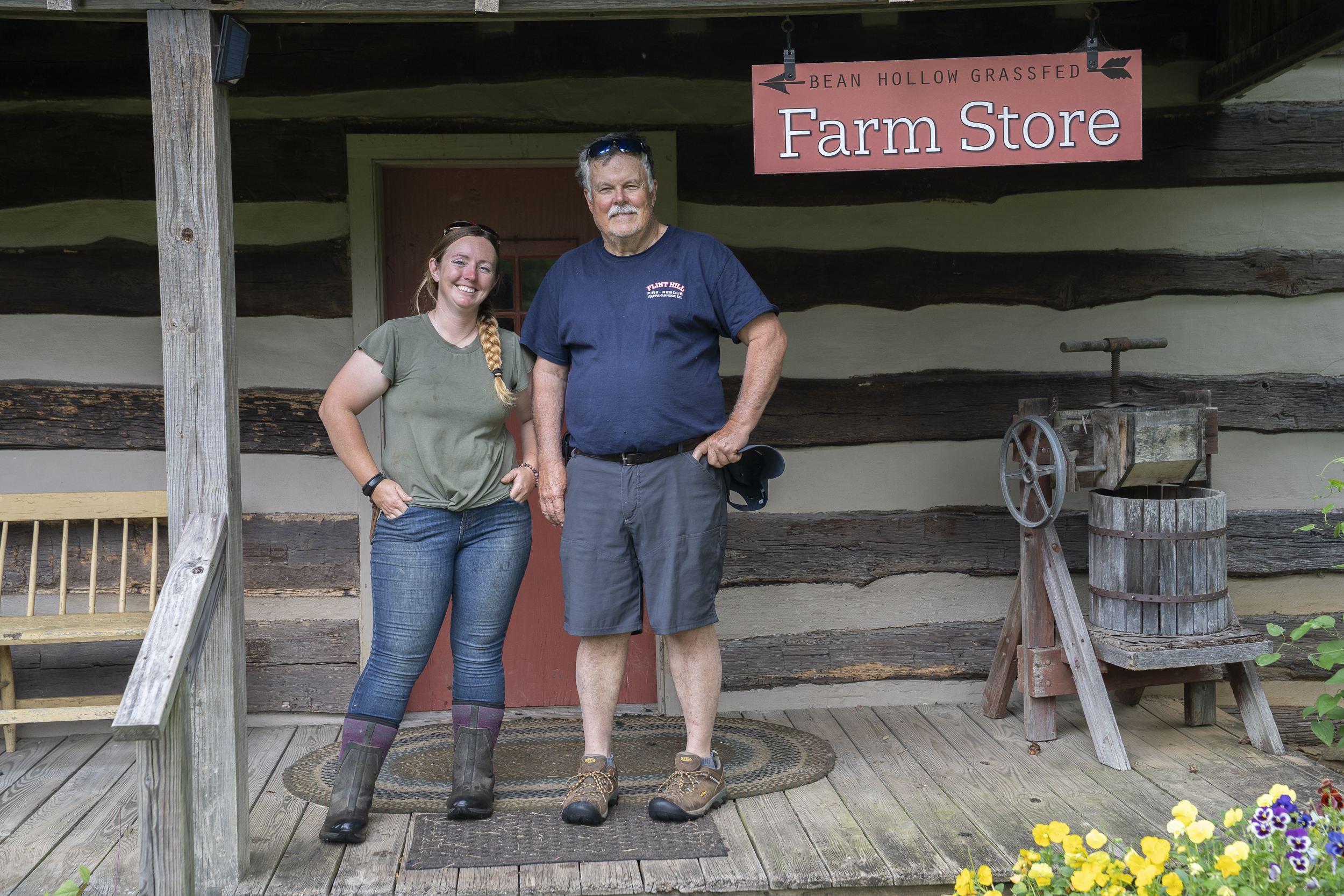
Amanda Frye Bywaters with Mike Sands, owner of Bean Hollow Grassfed, at the farm store on the Flint Hill property. (Photo/Camden Littleton)
At Bean Hollow, that “nontraditional” approach is the point. The farm raises grass-fed, non-GMO cattle, sheep and pigs, with a focus on soil health and what Bywaters calls the land’s interconnected systems. Instead of grazing pastures continuously, animals are moved through smaller sections, then the land rests and recovers.
The result, she said, is deeper-rooted grass, healthier pasture and fewer chemical interventions. Rotational grazing also helps break parasite cycles, reducing the need for dewormers. It’s even helped bring back grassland nesting birds.
“Meadowlarks and northern bobwhites call our fields home,” she said.
The methods have drawn interest beyond the farm’s fence lines. Bean Hollow now leases additional land from neighbors interested in improving soil and habitat through the same system.
“We gain community and grazing lands that way,” she said.
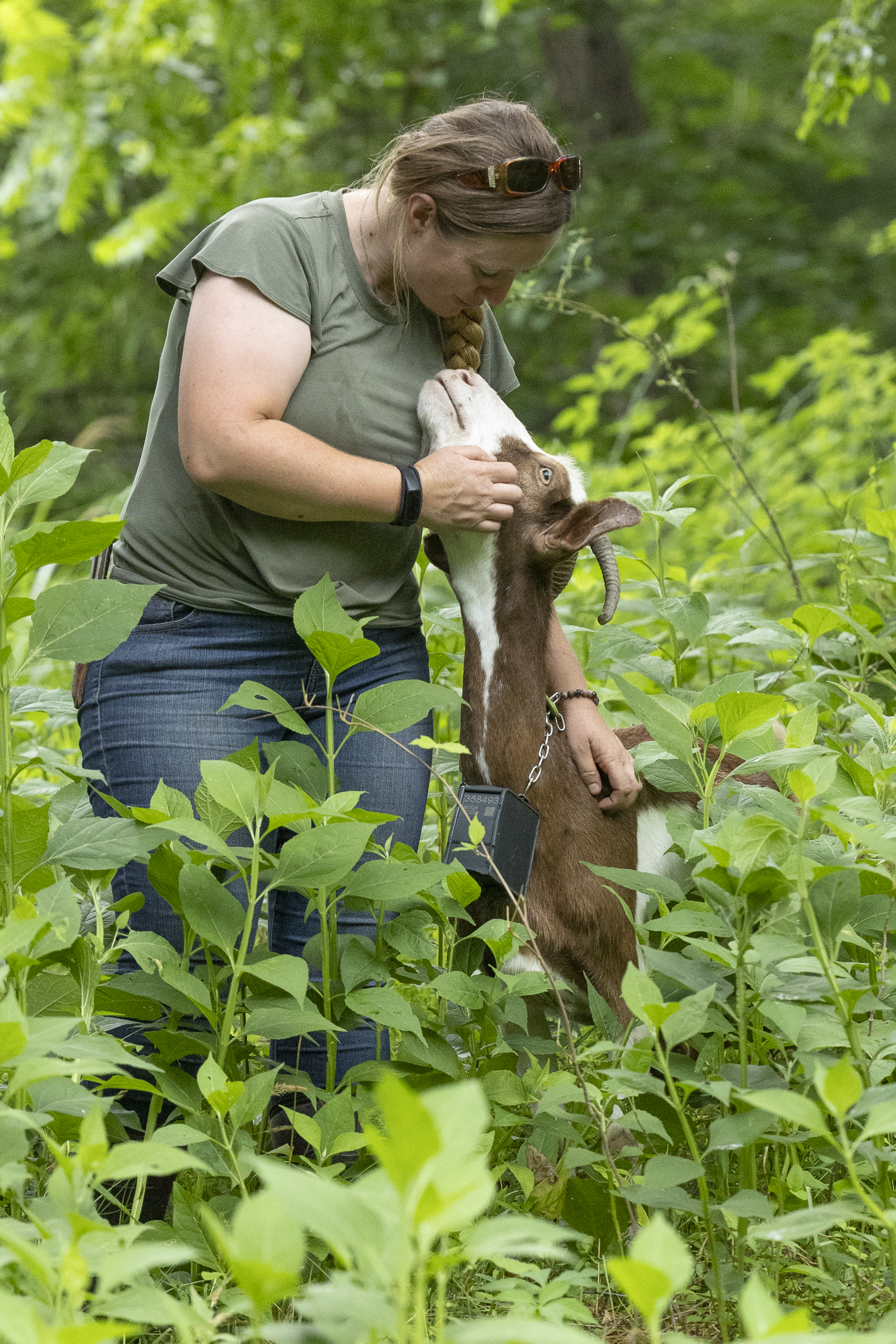
“I farm because it’s how I can help a little piece of this planet,” says Amanda Frye Bywaters, farm manager of Bean Hollow Grassfed. (Photo/Camden Littleton)
While she isn’t necessarily doubted these days for being a woman, Bywaters said she is sometimes underestimated.
“It doesn’t take much to change minds,” she said. “Usually all I need to do is back up the trailer into the spot in one try, and I’ll get an off comment on how they weren’t expecting that.”
She recounted an incident when Sands was asked by someone about hiring a woman farm manager.
“Luckily that day, I was in the middle of opening up a dead sheep to find out what might have happened to it,” she said. “Mike just shared the picture of the organs I sent him and that answered the [person’s] question on whether or not I was squeamish.”
When out with her husband, Josh Bywaters, a software engineer, people will usually talk to him first when the subject of farming comes up.
“He usually smiles, points at me and says, ‘She’s the farmer, ask her,’” Bywaters said. “He will help me chase escaped cows on Christmas, fix equipment if he has time and he’s butchered more chickens than he’s ever wanted, but he doesn’t want to be the farmer. Which is perfect, because I do.”
Her role at Bean Hollow also gives her space to build her own operation. She leases pasture at no cost for her cattle, goats and seasonal poultry, and uses farm equipment to raise and sell USDA-processed meat through the farm store.
It’s a rare setup in farming, she said — a way to build something of her own without starting from zero.
At home, she and Josh are raising two sons, Shepard, 8, and Jacob, 5. Shepard was born in 2018 when she was just getting started at Bean Hollow. Jacob was born three years later.
“It was hard with a two-year-old and another on the way,” Bywaters said. “My husband could work from home then and would watch our two-year-old during nap time. My husband’s grandmother, Mary Frances Bywaters, retired and watched the boys, too.
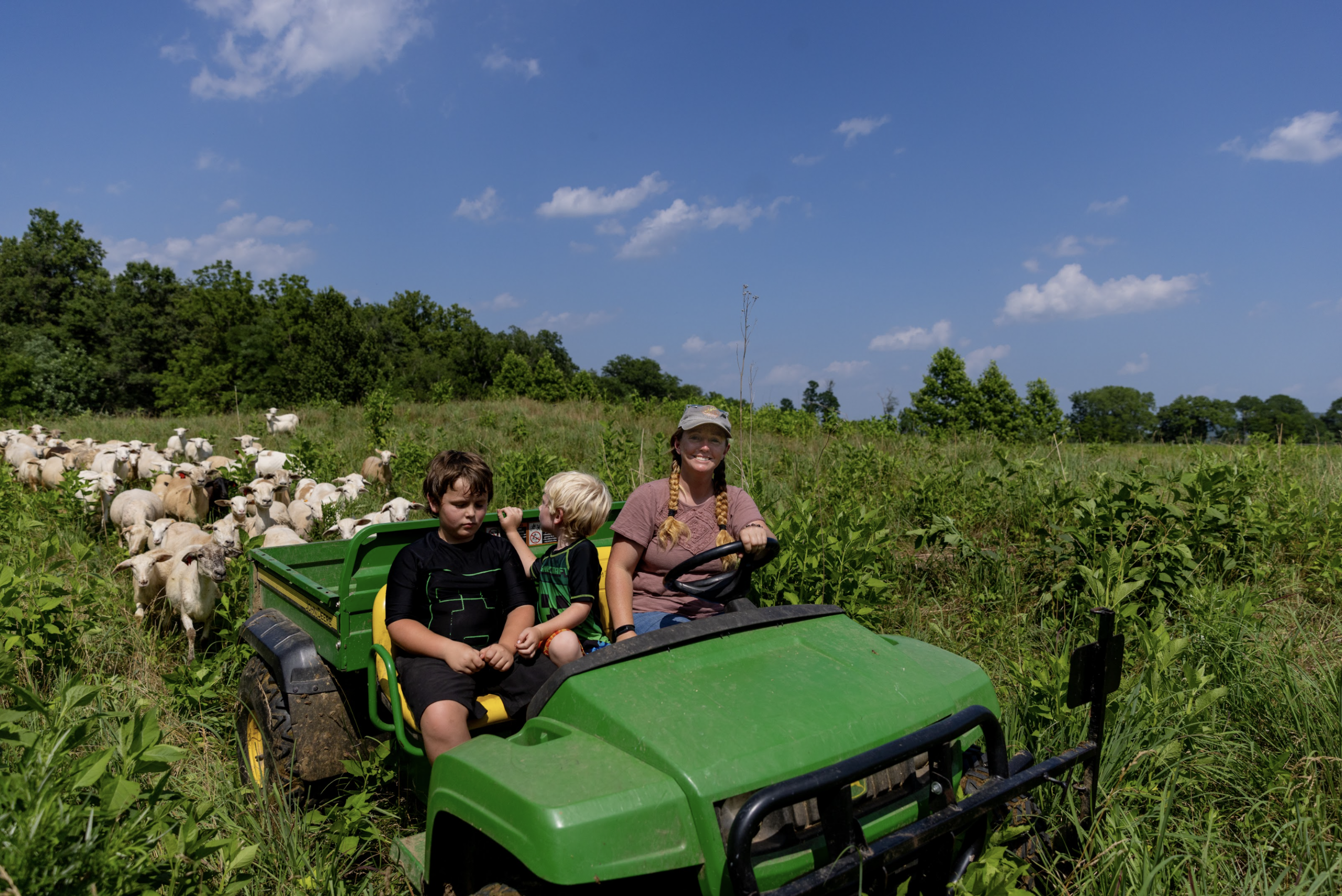
“On days where I had two littles with me we would make the best of it — an umbrella on the Gator (utility vehicle) for shade, a bucket of cold watermelon and dips in the pond, creek or water trough would keep us cool in the summer,” she said.
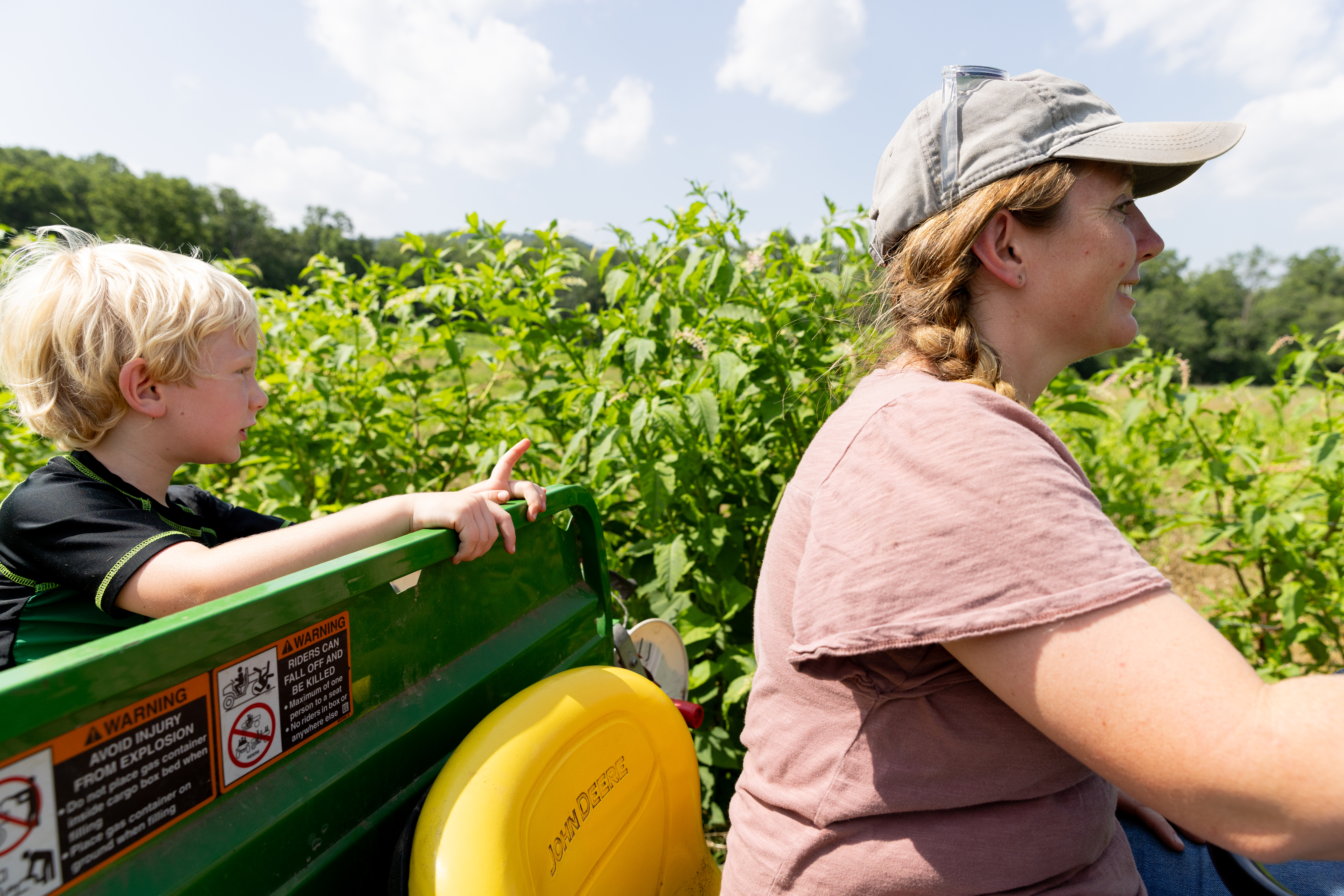
Amanda Frye Bywaters and her son, Jacob, 5, riding through one of the farm’s pastures. (Photo/Ireland Hayes)
Like many farm mothers, she wrestled with expectations — especially after her children began daycare in 2022.
“I remember feeling like I had failed,” she said. “People online would say kids belong on farms, not in daycare. I felt guilty — like I couldn’t manage both.”
Her perspective shifted as she realized that the comments on social media weren’t from women farmers; they were farmers’ wives.
“I don’t mean that in a bad way, I just mean they weren’t the ones fully responsible for the farm and the kids,” she said. “They weren’t out in the midday 90 degree sun bushhogging in an open cab tractor or chasing unruly pigs across the farm, or sorting and loading cows in the thunderstorm, pouring rain … dodging cow kicks and slipping in the mud. I’ve done all this too, one time or another, with a kid or two on my back.”
Now both boys are in school, and farm life moves in rhythms shaped as much by buses and camps as by livestock and weather. Some days they ride along in a truck with a trailer full of animals; other days they help gather eggs or care for barn cats they once raised from feral kittens.
Balancing motherhood and farming continues to be difficult.
-
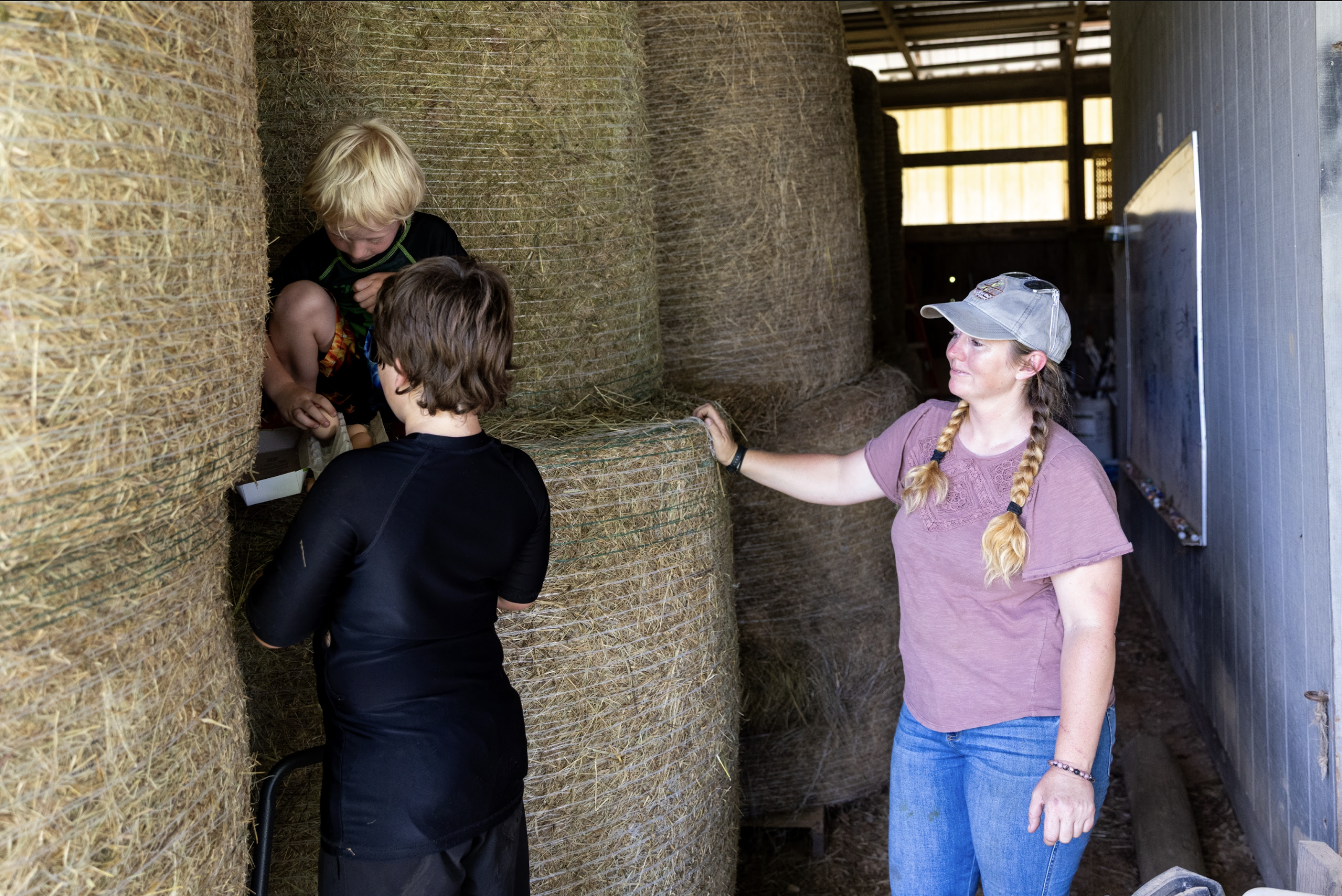
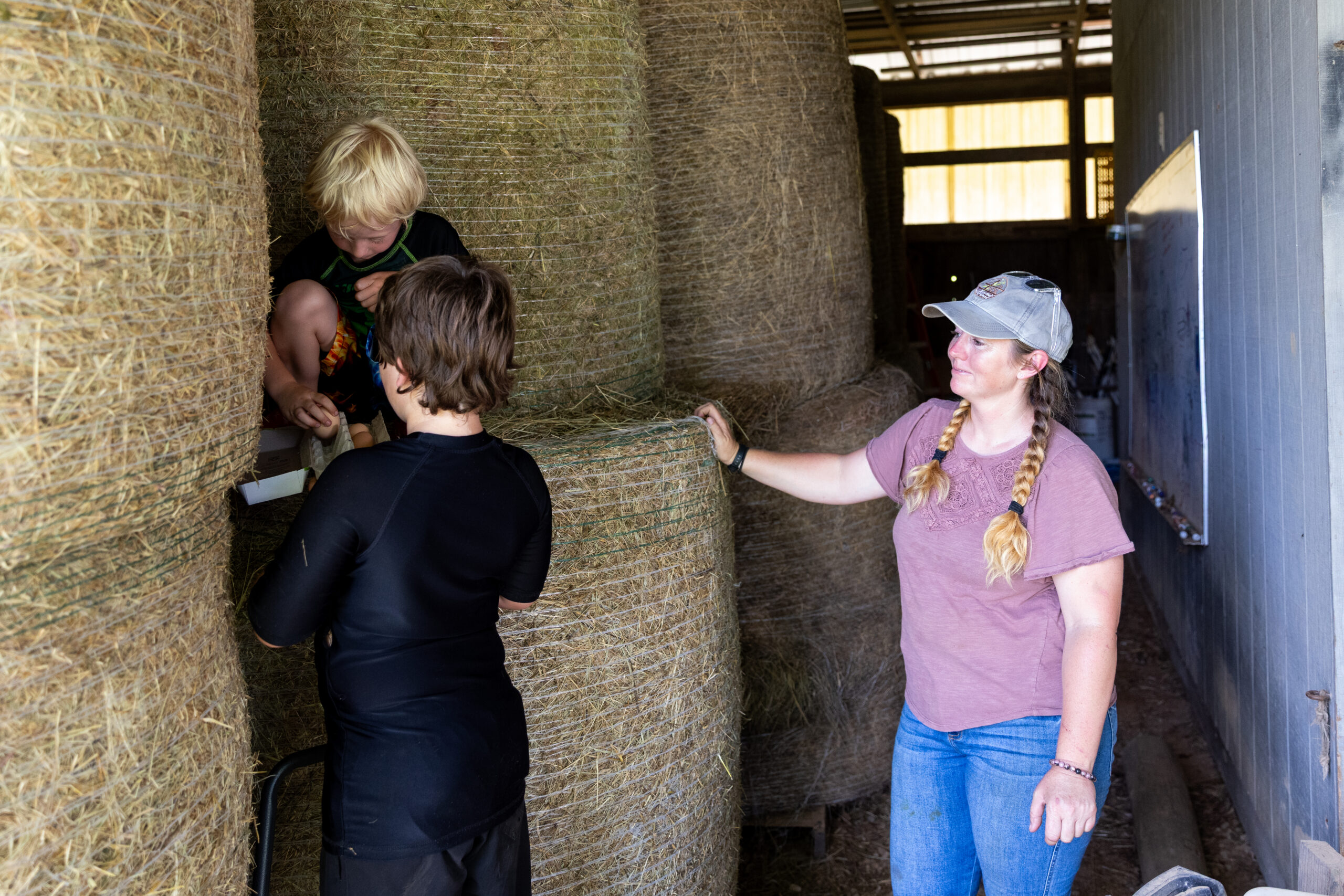
- Amanda Frye Bywaters watches her two sons as they collect eggs from a rogue chicken nest made in a stack of hay bales at Bean Hollow Grassfed farm. (Photo/Ireland Hayes)
-
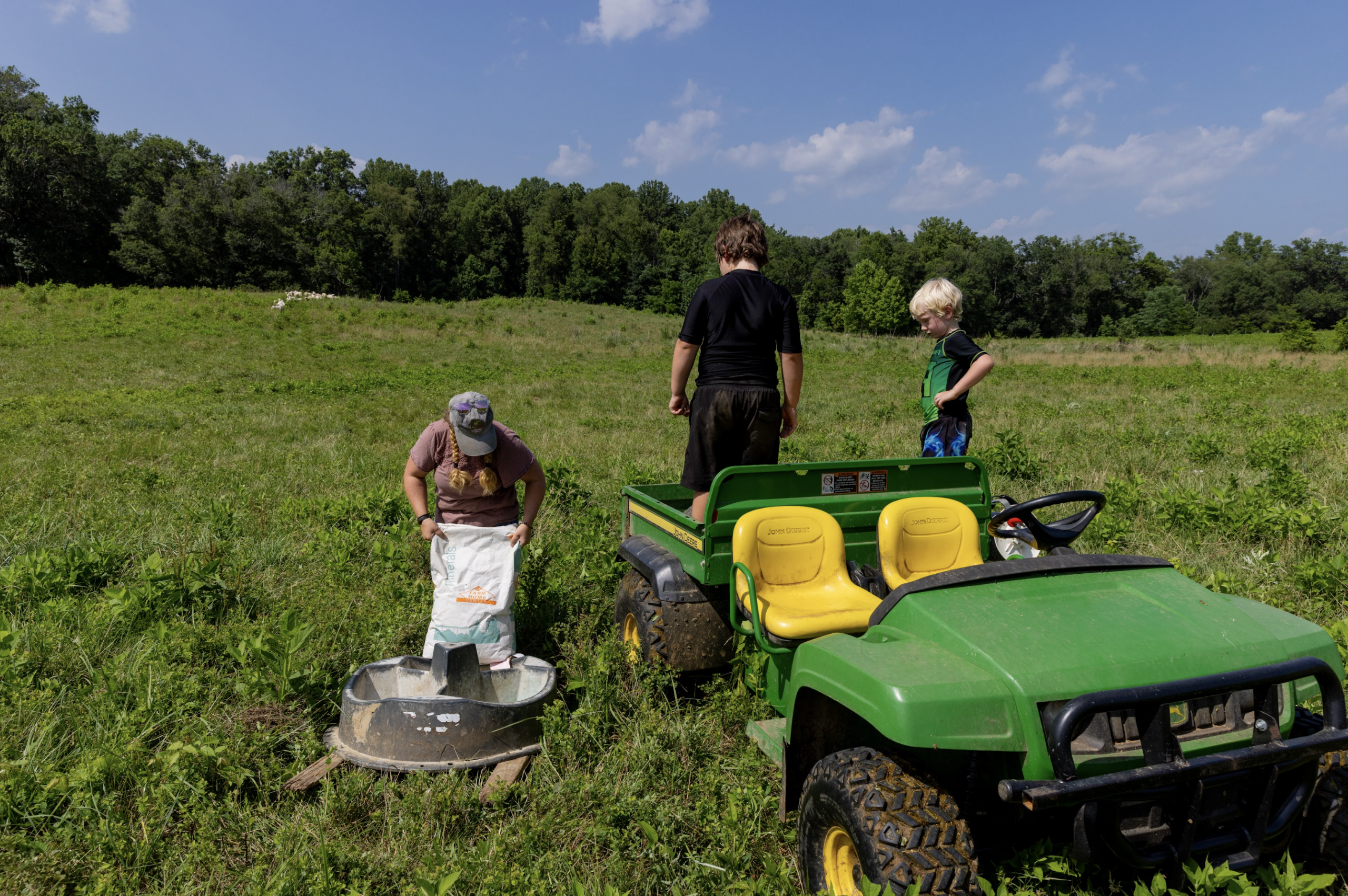
- Bywaters fills a mineral feeder in a pasture as her sons watch. (Photo/Ireland Hayes)
“There is always something being dropped,” she said. “I try to accept that things can be messy and that’s just the season of life we are in now. I have weeks that are dedicated to the kids, and farm stuff sits on the back burner …”
On hard days, she returns to the land itself.
“I sit with the animals, usually the dogs or the horse,” she said. “A few times they let me cry into their fur. They hold that space for me.”
But she also keeps a mental inventory of what’s good: the hundreds of lambs she’s held, grasses waving through summer fields, her boys running through them laughing.
“I remember why I do this,” she said. “I love the challenges, I love seeing the results of hard work and I love our customers who know we are doing more than just raising meat.”
For Bywaters, farming isn’t just production — it’s stewardship.
“You work with nature, or you work against it. And if you aren’t working with it, then what’s the point. I farm because it’s how I can help a little piece of this planet.
“It might not be much in the grand scheme of things,” she said, “but for this little bit of earth I get to tend, and the inhabitants that live on it, it’s everything.”
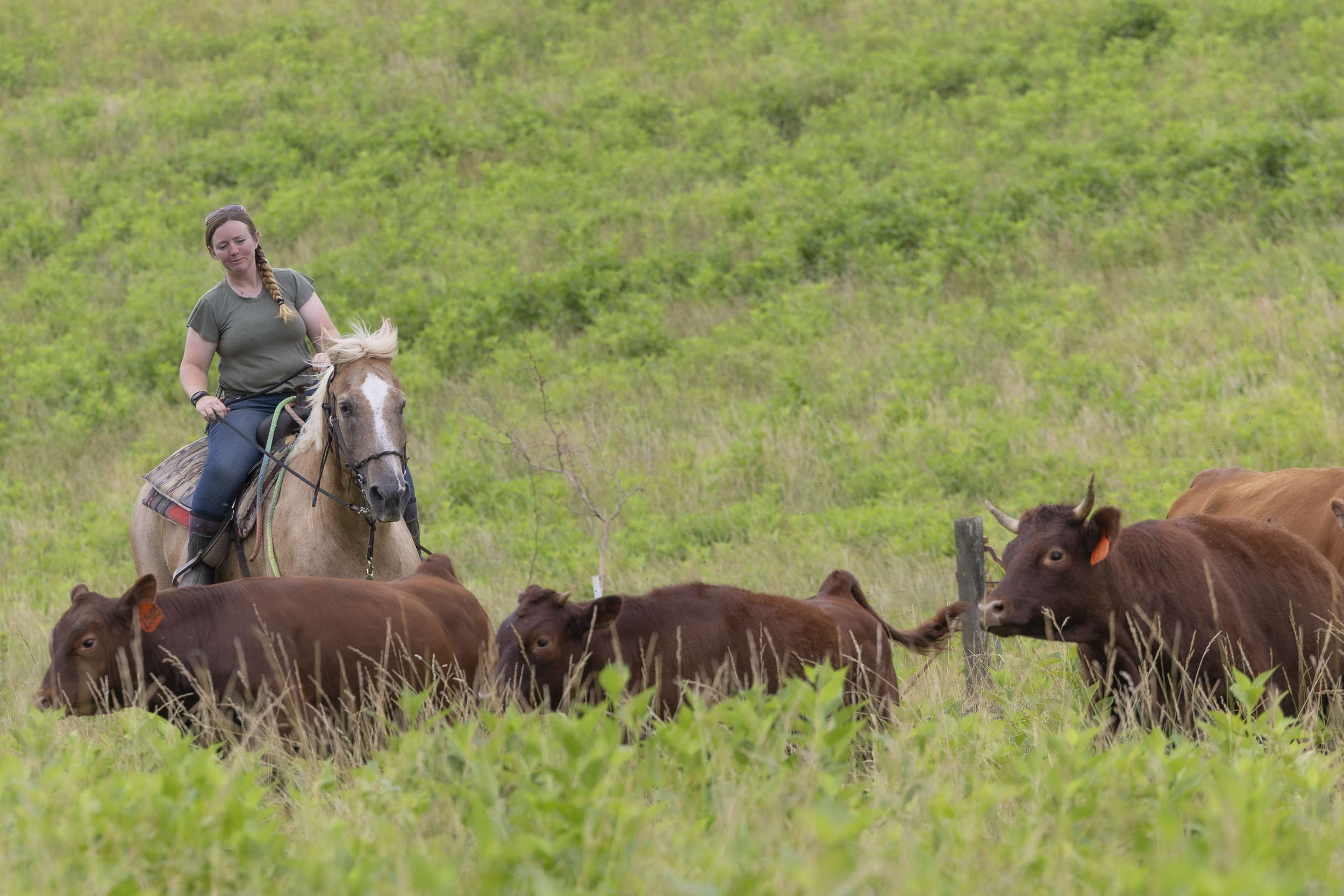
Amanda Frye Bywaters herds cattle on her American quarter horse, Shane, at Bean Hollow Grassfed farm in Flint Hill. (Photo/Camden Littleton)