

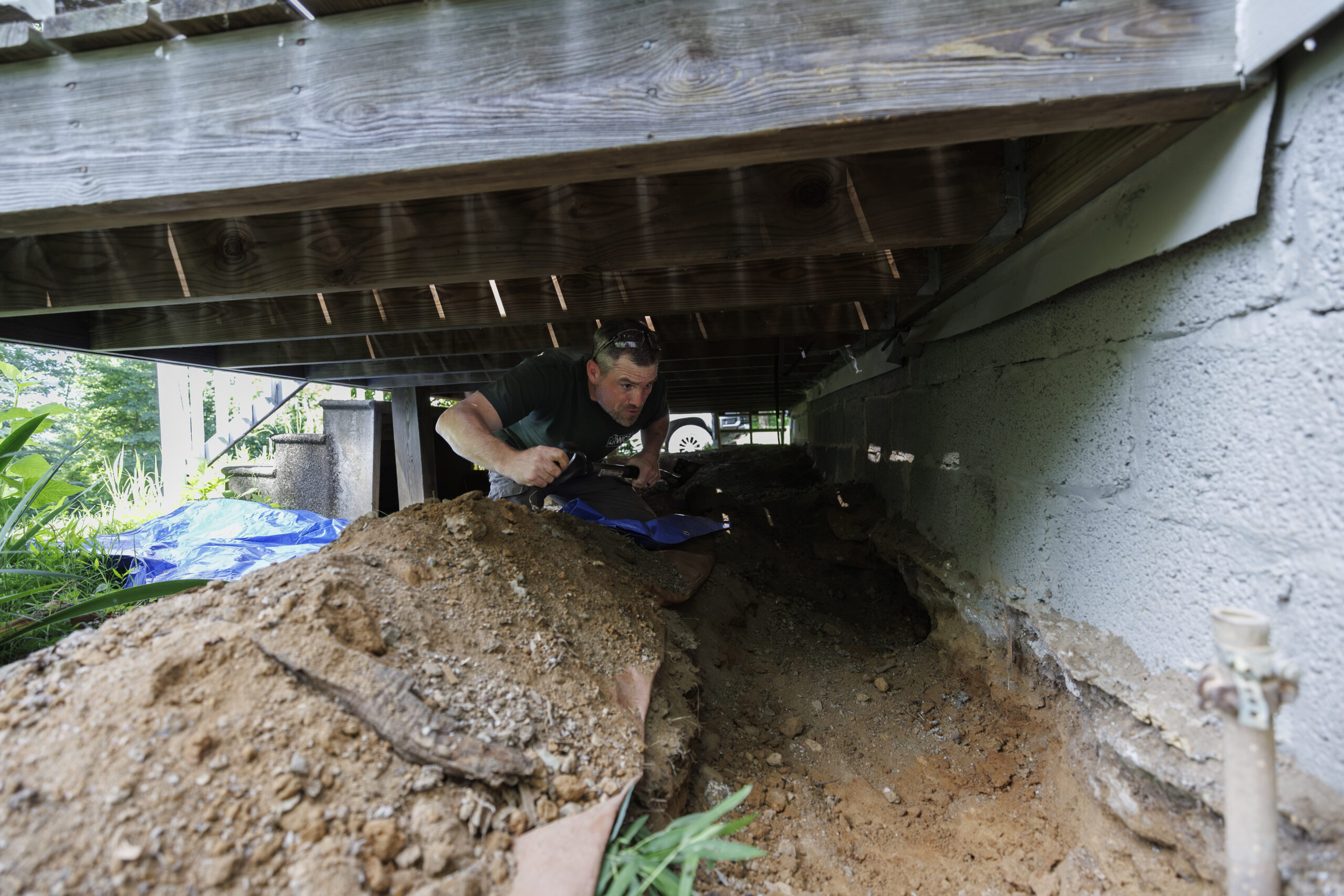
Let’s say there’s a female raccoon inside the wall of your house. Just what you need, right? But there’s more. With her is a litter of raccoon kits. Now what?
Will Russell knows just what. This calls for a pheromone, or scent, from a male raccoon.
“I put it in the area where she has the nest with the little ones,” he explained. “It works because she’s afraid that the male raccoon is going to come back and kill the juveniles to reimpregnate her. They’re pretty sadistic.”
The whiff of male is usually enough to get mama and kits to vacate the premises. “We use a lot of, well, just biology,” he said.
So it goes with Russell, 42, who spends his days “humanely” removing animals from spaces that nearby humans would rather not share. And, obviously, not just raccoons — bats, rats, mice, squirrels, snakes, and outside, groundhogs, beavers and the occasional coyote.
During spring — the busy season because many species are birthing — Russell said he and his wife, Alli, can get as many as 20 calls a day at their company, Will’s Humane Wildlife Removal and Repair in Washington. Many are for Rappahannock properties, but they also do work in neighboring counties.
He and Alli have lived in a cottage on the Rush River in Harris Hollow since 2020 when they moved there from Fauquier County to “live a more simple life in the mountains.” He used to work in security in Northern Virginia, but in 2013 started helping a friend with a wildlife removal business and liked it. Five years ago, he went out on his own.
The calls he gets can follow a familiar narrative. A family or a couple move to an old farmhouse in the country, not fully realizing all that comes with that.
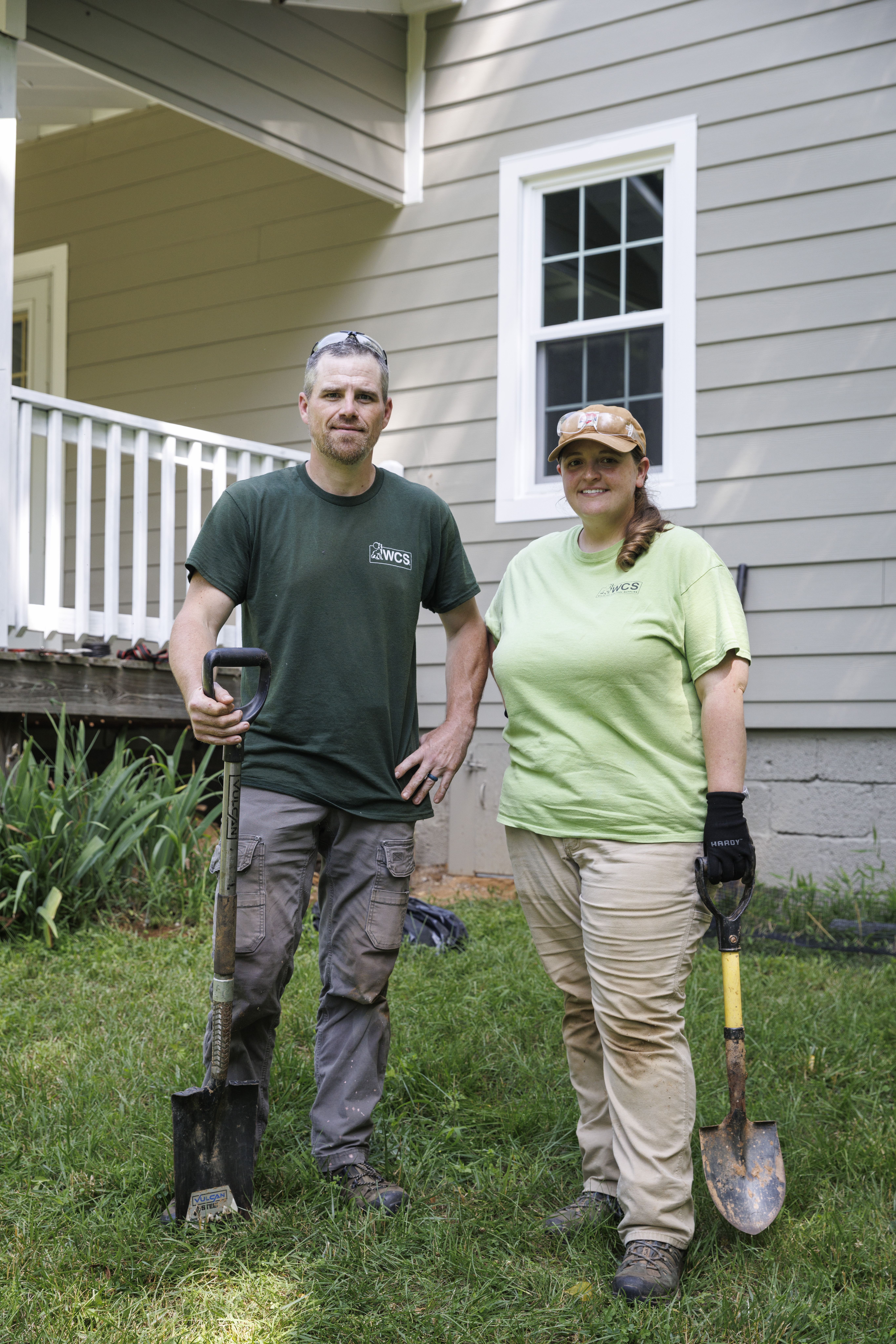
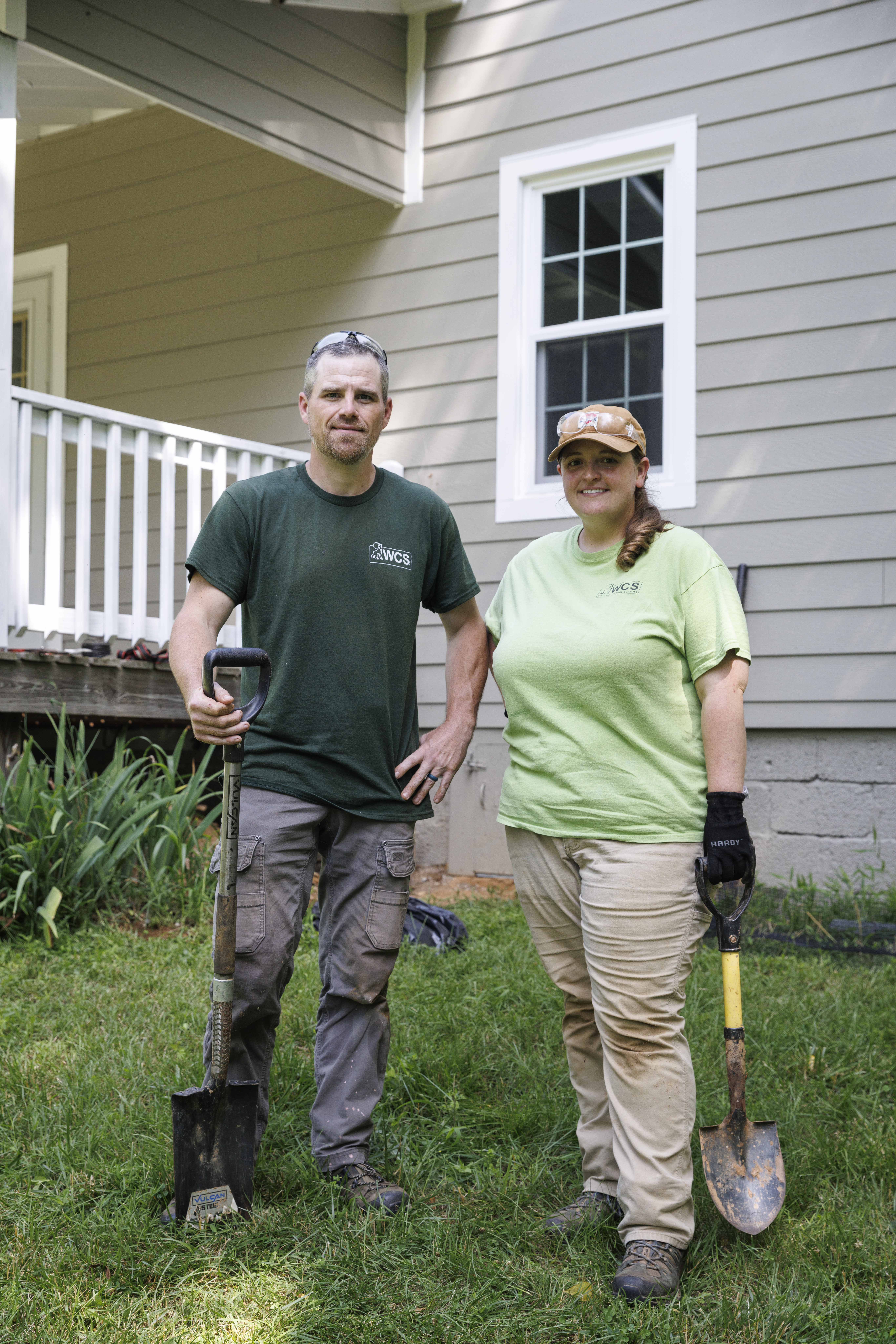
Will and Alli Russell of Humane Wildlife Removal at a home off Harris Hollow Rd. where they are proofing for woodrats. (Photo/Luke Christopher)
“They have no idea about the wildlife issues,” said Russell. “They get in there after a month, and maybe their kids are having allergies from rodent dander. Or they start hearing noises behind the walls at night. That can be very upsetting.”
That said, Russell’s found that most people in the Rappahannock community don’t want the intruders trapped or killed, hence, his company’s name, and his approach. He doesn’t use pesticides or poisons.
But eschewing the use of poison brings its own challenges. He joked about the nice “white dress uniforms” that some exterminators wear. His clothes, he said, “look rough” because not relying on chemicals or pesticides often means crawling through dusty, tight spaces or digging trenches.
“First, you need to figure out how they’re getting in, what are the entry points, but you have to make sure they still have an exit,” Russell said. “It’s rough work compared to being an exterminator.”
Challenge of bats
When asked which evictions are the most demanding, Russell doesn’t hesitate.
“Bats, for sure. Almost all of it is elevated work,” he said.
It’s also complicated by federal laws protecting female bats during maternity season, meaning he can’t evict them between April and mid-August. That’s to ensure that bat pups are able to fly away.
In the meantime, he needs to prep the house so all access, save the ultimate exit, is blocked and to make sure there are no places where young bats can fall behind walls. He also will install a one-way eviction tube that allows the bat family to leave, but prevents their return. He has to take the same type of precautions with young squirrels to make sure they aren’t left behind when the mother leaves.
But that, noted Russell, is only part of the job. He needs to “wildlife proof” the house.
“Anyody can set up a squirrel trap in their backyard and catch a squirrel and assume it was the squirrel that was in the attic.” he said. “But you really don’t know unless you get up there and patch any holes and see if they’ve chewed their way in. You patch it with materials they can’t chew through or pull off.”
Also, it’s illegal in Virginia to trap a wild animal and release it somewhere else. Russell can only do so much in dealing with, say, an intrusive groundhog. If it’s under a shed or a house foundation, he can install barriers to keep it out. But he can’t just catch it and drive it far away.
Same with beavers. They can’t legally be removed. Russell can install beaver-proof fencing around trees and guards around drains and culverts that make it harder for beavers to block them. The thinking is that if they’re denied a food source and building material, they’ll move on. If that doesn’t work, and the property owner chooses, they can be put down with a firearm, which he says is the most humane way to euthanize animals.
“I’ve had customers who let wildlife issues get bad around their homes because they were under the assumption that at some point the animals could be trapped and released in a sanctuary,” he said. “So, not realizing it’s not an option, they let the problem build up. Then they face another decision whether to let the situation continue or have the animals euthanized because they can’t just be moved.”
Dark crawl spaces
For all the wildlife removal work he’s done, there are still jobs Russell would rather forget. Like the one that required climbing up and working from a 47-foot high ladder to seal holes or cleaning up raccoon poop in a 100-degree attic “when the ammonia is so bad I can hardly breathe.”
Then there are snakes. Actually, Russell doesn’t have a particular fear of them, and most of his snake jobs involve non-venomous black snakes and others drawn to rodents. He has dealt with copperheads, too, particularly in homes higher up mountains, usually without any problems. But there are worst-case scenarios.
“Sometimes I have to go into crawl spaces,” he said. “I’m not necessarily claustrophobic, but I don’t like being in areas where I can’t move my arms. And the owners have seen venomous snakes down there.
“Or the HVAC repair guy said he saw three juvenile copperheads in there. So you’re not just looking for them, but you have to pull them out of their home. It’s knowing you have to do that and not have a full range of motion because you’re in a dark crawl space,” he said.
And you complain about your job.
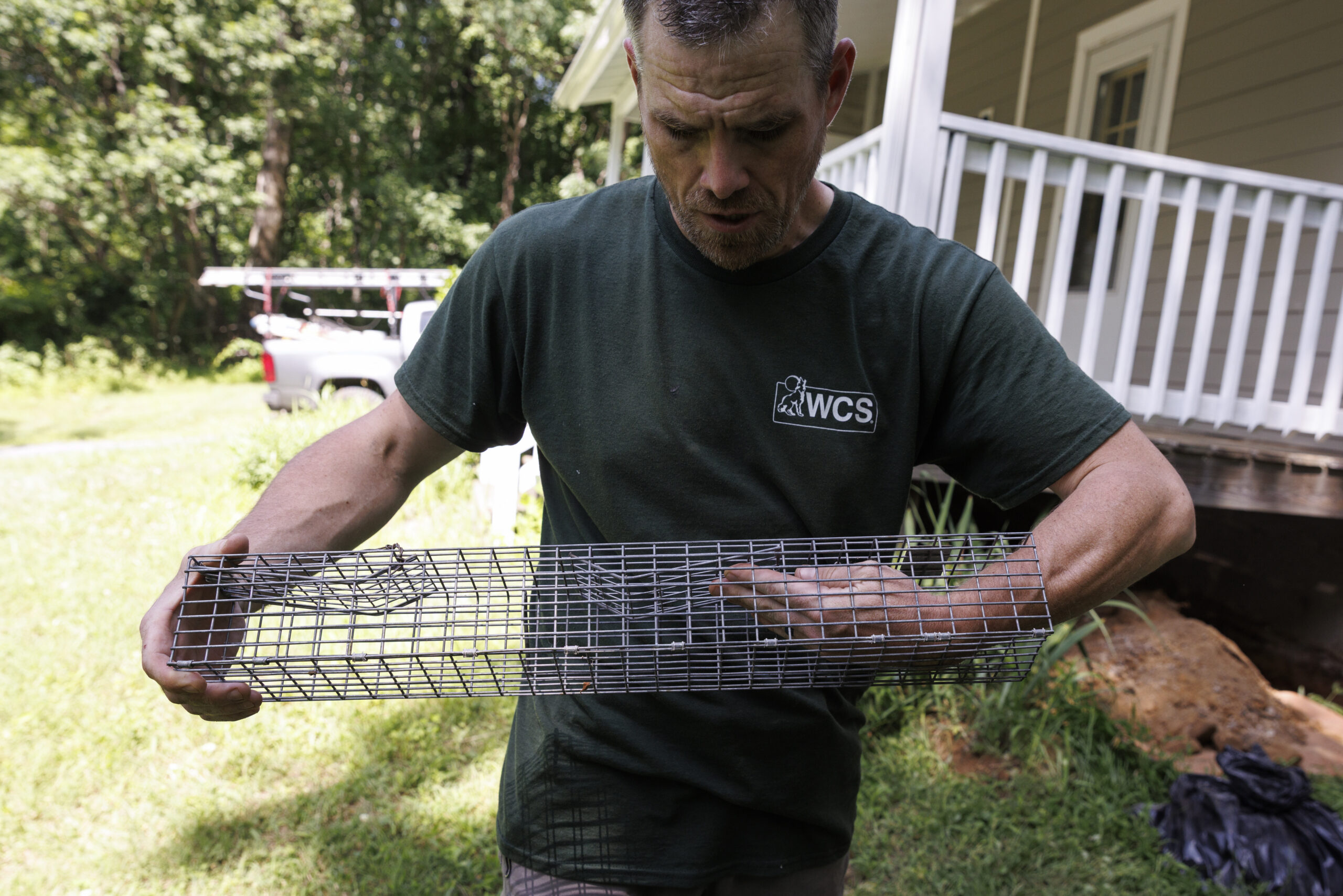
Will Russell of Humane Wildlife Removal at a home off Harris Hollow Rd. where they are proofing for woodrats. He’s holding a One Way Door device that allows the creature to leave the home but not re-enter. “We want these guys [woodrats] to survive, we just don’t want them living in the house, if they are in the woods that’s good, just not in the attic.” (Photo/Luke Christopher)