

New tools improve access for vision, hearing, mobility needs
Rappahannock County’s Office of the General Registrar is rolling out new equipment and procedures ahead of the Aug. 4 Republican primary aimed at making voting more accessible for residents with mobility, hearing and vision impairments.
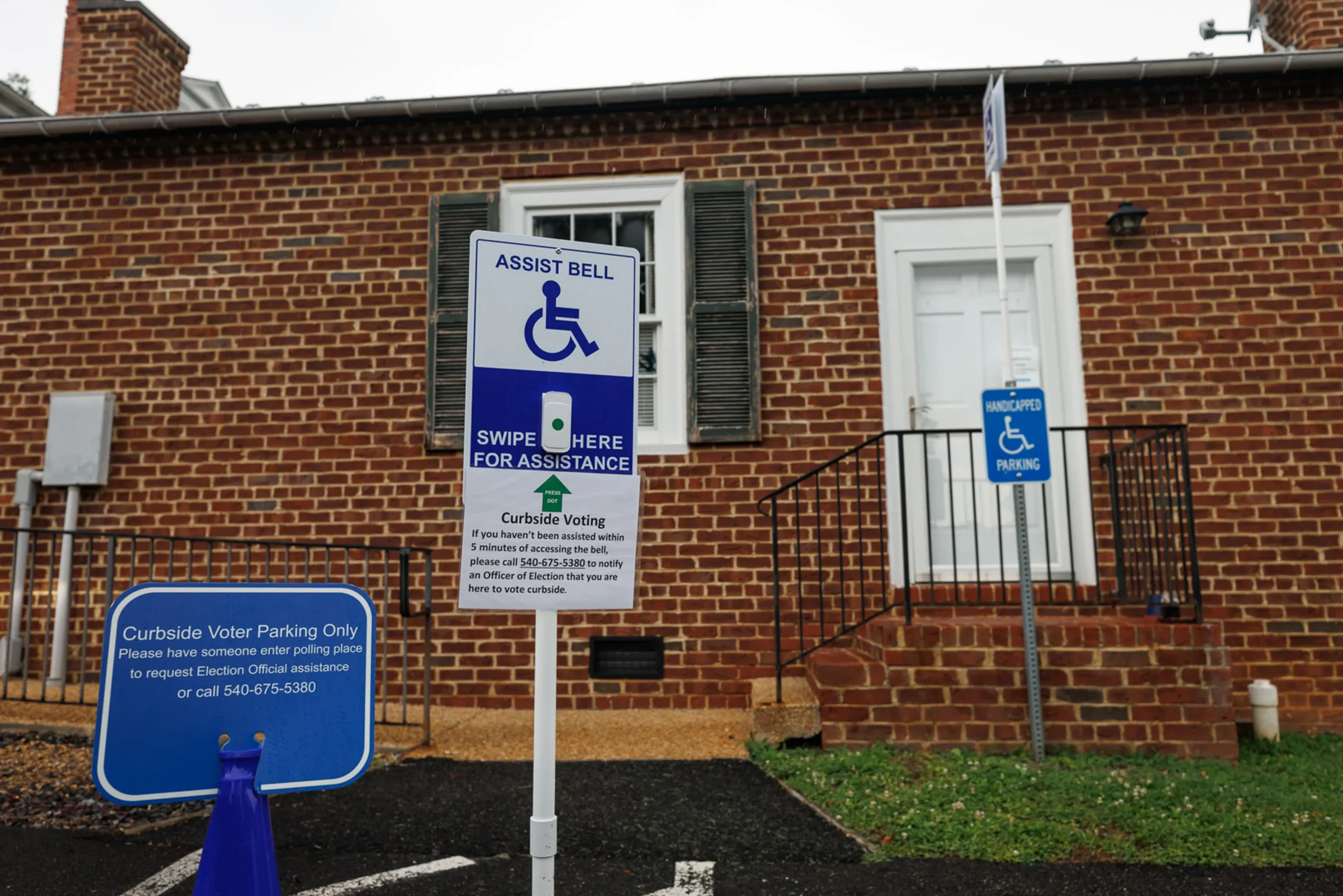
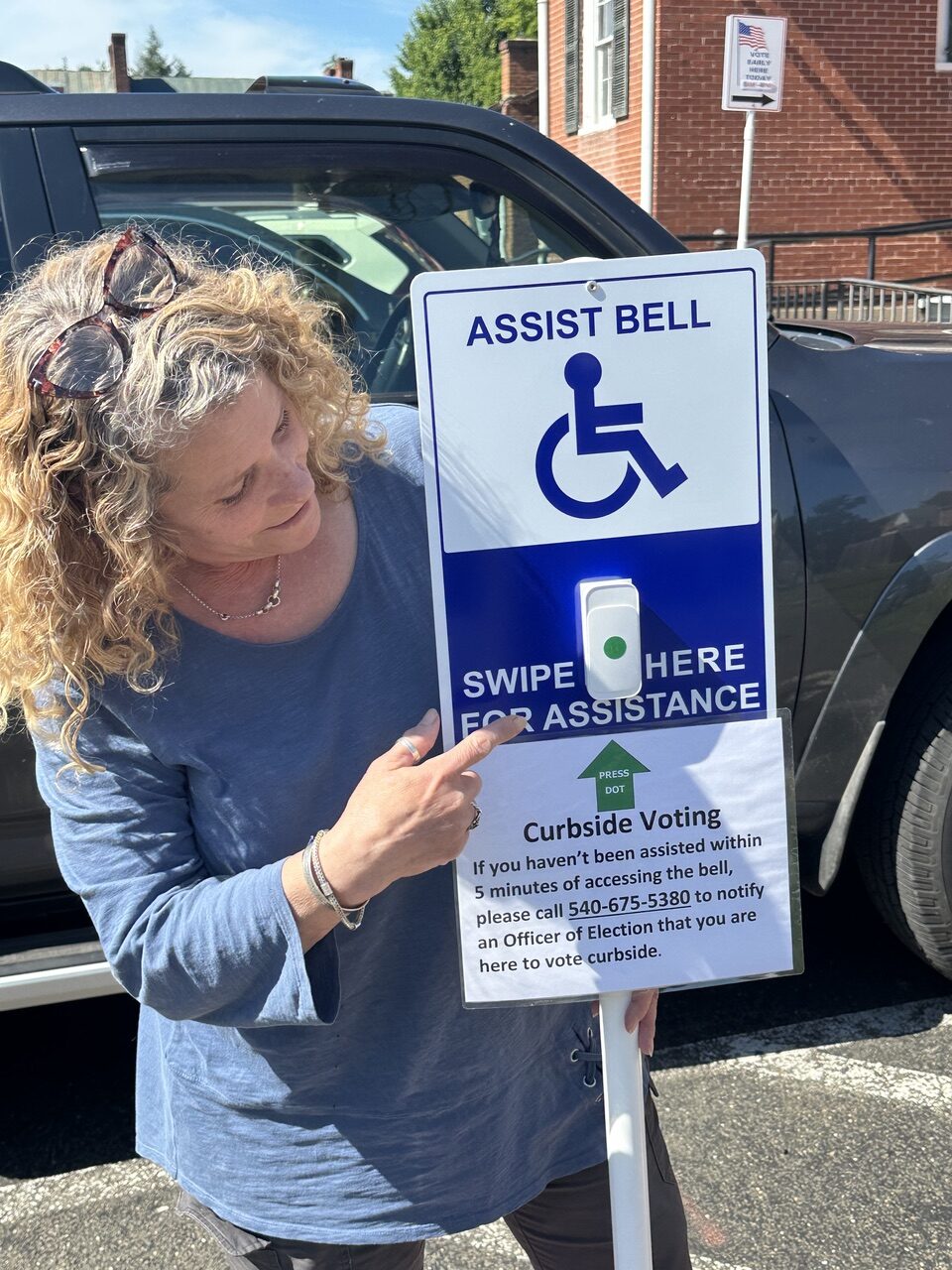
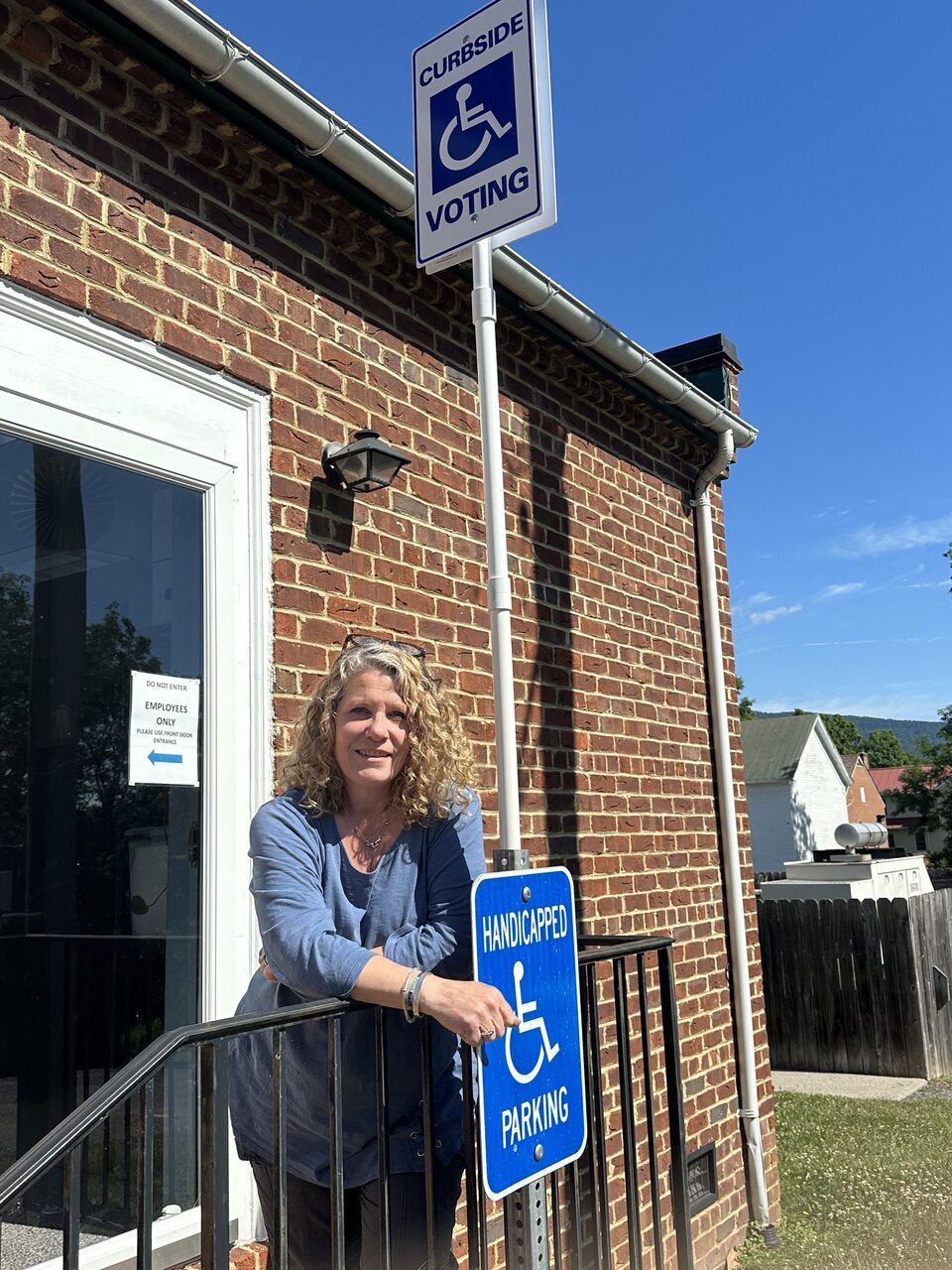
Kim McKiernan, the county registrar and director of elections, said wireless doorbell-style notification systems have been installed at three polling locations — Washington, Amissville and Sperryville — allowing curbside voters to summon an election official without having to send a companion inside. At the registrar’s office in the Town of Washington, a designated curbside parking space equipped with the bell notification system is located behind the building.
McKiernan said curbside voting isn’t only for disabled voters, noting that state law requires it to be available for voters 65 and older. She also said curbside parking spots must accommodate vans with wheelchair lifts.
Previously, voters needing curbside assistance had to rely on a companion to enter the polling place and notify staff or call the registrar’s office directly. Polling places will continue to post a phone number for voters who need to request assistance.
“We don’t have enough election officials to have someone outside monitoring a spot when it’s only a handful of people who vote curbside,” McKiernan said.
In addition to the bell notification system, the county budgeted $90,000 to purchase new voting equipment which is being tested during the primary election period. If they perform well, additional units will be ordered for the Nov. 3 general election.
Also new is a ballot-marking device designed to assist voters with limited vision, hearing or mobility. The unit features a touch-screen interface, a keypad with braille and shape-coded buttons, an adjustable stand for seated voters and headphones with a full screen-reader function.
Voters who are blind can navigate the ballot entirely through audio prompts and select candidates without assistance. The device then prints an official ballot bearing the county seal that voters can review with the person accompanying them before feeding it into a standard vote scanner.
McKiernan said the equipment, manufactured by Unisyn Voting Solutions and certified by the state, replaces an older system that required multiple connected components.
“I feel like this new equipment will be much easier to use for the voters and election workers,” she said.
Early voting underway
Early voting for the Republican primary is underway. The ballot includes three candidates for the U.S. Senate and three candidates for the U.S. House of Representatives.
Democrat incumbents Sen. Mark Warner and 10th Congressional District Rep. Suhas Subramanyam do not have primary opponents. Pursuant to state law they will not appear on the ballot.
Early voting runs through Saturday, Aug. 1, including Sunday voting on July 19 and July 26 from 11 a.m. to 4 p.m., as required under a new state law. Early voting is available only at the Voter Registration Office, 262A Gay St., in the Town of Washington.
The general election is scheduled for Nov. 3. In addition to races for the U.S. Senate and U.S. House, voters are expected to consider three proposed constitutional amendments: establishing a right to reproductive freedom, codifying marriage equality and automatically restoring voting rights to people released from incarceration. Voters in Washington will also cast ballots for members of its Town Council.
Fraud not an issue
Amid ongoing national debate over election integrity, McKiernan said Rappahannock County’s election system has multiple safeguards, including a statewide voter registration database that flags duplicate voting across localities, voter identification requirements, felony penalties for falsifying registration documents, security-sealed equipment with recorded seal numbers and voting machines that are not connected to the internet.
Virginia has also rejoined the Electronic Registration Information Center, Inc., or ERIC, an interstate information-sharing consortium that helps identify potentially inaccurate voter registration records and possible duplicate registrations.
“I’ve been here 14 years, and I know of no instances of noncitizens voting,” McKiernan said. “It’s just not a thing.”