

‘Residents are being squeezed economically’
At first, it was a ripple.
There were more people coming more frequently to the Rappahannock Food Pantry, more seeking help from the Rappahannock Benevolent Fund, more uninsured showing up at the Fauquier Free Clinic.
In recent months, it’s been building into more of a wave.
The combination of stubborn inflation and cutbacks in federal social services programs such as Medicaid and SNAP — also known as food stamps — is putting a growing strain on those in Rappahannock at the lower end of the income scale. And that was largely before the biggest monthly surge in average gas prices since the 1960s.
“Many nonprofits are seeing an increase in need,” said April Achter, director of Communications and Outreach at Encompass Community Supports, an agency providing services for issues involving mental health, substance use, housing and aging for Rappahannock and four other counties in the region.
“The cost of many things has gone up. The cost of gas has really gone up. Our residents are being squeezed economically, and that affects both physical and mental health,” she said.
Help paying bills
Berni Olson, executive director of the Benevolent Fund, has certainly seen it, particularly when it comes to the impact of rising energy costs. February was an unusually cold month, and a total of 69 Rappahannock residents received grants from the nonprofit, often to help pay electric bills. By comparison, the average number of grants per month last year was 24. The total amount of money provided through those grants in February was $45,000, triple what it typically is per month.
The number of actual grants dropped to a more normal level of 31 in March, but a total of $31,000 was issued in grants, close to double the amount in March 2025. Almost 60% of last month’s grant money was provided to help people pay electric bills or to cover the cost of propane or wood.
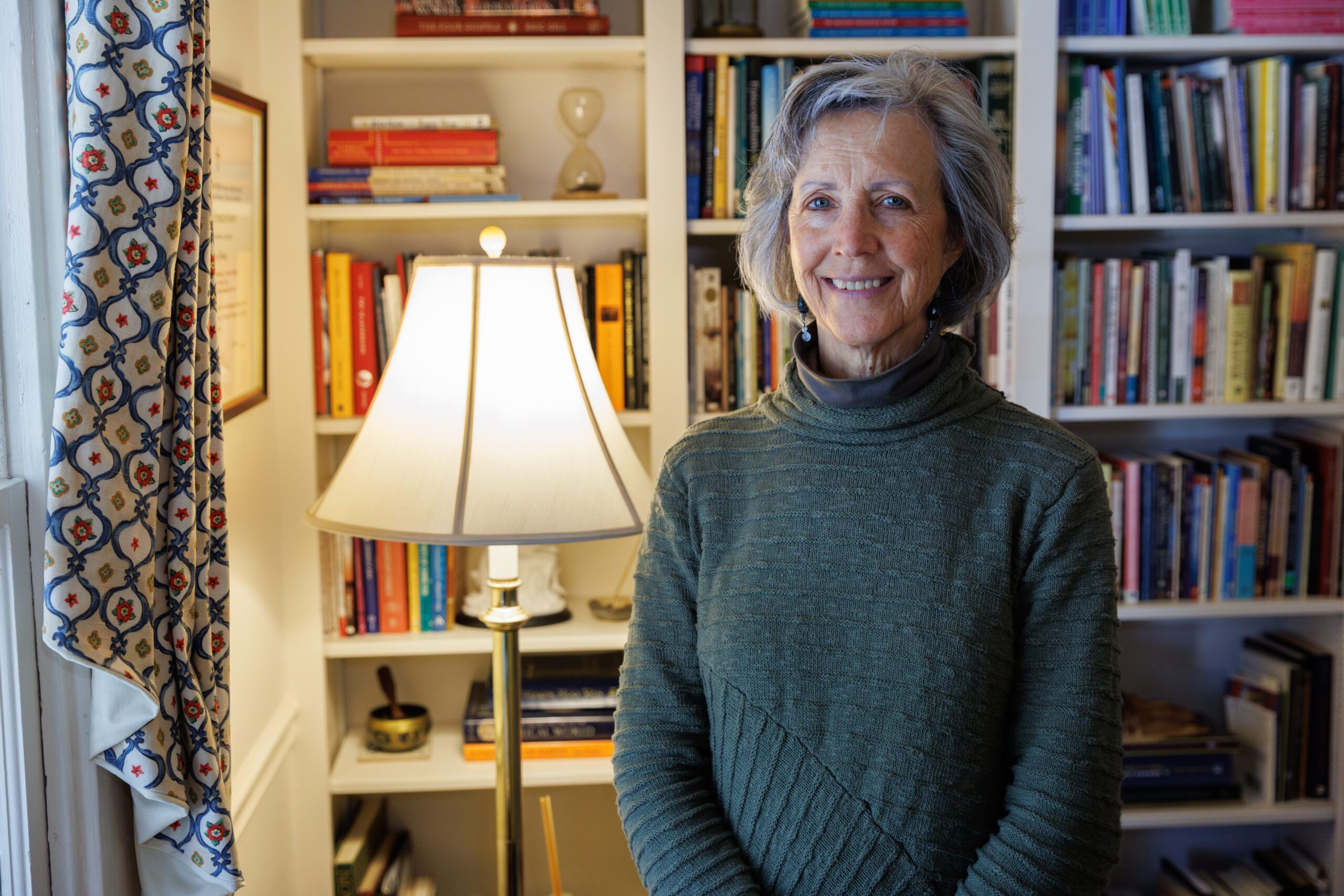
“Typically, people have requested $200 to $300 to help pay electric bills. This year, in February, March, and now into April, people are coming in with bills of $700 to $1,500,” says Berni Olson, executive director of the Benevolent Fund. (Photo/Luke Christopher)
“There has been a more drastic change in what people are requesting,” said Olson. “Typically, people have requested $200 to $300 to help pay electric bills. This year, in February, March, and now into April, people are coming in with bills of $700 to $1,500.”
That, she noted, is often an accumulation of bills they haven’t been able to pay. Olson said that of the 14 requests the Benevolent Fund received in March to help cover electric bills, 12 were for more than $600.
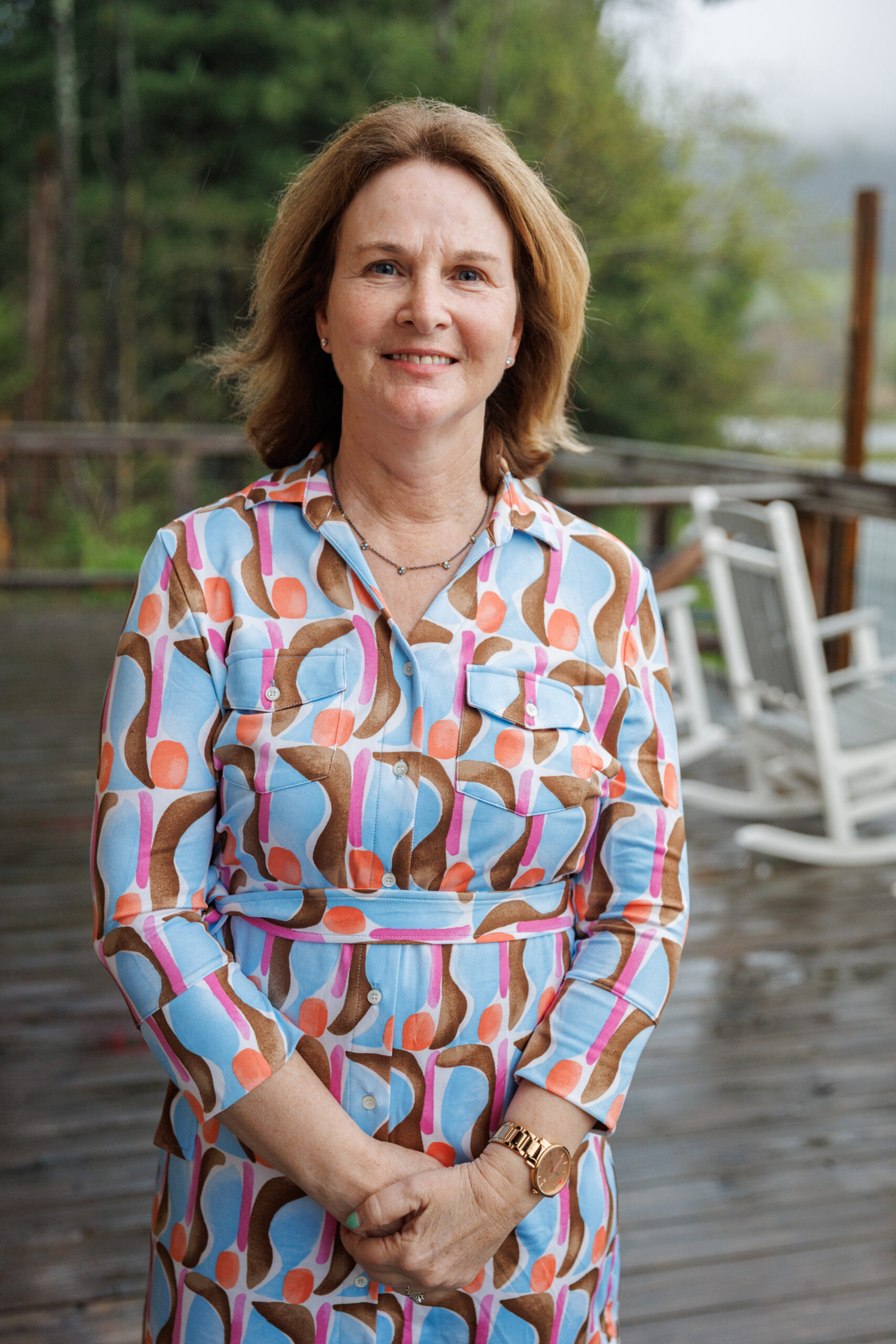
“A few years ago, you would see people come in …once a month,” says Penny Kardis, president of the Rappahannck Food Pantry’s Board of Directors. “Now, I’m seeing clients coming in twice a month, as often as they can…and I think that’s because of the grocery prices.” (Photo/Luke Christopher)
More food pantry shoppers
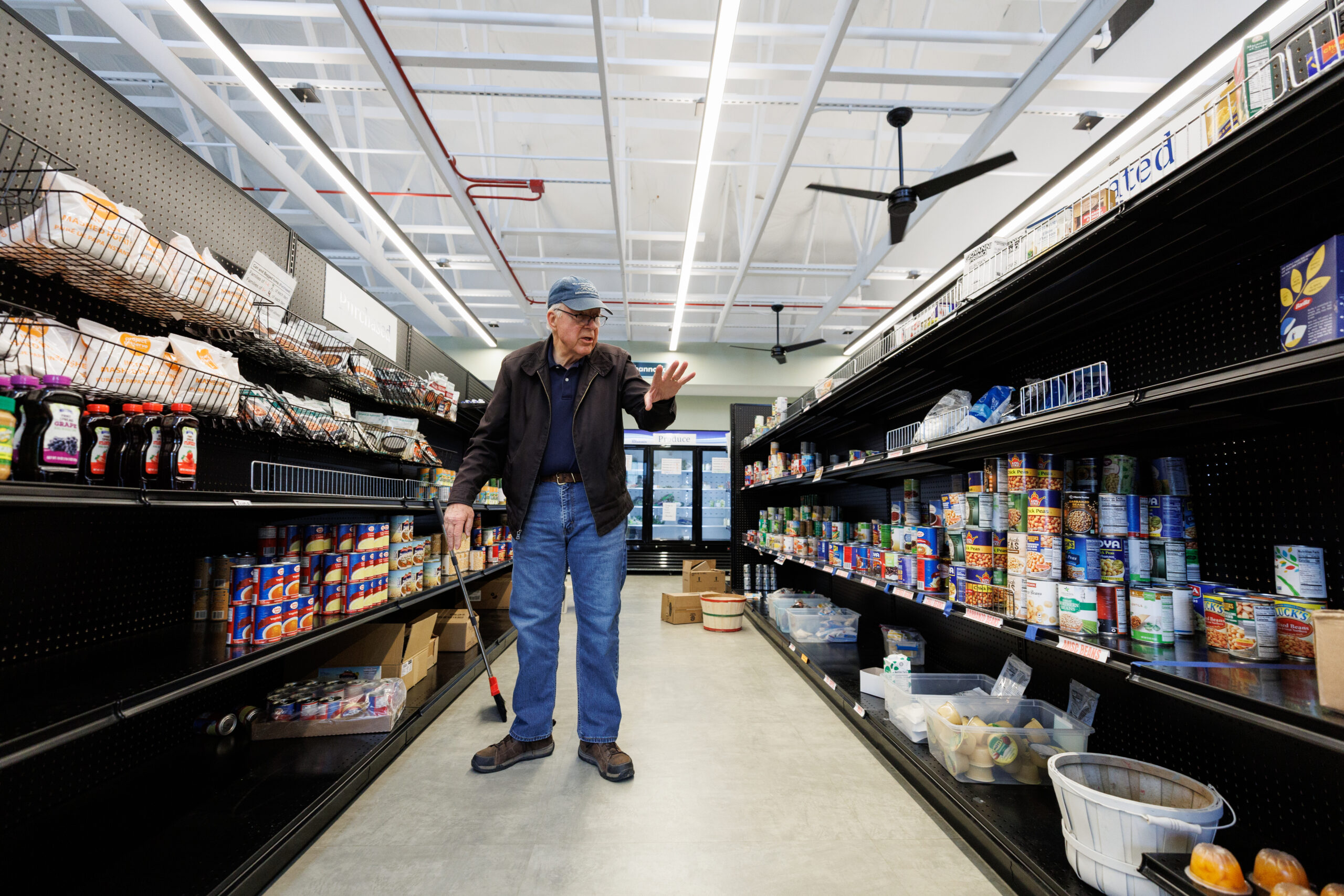
There have been similar trends at the Rappahannock Food Pantry. Not only are more clients getting food and other products there, said Penny Kardis, president of the pantry’s board of directors, but they’re coming in more often. People are permitted to shop there twice a month, three times if they have children under the age of 18.
“A few years ago, you would see people come in more as a stopgap,” she said. “They’d come in once a month, to bulk up their pantries, to get the basics, and not so much to get fresh produce or bread. Now, I’m seeing clients coming in twice a month, as often as they can, and they’re picking up produce and bread. More are using us for their regular shopping, and I think that’s because of the grocery prices.”
She added that the higher cost of gas is likely another factor. While Rappahannock lacks a grocery, it’s becoming more expensive for county residents to drive to neighboring counties to buy food. So, she said, “We’re seeing more and more people sign up here.”
The numbers reflect that. In 2024, there were 10,242 visits to the food pantry. Last year, there were 12,851 visits, an increase of more than 25%. Also in January 2025, 183 families shopped at the pantry, according to Kardis. By December, that number had risen to 262 families, a bump of more than 40%.
Complicating matters for the pantry is that donations from big grocery stores and other sources have dropped almost in half since last summer, another consequence of rising food prices. Given their tightening cost margins, those stores, said Kardis, aren’t donating nearly as much as they once did.
“We used to get boxes and boxes from them,” she said. “But that’s not the case any more.”
One upside to that trend, though, is that the pantry has been relying more on area farms. Last year, it spent $44,000 to buy meat, produce and eggs from local farmers.
Loss of health insurance
Another nonprofit under more strain these days is the Fauquier Free Clinic in Warrenton, which also provides health care for Rappahannock residents. According to its executive director, Rob Marino, it’s seeing a surge in demand while experiencing a big drop in funding. Last year, he said, it saw its Medicaid reimbursements drop by $61,000. That drop off could worsen when other aspects of the “Big Beautiful Bill” Act approved by Congress last July go into effect after the midterm elections.
Marino said it’s difficult to pinpoint any one reason for the funding decrease, but said more patients have told the clinic’s staff that they have had difficulty renewing their Medicaid coverage. He suggested that some may have heard about the coming Medicaid cutbacks and assume they’ve already gone into effect, or they’re discouraged by the increased frequency with which they will need to update their work information. Still others have indicated that they are increasingly uncomfortable with providing personal details to the federal government.
Marino said that’s even true of people not at risk of being deported — they just don’t want to share any information related to their families. “So they let their insurance lapse. It’s not a good choice, but it’s what they’re doing,” he said.
Still another factor is the non-renewal of Affordable Care Act subsidies, resulting in significantly higher monthly premiums for those with that private health insurance coverage. “People got their first premiums without the subsidy, and they said, ‘Holy cow, forget it,’” said Marino.
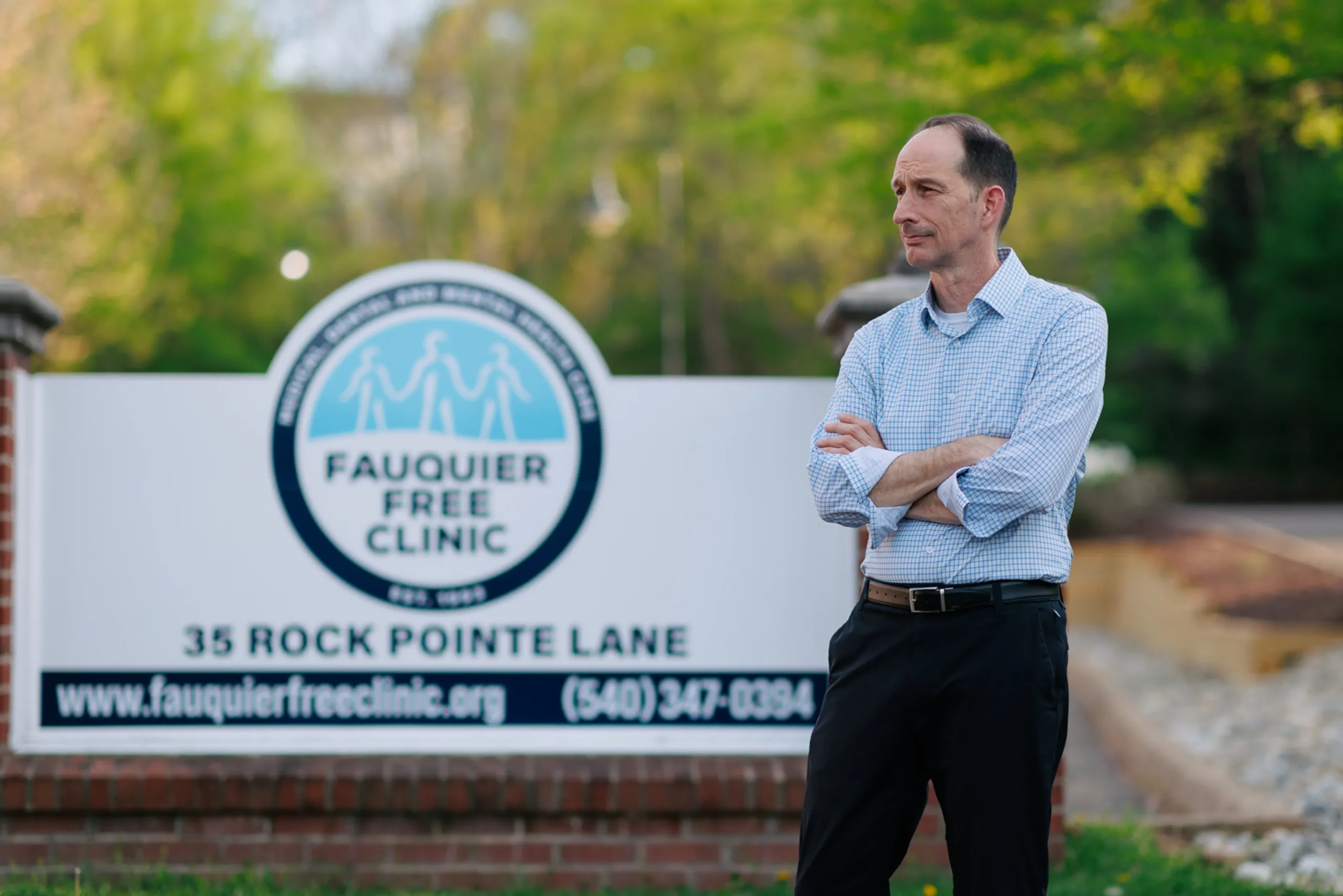
“I just got an email from somebody …and they said, ‘I lost my Medicaid and I’m out of my medicine. Can I see the doctor and get my medicine?” It’s kind of like this every day, all day right now,” says Rob Marino, executive director of the Fauquier Free Clinic, about a rise in the number of people without health insurance. (Photo/Luke Christopher)
The result has been a clear rise in the number of people without insurance coming to the clinic. It’s been able to handle the increased demand, according to Marino, but the staff has had to start making adjustments. There are now wait lists for non-emergency dental care and some mental health counseling, particularly for Spanish speakers.
The clinic more often now has to pay for patients’ medications, something that Medicaid would have covered. Through the first three quarters of this fiscal year, the clinic has purchased 6,400 prescriptions, compared to 5,800 during the same period the previous year. Marino described that as a “significant increase in medication costs.”
“I just got an email from somebody saying they’re coming in to see our counseling service,” said Marino. “And they said, ‘I lost my Medicaid and I’m out of my medicine. Can I see the doctor and get my medicine?’ It’s kind of like this every day, all day right now.”