

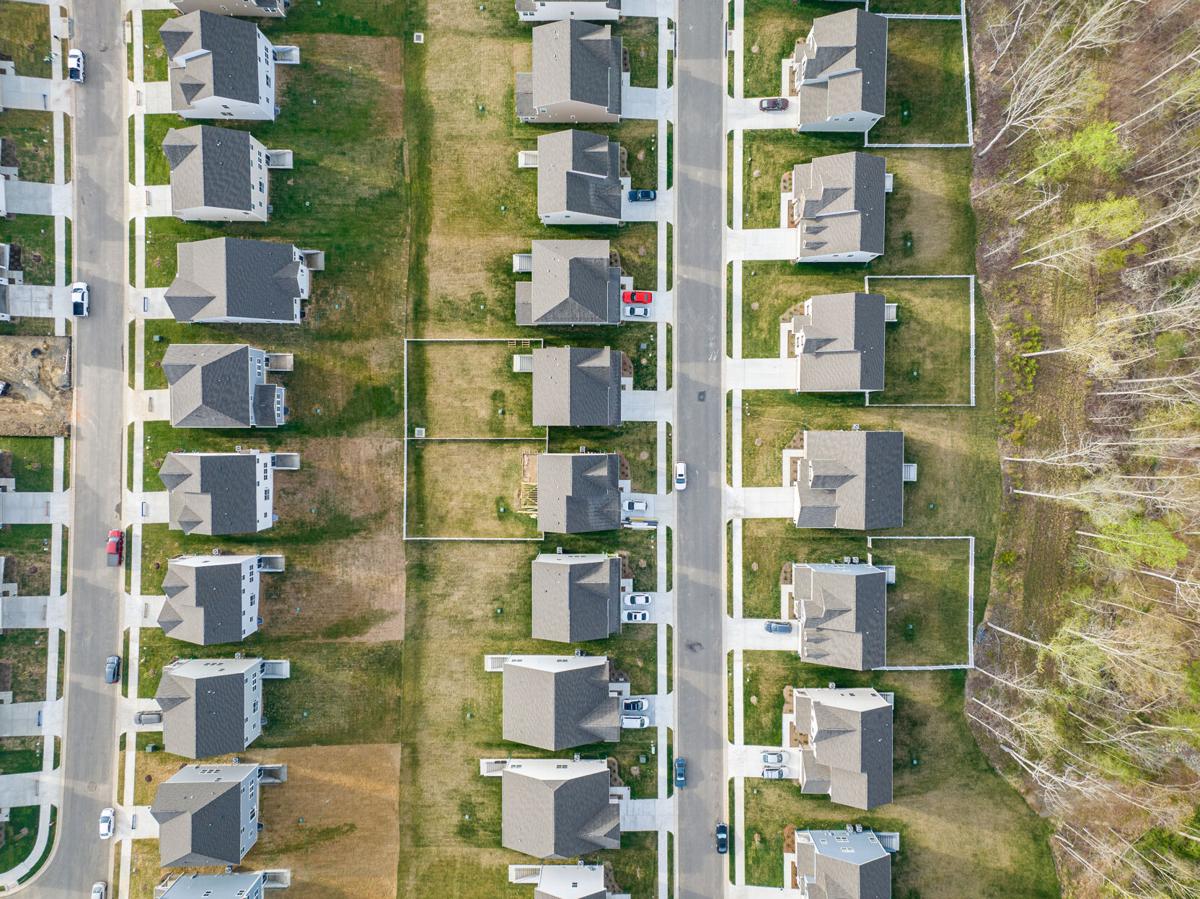
A disappearing dream for buyers, renters
Houses in Rappahannock and nearby counties are so scarce and expensive that thousands of buyers and renters are being shut out of the market altogether.
This sobering assessment about homes in Rappahannock and other counties in the Piedmont region — Madison, Fauquier and Culpeper — found that “homeownership has become increasingly out of reach for all but the highest income households in the Greater Piedmont region,” according to a study released last week by the Greater Piedmont REALTORS®.
Titled “Greater Piedmont Region Housing Gap Analysis,” the study found that the average annual wages for Rappahannock residents came to $49,140, while the income needed to afford a median-priced home was $175,400. The study based the wage findings on the U.S. Bureau of Labor Statistics.
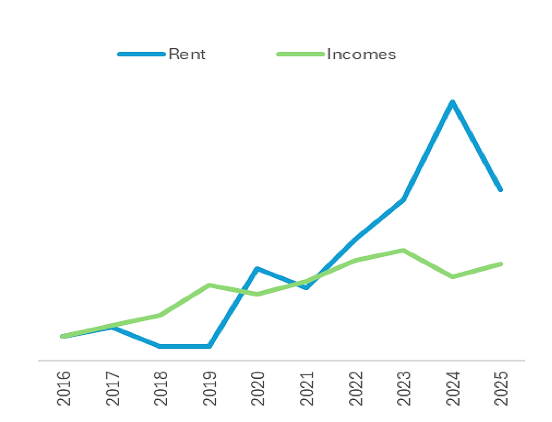
The core problem is that home prices and rental rates have been rising much more than compensation. According to the study, home prices have surged by 50% since 2020, while median household income has risen by only 15%. In Rappahannock, the median house price last year came to $645,250, with few signs of abating so far this year. Rents in the county have followed a similar trajectory, with the median monthly rent coming to $2,450 in 2025.
What’s needed for residents earning median incomes or less, the study said, is far more homes that are priced below $525,000, and more rental units going for $1,250 a month or less, but these price levels are rare these days. Moreover, multi-family housing, generally less expensive, accounts for just 1.2% of the available homes in Rappahannock, compared to 8.9% in Culpeper and 6.5% in Fauquier, the two most populous counties in the study.
As of March, the inventory of moderately priced homes on the real estate market was “almost nonexistent,” the study found. Of all homes listed for sale in the region, only 5% were considered affordable to the median-income household in the region.
Housing is at the crux of the national problem often called “the affordability crisis,” where those earning median incomes or less struggle to cover the costs of essentials like food, shelter and health care. But because housing often soaks up 50% or more of many Americans’ income, it is often seen as the greatest source of financial strain and insecurity.
Working with U.S. Census Bureau data, the study found that Rappahannock presents a distinct demographic profile: it is smaller, older and has experienced less population growth than the other counties. But housing follows the prevailing pattern, with the number of available homes shrinking while prices surge.
Bright MLS, an information platform designed to help real estate brokers understand the markets where they do business, found that as of March 12, there were 33 Rappahannock listings on the market with a median price of $850,000 — well above the 2025 median price, and the highest of the four counties covered in the study (at least for that day).
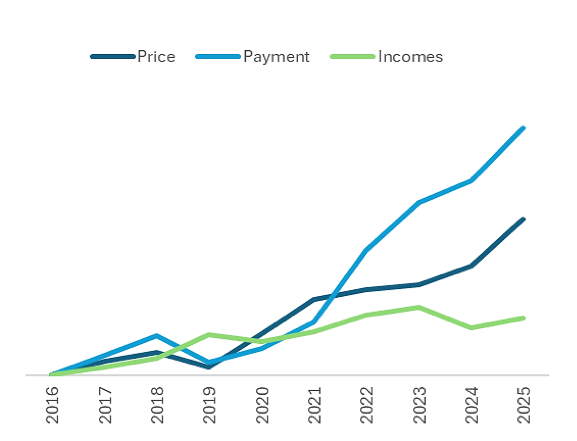
Housing costs have risen much faster than incomes in Rappahannock County. The median home price in 2025 was $617,250 and the median monthly rent was $2,000. (Graphic/Greater Piedmont Housing Gap analysis)
Multiple causes, few ‘silver bullets’
Analysts and housing industry leaders are working to determine just why the housing market is falling so far short of meeting citizens’ needs.
Speakers at a Rappahannock-Rapidan Regional Commission housing summit last Friday emphasized there were multiple causes that explain the affordability crisis and “no silver bullets” to correct the problems.
One of the speakers, Jonathan Knopf, executive director for programs at Housing Forward Virginia, a nonprofit research and policy organization, went on to list a number of “whiplash” experiences stemming from the federal government — including surging energy prices caused by the war in Iran, shifting tariffs and related trade disruptions, and deep staffing cuts at the U.S. Department of Housing and Urban Development, which administers most federal programs to support housing. He warned that everyone involved in the housing sector should expect “turmoil and uncertainty.”
The cost and availability of low-income housing is strongly connected to government support. Knopf estimated that the federal government provides direct support of about $2.5 billion for housing each year, while the state of Virginia injects about $110 million.
Federal assistance for home rentals supports 827 units in Culpeper and 750 in Fauquier, according to the housing gap study. The support falls to 16 units in Madison County, and in Rappahannock, there are no federally subsidized rental units.
Homebuilders have responded by concentrating on the high end of the market, where buyers are less likely to feel constrained by short-to-medium term disruptions and crises, and are less subject to the swings in federal or state support.
Rappahannock County wages are below the income needed to rent or buy a typical home.
The average annual wage for one worker is $49,140, and the income needed to afford median rent is $80,000. The income needed to afford a median-priced home is $175,400. (Graphic/Greater Piedmont Housing Gap analysis)
Shrinking supply
But most experts also see a market component to the crisis. A falloff in homebuilding began after the housing and financial crisis in 2008 and 2009 and continued for most of the decade that followed. The COVID-19 pandemic spurred demand for housing outside urban centers, pushing up prices in areas like the Virginia Piedmont. By March this year, the study found, listings in Rappahannock had fallen to nearly half what they were before the pandemic.
Fewer real estate listings also reflect the preference of many homeowners to hang on to their present homes rather than putting them up for sale — even though the current high prices might be expected to entice sellers. According to The Greater Piedmont Region Housing Gap Analysis, older homeowners often stay put these days because of the paucity of appealing downsizing options. Other homeowners calculate that they would lose a comparatively low mortgage rate if they took out a new mortgage, with higher interest, to finance a new residence.
Affordability isn’t always a precise concept. In the matter of housing, Bright MLS employs a formula that assumes a 10% down payment, a 30-year fixed rate mortgage at current rates, with average property taxes and insurance premiums. If the package ends up consuming more than 28% of household monthly income, the purchase is considered unaffordable.
Zoning intricacies
Intricate zoning requirements can drive up the costs of new homes. Maria Dougherty, a senior associate of Housing Forward, argued that Virginia’s zoning requirements often bias builders toward “large-lot single family homes, which amount to 68% of the housing supply.” She said that single-parent families, elderly people and young unmarried people prefer more compact spaces that are “inclusive, affordable and walkable.”
She added: “Our zoning rules make it hard to build small and varied, and easy to build large and repetitive.”