

The morning begins in a hush.
A thin veil of mist hangs over the rolling fields of Virginia’s Piedmont as riders gather, their horses shifting beneath them in the cold March air. Breath rises in soft clouds. Leather creaks. Hounds stir with anticipation.
Then, a horn cuts through the quiet. In an instant, the landscape comes alive.
Hounds surge forward, noses down, fanning across the field in search of a fox’s scent. Riders follow, sweeping over open fields, clearing fences and threading through woods at a gallop. It is fast, chaotic and exhilarating — a tradition that has played out here for a century.
This year, the Rappahannock Hunt marks 100 years of doing exactly that.
“It’s truly for the sport — the chase,” said Oliver Brown, 74, a longtime master and former huntsman who has spent decades in the saddle.
Founded in 1926 by Sperryville farmers Hugh Bywaters and Joseph B. Johnson, the hunt began simply — two men, their hounds and a shared love of the land. Over time, it grew into a fixture of the region, formally recognized in 1939 and revived after a pause during World War II.
Today, about 50 riders, 25 or so foxhounds and dozens of supporters carry that legacy forward every September through March across a patchwork of 384,000 acres of farmland, forests and mountain terrain currently spanning four counties — Rappahannock, Madison, Culpeper and Orange — making it one of the larger hunting territories in Virginia and in the United States. About 13% of the foxhunting acreage is in Rappahannock.
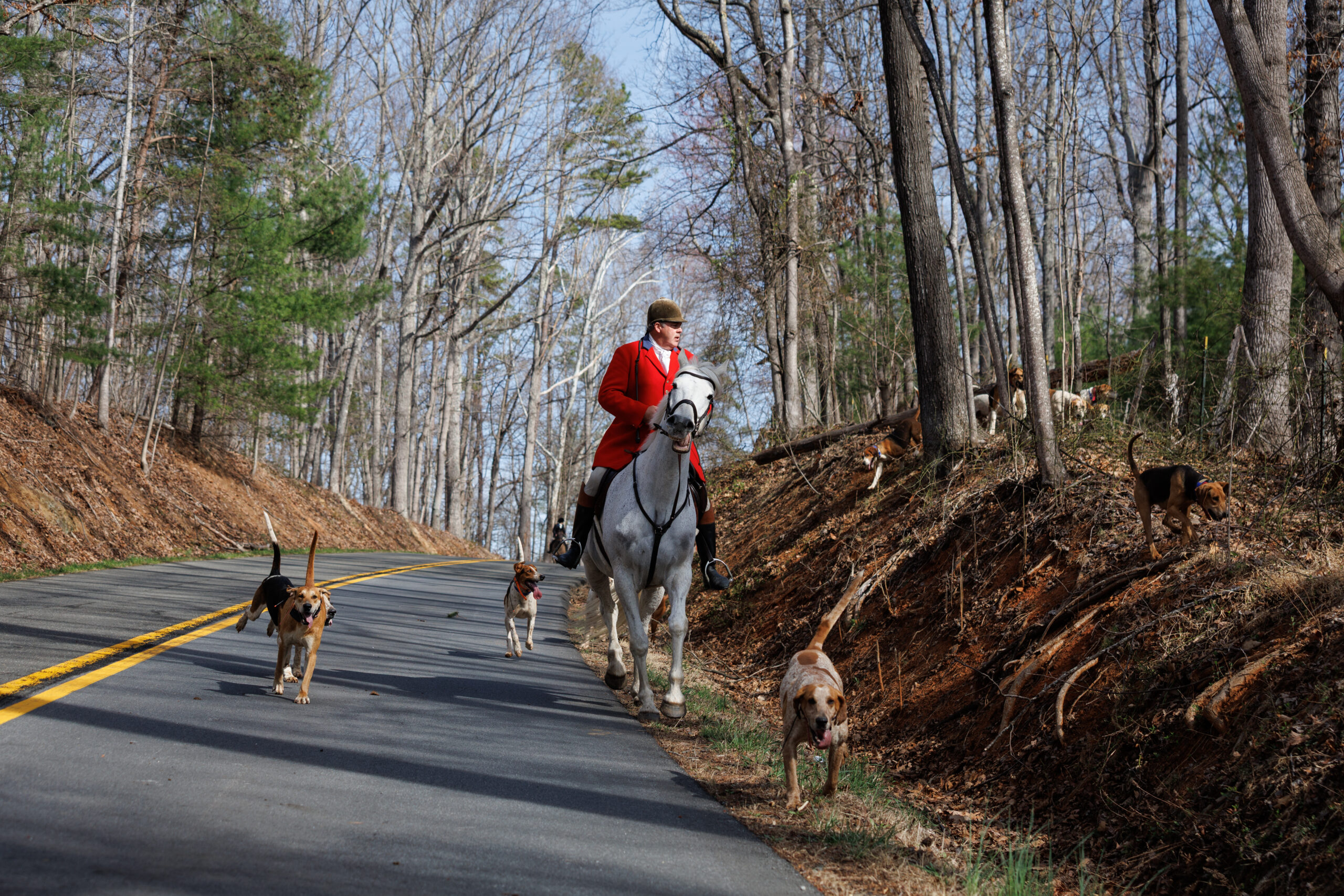
Master Michael Brown leads the hounds in a “full cry” when they picked up a fox’s scent. A whipper-in is in the background to prevent vehicles from passing on the road. (Photo/Luke Christopher)
The Virginia House of Delegates last month formally recognized the Rappahannock Hunt’s 100-year legacy, citing its role in preserving tradition and supporting conservation.
For Brown, who served as huntsman for more than 20 years, the responsibility now extends beyond the ride. Alongside joint masters Michael Brown, 51, and Gus Edwards, 81, he helps steward the hunt’s traditions, coordinate with landowners and ensure that both safety and etiquette are upheld.
Foxhunting’s roots stretch back to 16th-century England, but it found especially fertile ground in Virginia, where even George Washington kept hounds and rode regularly.
Despite changes overseas — including a ban on traditional foxhunting in England in 2004 — the sport remains vibrant here, particularly in the Piedmont.
And while outsiders may misunderstand it, participants insist the goal isn’t the kill.
“It’s really for the love of the sport, not to kill things,” said Kristy D’Alessandro, 31, who has been hunting since she was eight years old and now serves as a whipper-in, managing the hounds in the field. “We want to go out, have fun, run, jump — and hunt the hounds.”
In fact, most hunts end with the fox escaping, often slipping into a den or simply outrunning the scent.
“We want the fox to win,” Brown said. “That’s what makes it worthwhile.”
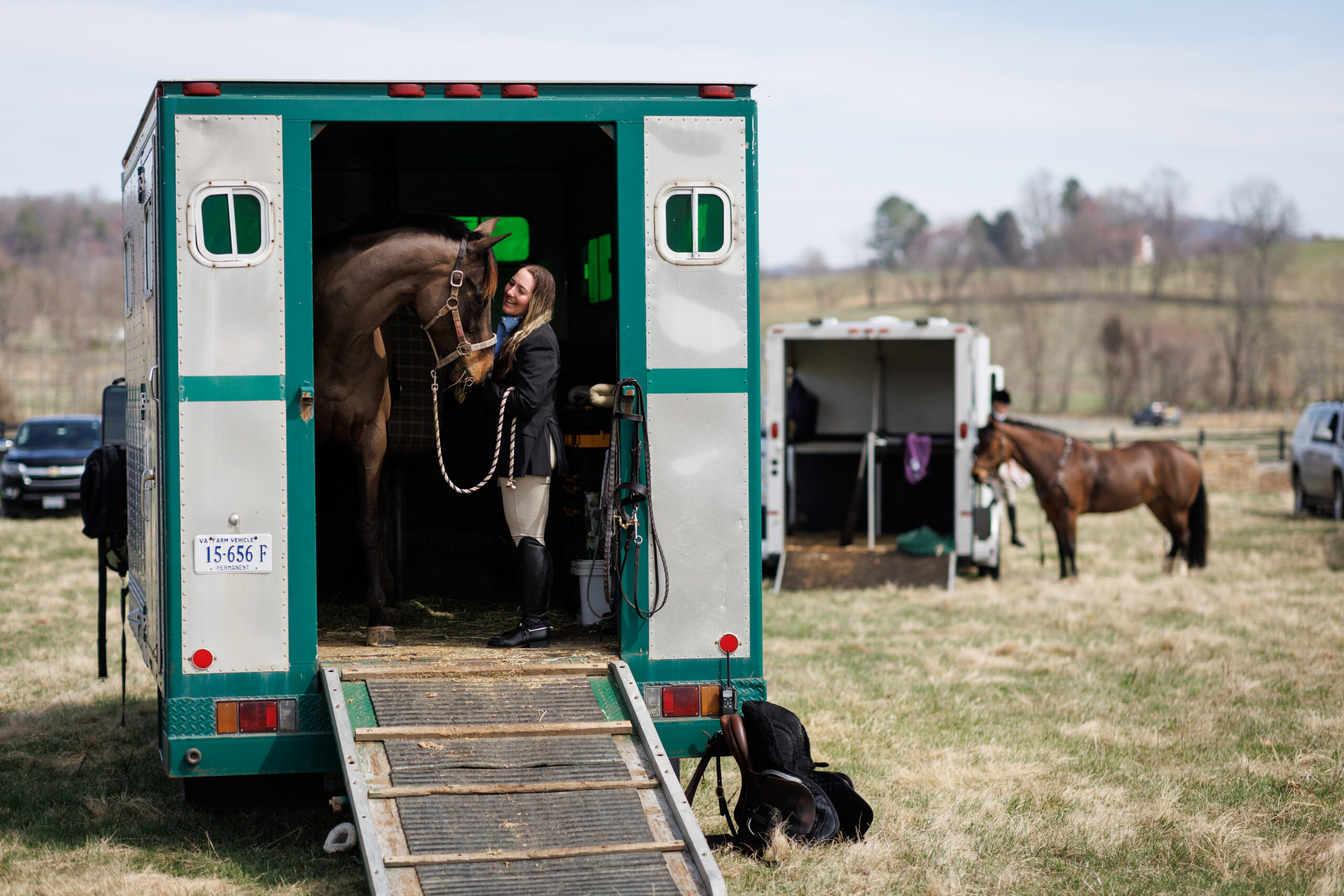
Kristy D’Alessandro with “Ducati VT” a Hanoverian from Virginia Tech’s breeding program, after the hunt at Meadow Grove farm. (Photo/Luke Christopher)
Pull of the land
For many, the deeper reward lies not in the chase, but in the setting.
Riders spend hours moving through landscapes rarely seen from the road — quiet valleys, wooded ridgelines, and sweeping pastures untouched by development.
“It’s an amazing way to spend the day,” said Katrine Pendleton, a member for 15 years. “You see places you don’t get to see any other way. To see it on horseback is amazing.”
Hunt master Edwards still rides for that feeling — the rare sense of being fully immersed in the natural world, rarely seeing a house or a road.
“You feel like you are part of nature, watching the hounds do their work and watching the fox escape — which it does 99.9% of the time,” he said.
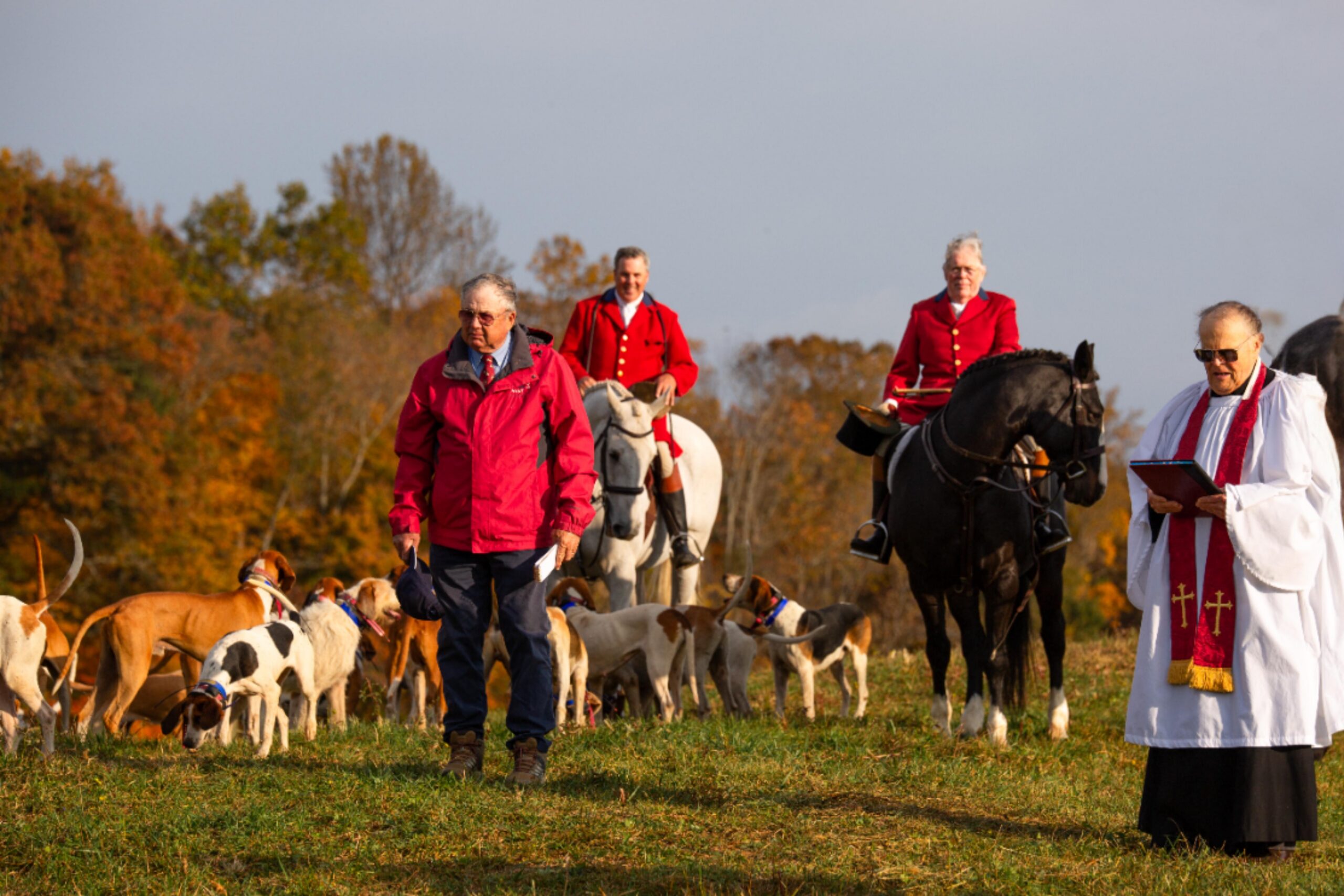
READ MORE: Blessing of the hounds: A prayer before the chase
‘Music’ of the hounds
If the riders provide the motion, the hounds provide the soul.
Their voices — rising, falling, echoing across hills — are what hunters call “music.”
“Once the hounds pick up a scent and start making their beautiful music, it sends a chill up and down your spine,” Edwards said.
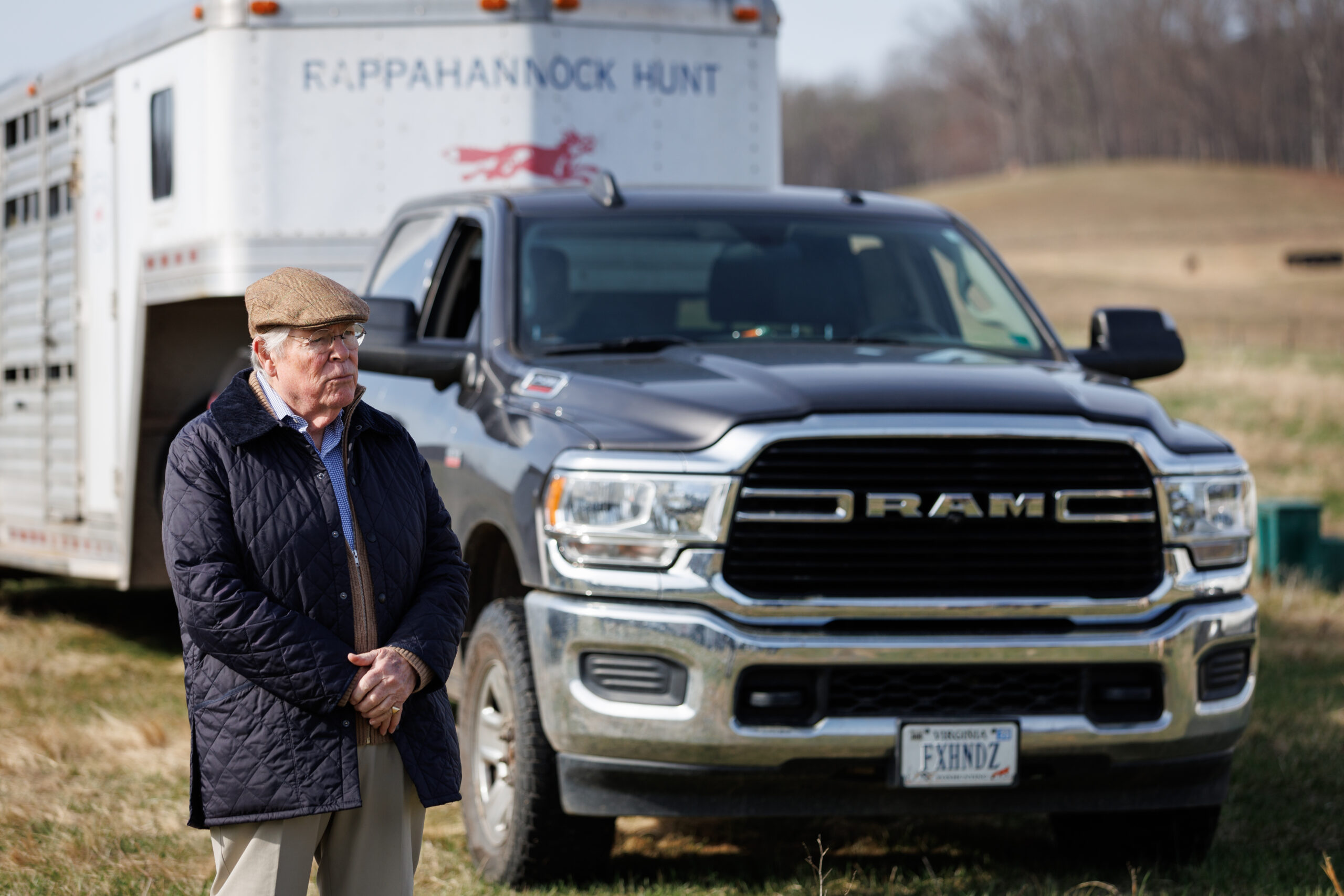
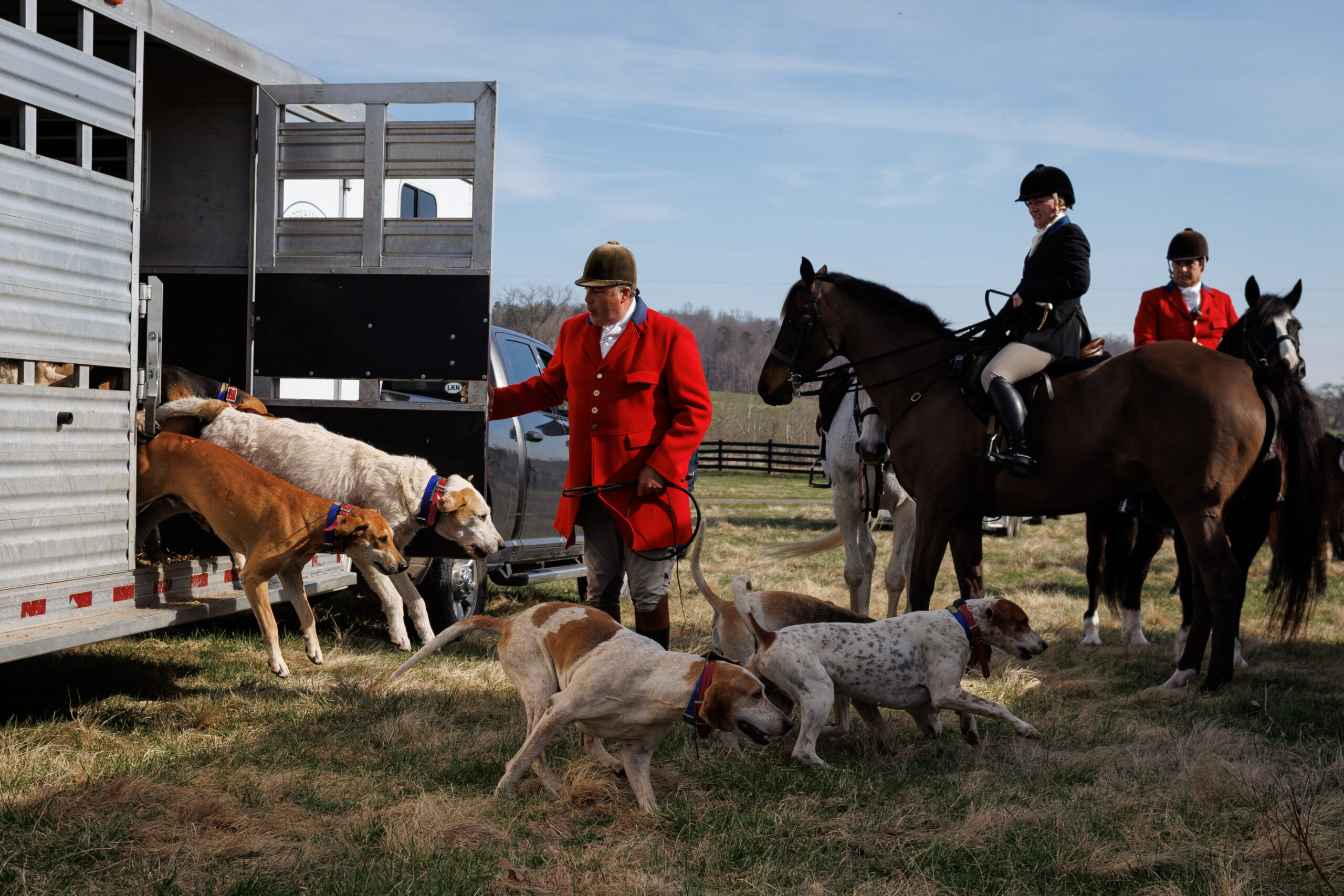
Master Gus Edwards listens at the pre-hunt briefing at Meadow Grove farm in Amissville. (Photo/Luke Christopher)
Each hunt depends on the instincts of these dogs, especially the “strike hounds” trained to find the first trace of a fox. From there, the rest of the pack joins in, building momentum as the chase unfolds. For those who work closely with them, the connection runs deep.
Over time, members come to know each hound individually, learning their personalities and strengths. “Knowing each hound and watching them work is thrilling,” said Rachel Vaughn, 27, who grew up with the hunt and now serves as a whipper-in.
-

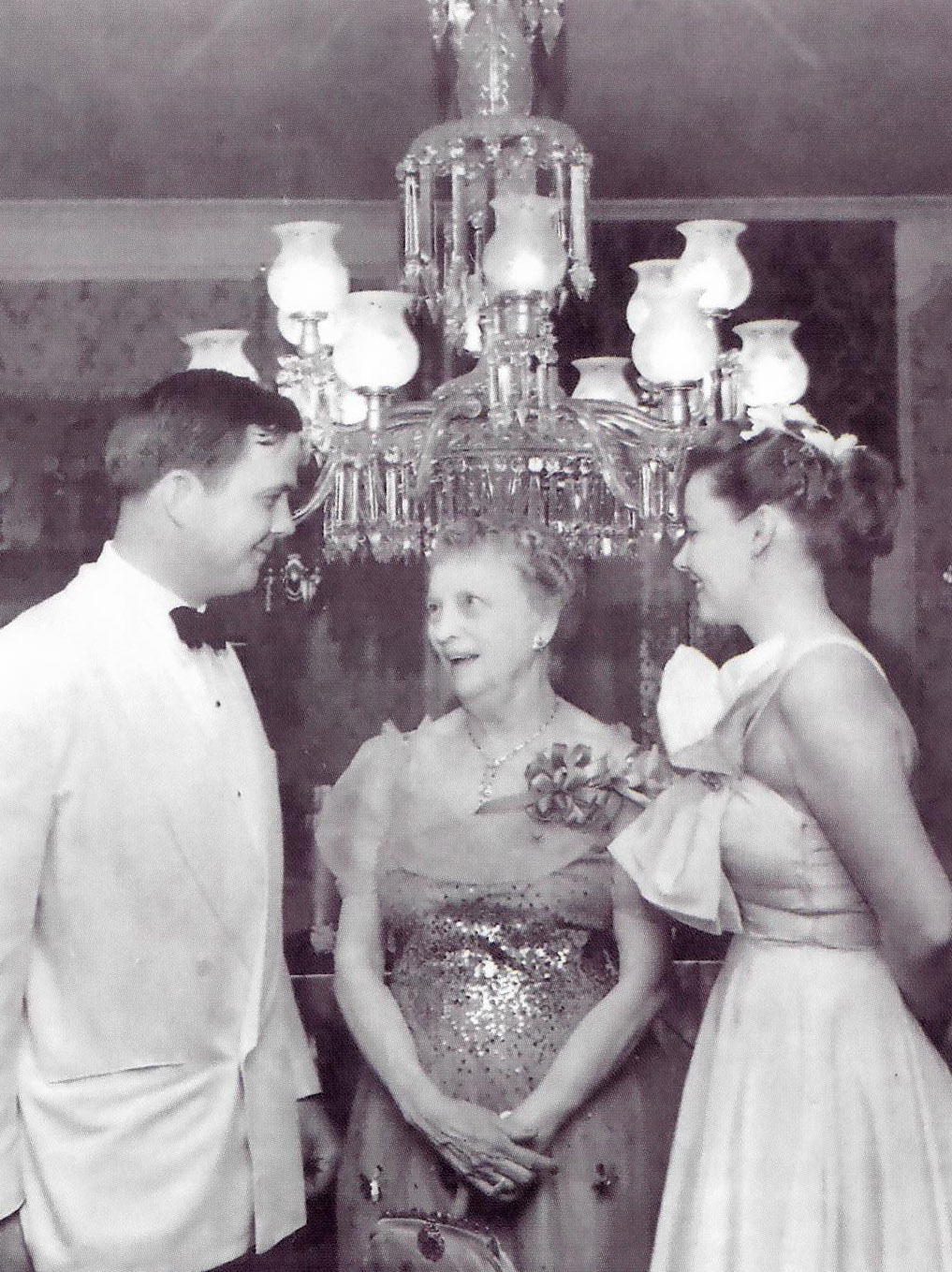
- Jim Bill Fletcher, Mary Jamieson and an unidentified fellow attendee at a Rappahannock Hunt ball yesteryear.
-
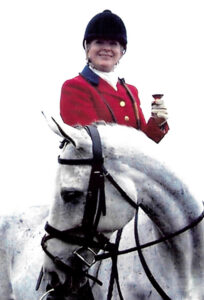
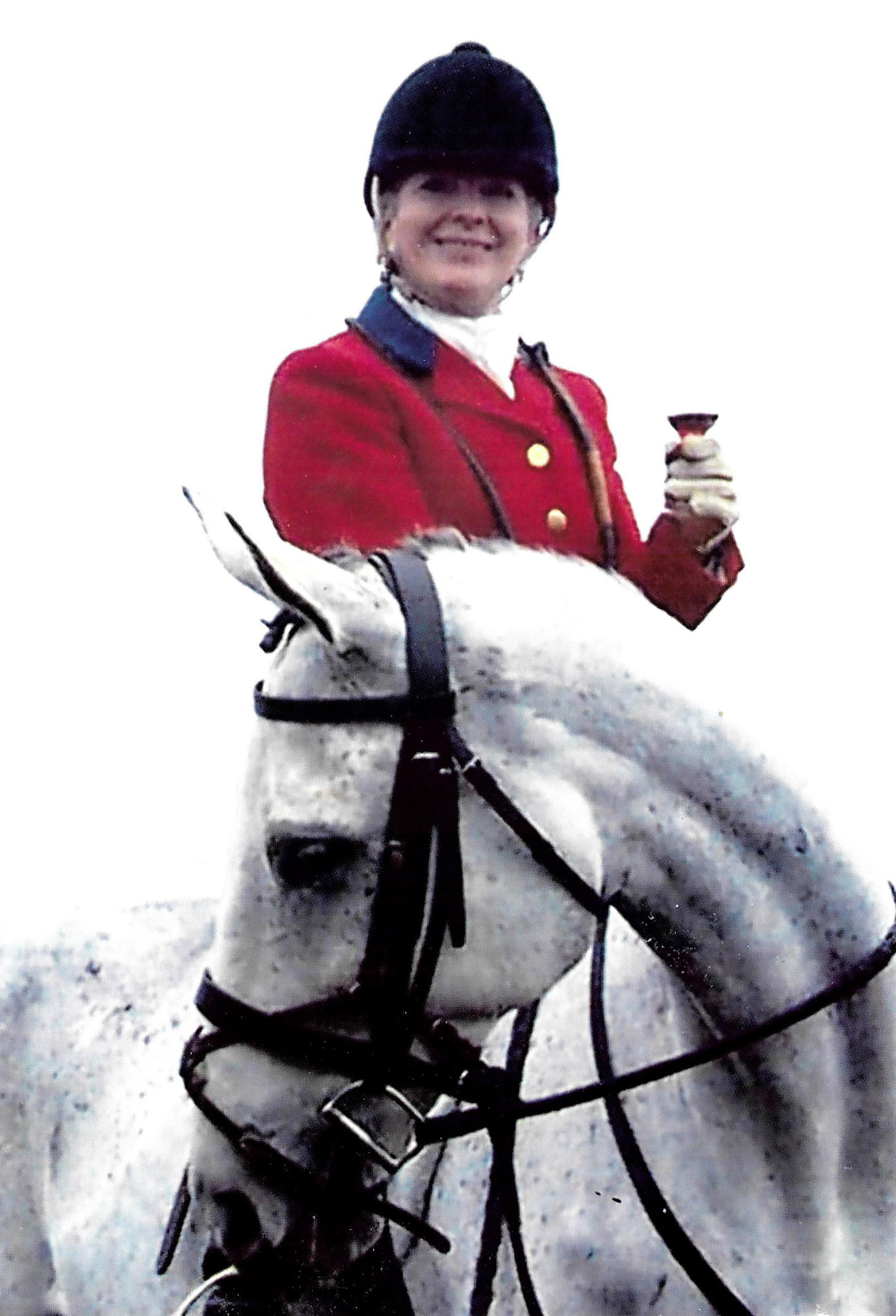
- Janet O’Keefe, the first woman master of the Rappahannock Hunt.
-
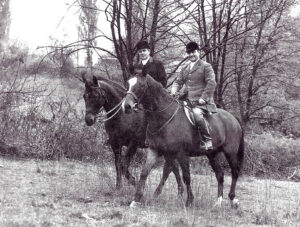
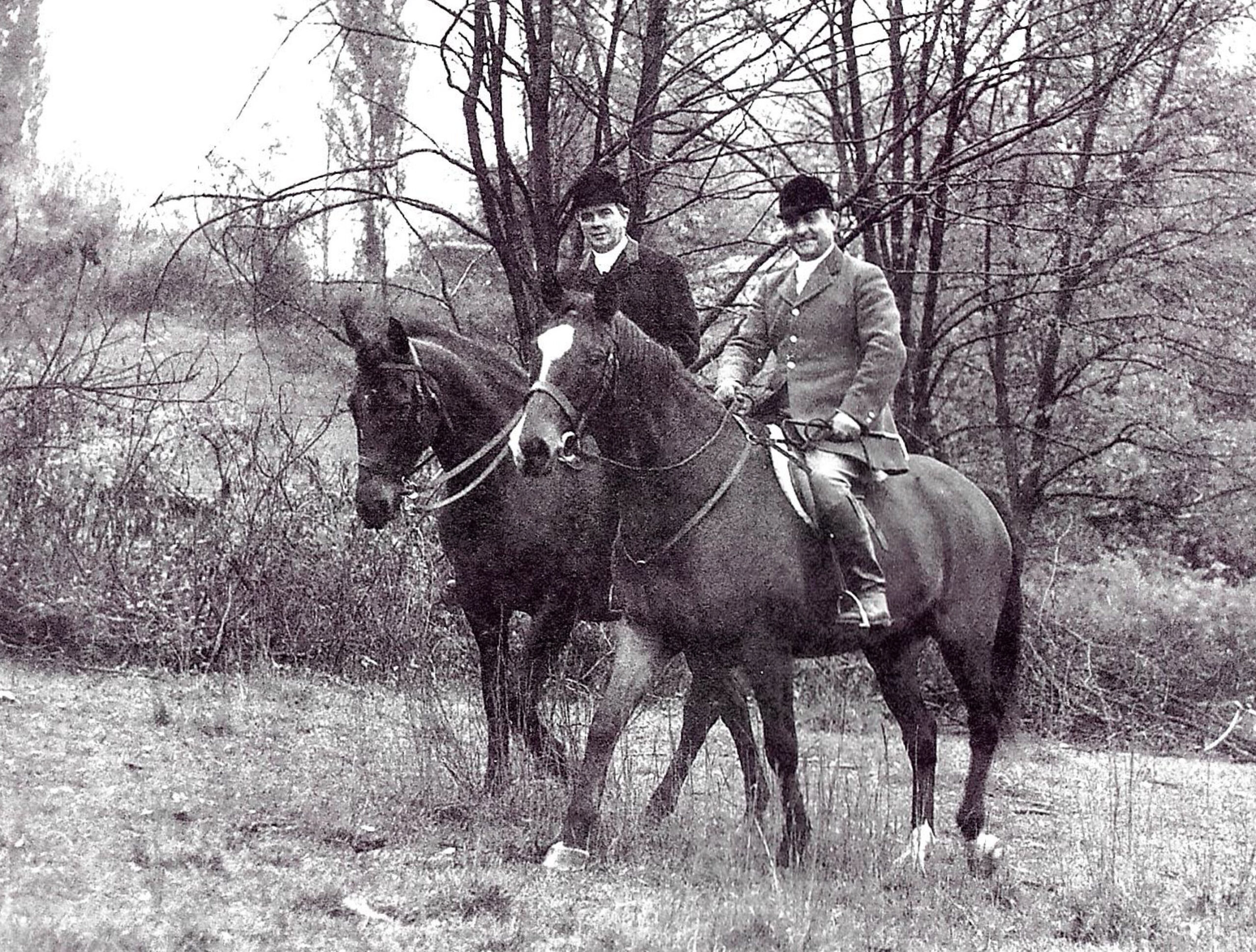
- Former Rappahannock Hunt Masters Jim Bill Fletcher and Jack DeBergh.
-
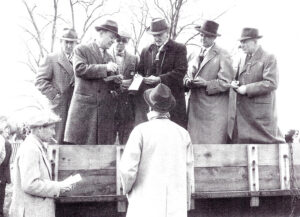
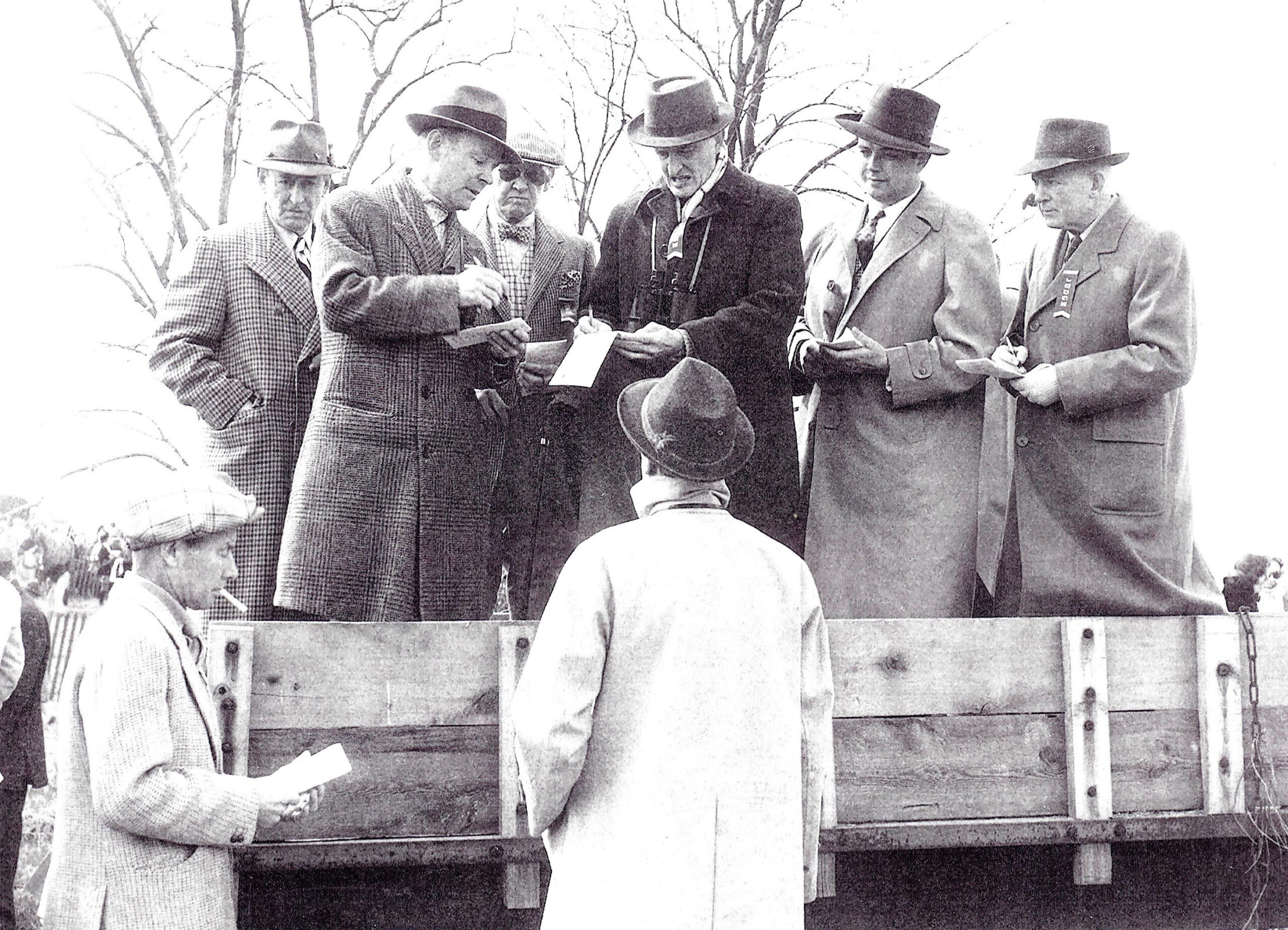
- Race officials at a Rappahannock Hunt event.
Even in the offseason, the relationship continues. At a farm in Reva, Va., the hounds are cared for year-round, exercised, trained, and allowed a bit of leisure.
“They even have a pond they can go swimming in,” D’Alessandro said.
Beyond the hunt itself, the organization has become a social and cultural anchor in the region.
Events like trail rides, gatherings and the annual point-to-point races draw crowds from across the community. This year’s races are set for Saturday, March 28 starting at noon at “The Hill” near Boston, Va. Events include hurdles and timber and flat races. Younger riders will open the day’s events with pony races.
“It’s an amazing event for the entire community,” said Pendleton who is co-chairing this year’s races with Brown. “It involves kids, it involves horses, it has tailgating and food trucks…it’s really a nice way to celebrate both the hunt and the horse industry.”
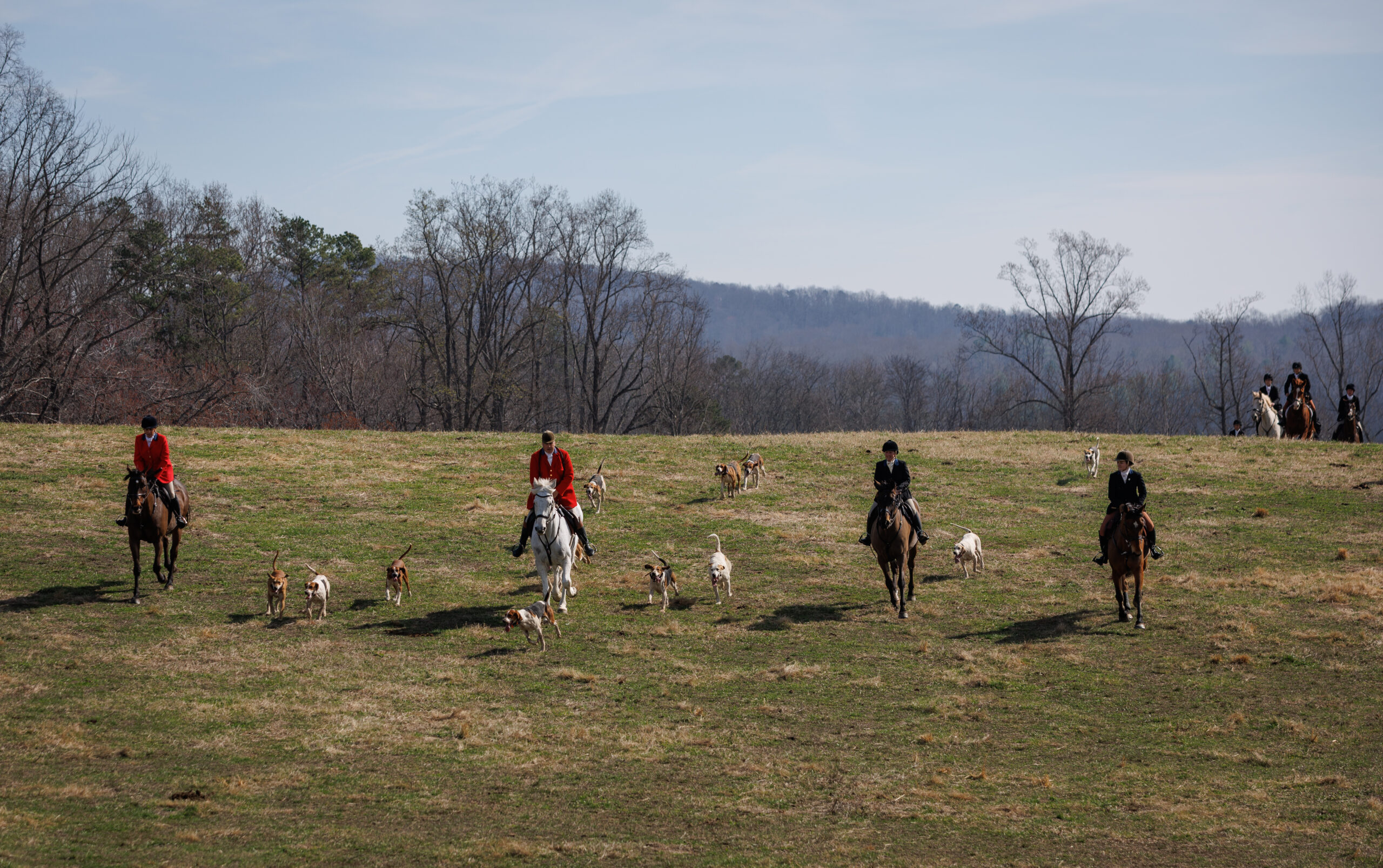
The riders heading in from the hunt at Meadow Grove farm in Amissville. (Photo/Luke Christopher)
Looking ahead
The future of the Rappahannock Hunt, members say, depends on something less ceremonial — land.
As development pushes into rural areas, maintaining access to open space has become an ongoing challenge. Relationships with landowners — built over decades — are essential.
“Without them, we wouldn’t be able to do what we love,” Vaughn said.
There’s also a growing need to bridge understanding with newcomers unfamiliar with the sport.
“Now, a lot of people move in that don’t know much about foxhunting,” Brown said, “so we try and educate them and explain what we do.”
Even so, there is optimism.
A new generation — riders like Vaughn and D’Alessandro — is stepping forward, blending respect for tradition with an openness to newcomers.
“Our hunt is super open and friendly to new people,” D’Alessandro said. “We encourage everybody to come out and at least give it a try and see if they like it or not.”
And so, as one season ends and another awaits, the rhythm continues.
Come fall, on another crisp morning, riders will gather once more. Horses will stamp, hounds will stir, and the horn will sound again — echoing across fields that have carried this tradition for 100 years.
And counting.