

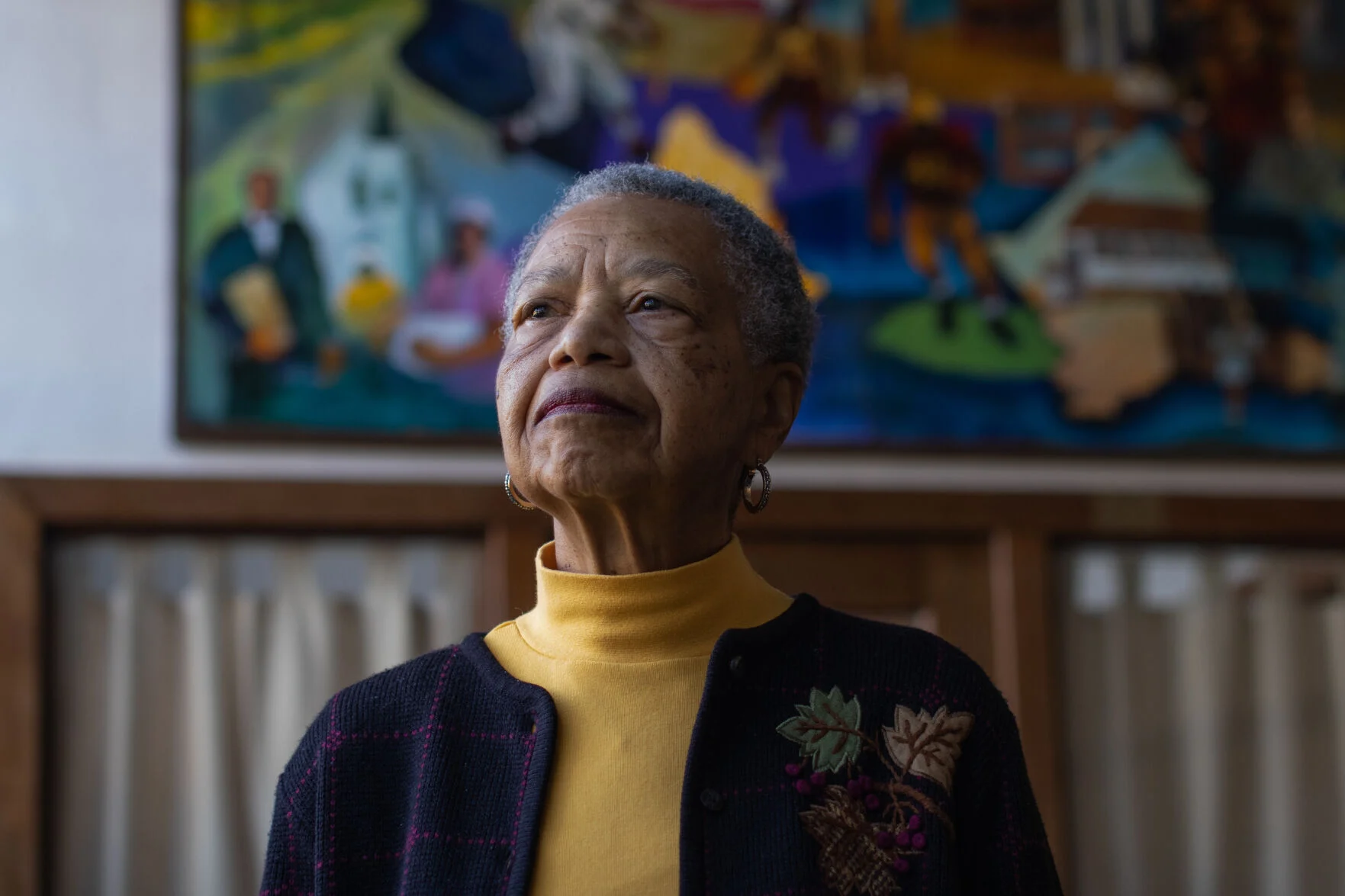


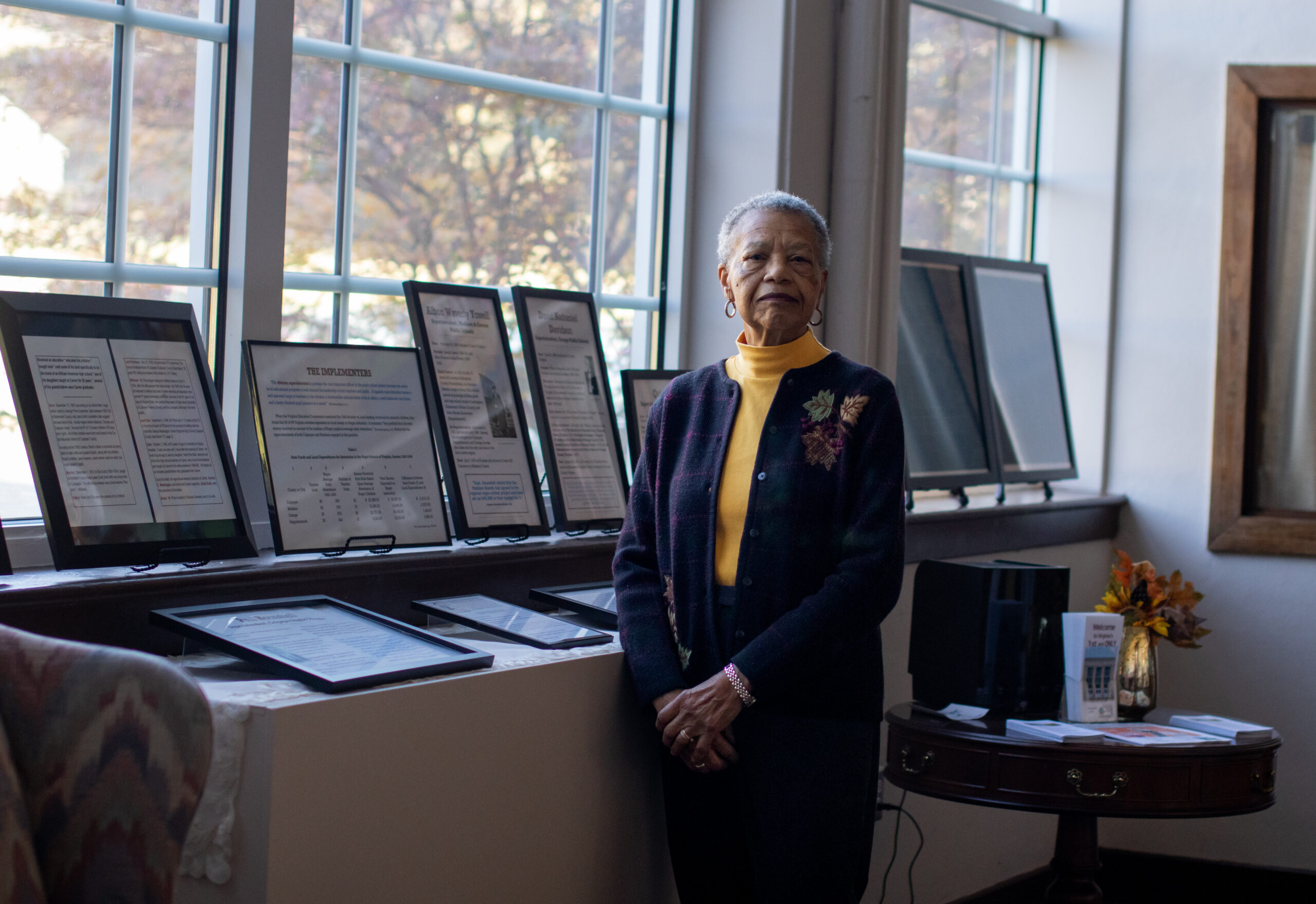


 Retired teacher Jane Pollard, now 78, grew up in the Slate Mills area of Rappahannock County in a close-knit Black community that thrived on unity and self-reliance despite the harsh realities of segregation and the arrival of integration in the 1950s and ‘60s. She and her six siblings were raised in a family that valued hard work, love and education, which helped them navigate the challenges of the time.
Segregation impacted nearly every part of life for Black families, yet Jane’s family found ways to prosper. The family lived off its land, farming, tending animals and producing much of its needs. Jane’s mother sewed and embroidered the children’s clothes and baked fresh bread daily, while her father and grandfather made homemade sausages, preserved food for future use and milked the cows. She recalls that self-sufficiency was a way of life and a source of fulfillment and sharing within the community.
In 1953, six-year-old Jane attended Scrabble School in Castleton, a two-room schoolhouse for Black children in grades one through seven. It was part of the Rosenwald School network designed to educate Black students in the rural South.
Students took pride in helping to maintain the school by performing daily chores, including carrying drinking water and gathering coal for heat. Jane recalls daily devotions, songs and Bible verses led by their teachers, Ms. Williams and Mrs. Austin, which instilled faith and a sense of purpose.
“We had general housekeeping chores that helped us understand we were part of a community,” Jane said.
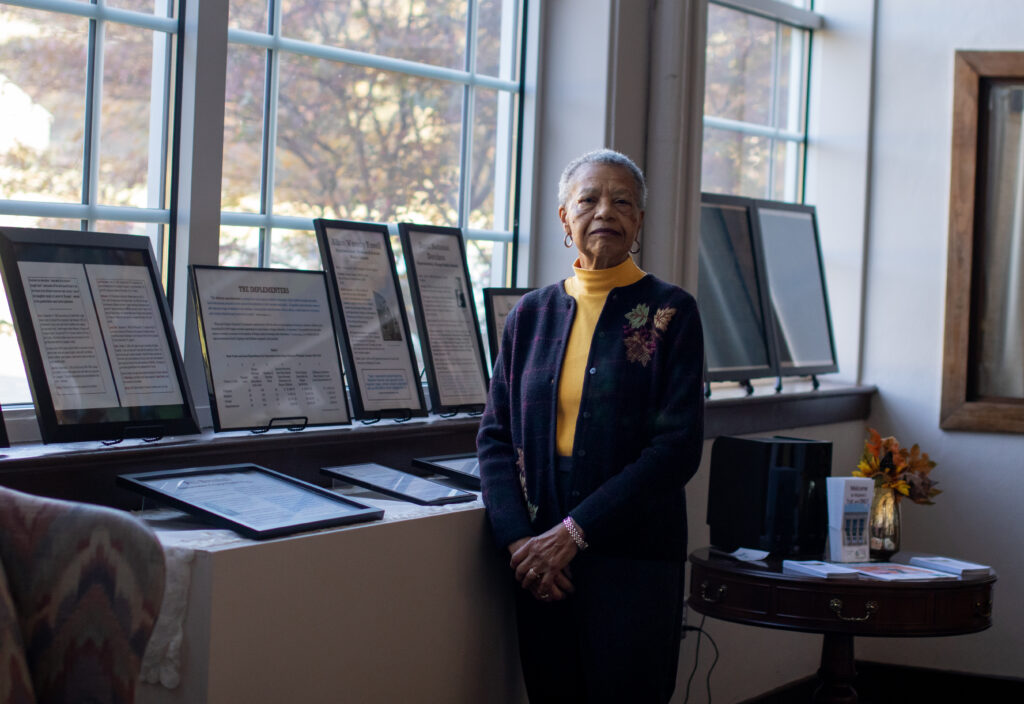
Pollard standing among exhibits in the museum. (Photo/Ireland Hayes)
Students were taught that Scrabble was their school, and they were responsible for keeping it clean inside and out. The school was supported by an active PTA that organized events such as Christmas plays and “Scrabble Soup Wednesdays.” On Wednesdays in the colder months, the PTA women made soup for the students, and Jane’s father brought it to school in a kettle on the bus. Community members worked in every capacity to ensure their children had opportunities for higher education.
Her father played a crucial role by driving the school bus. His bus transported children from Rappahannock to their respective schools, including George Washington Carver Regional High School in Culpeper – the only school available for Black students in grades eight through 12 within a four-county region.
Jane and her siblings would endure hours-long bus rides on winding country roads as students were picked up as far away as Chester Gap, then driven to Culpeper, often without heat, to get to school every morning. After her father retired, her older brothers took over driving the bus.
One fall, Jane’s older brother, William, was driving the bus and it broke down. The children were forced to walk. William asked a nearby homeowner to use their phone to call the bus shop. The owner refused because William and the children were Black.
“Despite the heat of Indian summer and rough, scratchy grass, we made the walk with older boys helping carry the younger ones,” Jane said. “We walked until we reached a cut-through road called Holland, which got you from one side of Rappahannock to the other.”
“When we got home, Mama angrily called the bus shop, but nothing changed. We always had old buses without heaters or proper drivers while white kids going to Culpeper High School rode in new, shiny buses down 522,” Jane recalled.

Pollard points out a photo of her grandfather, Simuel Wright, in a collage of changemakers displayed in the museum. (Photo/Ireland Hayes)
Jane’s family valued education, filling their home with daily newspapers and magazines like Jet, Life and Ebony, which fueled her early love of reading. Thanks to her mother’s and grandfather’s lessons, Jane was already a strong reader and writer when she began attending Scrabble in first grade. In seventh grade, her teacher, Ms. Williams introduced Jane to “Up from Slavery” by Booker T. Washington, further igniting her passion for learning.
“That was one of the first books I read about someone Black, which sparked my interest in George Washington Carver,” she said.
Jane, a former Carver Regional student, recently discovered a personal connection to its founding.
“I did not know until our [Carver Museum] curator, Ms. Terry Miller, did the background information that my grandfather [Simuel Wright] was one of the group’s leaders from Rappahannock County,” she said. Wright was a key figure among the parent-led organizers who fought to establish the school in the 1940s, ensuring that Black children in Culpeper, Madison, Orange and Rappahannock counties had access to education beyond elementary school.
George Washington Carver Regional High School, founded in 1948, was built on land formerly owned by Noah Price, a Black man whose daughter, Viola Price Blair, became one of the first teachers there. The school’s creation marked a significant victory for Black families in the region, reflecting their determination to secure educational opportunities for future generations.
Jane graduated from Virginia State University with a degree in elementary education in 1970 and spent 31 years teaching third and sixth grade in Culpeper County Public Schools. In 1968, the massive integration marked a significant shift in the nation’s education system.
“I remember when a sixth-grade teacher was chosen to help integrate Petersburg Elementary,” Jane said. “A student came to me, worried about having a White teacher, and asked, ‘What are we supposed to do?’ I told him, ‘She’s your teacher, and you’re here to learn. Do your best; remember, it’s new for her, too. You’ll need to work together to understand each other.'”
Jane recalls how administrators worked hard to keep things professional during integration. “It was new for everyone, but they did their best,” she said. She got along well with a white colleague, noting, “She was patient and great with the kids. I knew this was my job, and I needed it.” Jane didn’t feel much tension as a Black teacher with white students. “I was treated with kindness,” she said. When conflicts arose, she stayed firm: “I’m here to teach your child, and the rules are the same for everyone.”
Today, Jane lives in Culpeper, surrounded by her siblings, son, grandchildren and great-grandchildren.
Her story is a reminder that history is not just about dates and events; it’s about the lives of people like Jane, who faced challenges with grace, overcame obstacles through determination and passed down invaluable lessons to the next generation.
“Whatever situation you find yourself in, do your best and remember who you are,” Jane said. “Not everyone will look like you, but it’s important to learn to work together and be open-minded.”