

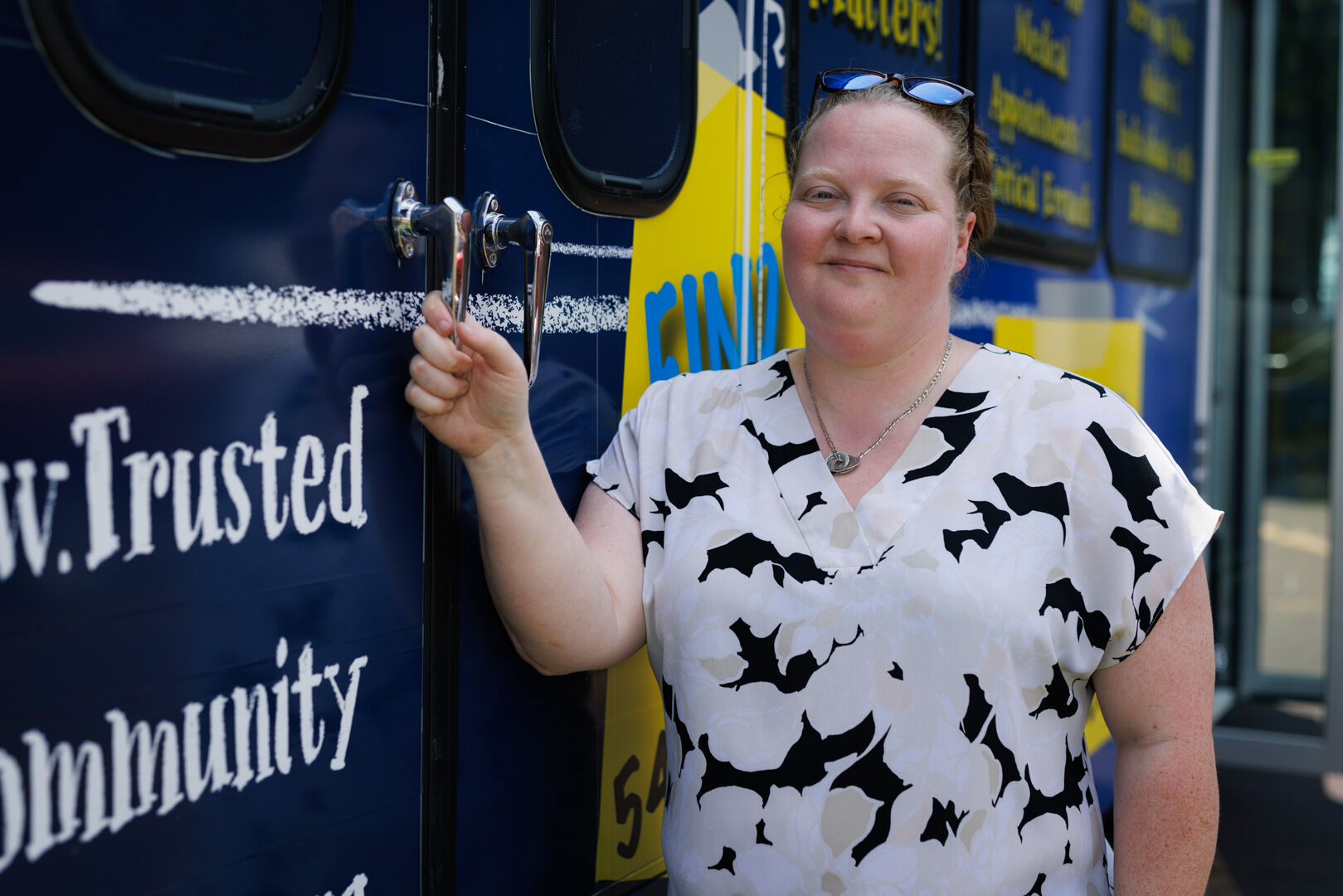
In a community with an older population like Rappahannock County, the medical needs of its residents only increase with time.
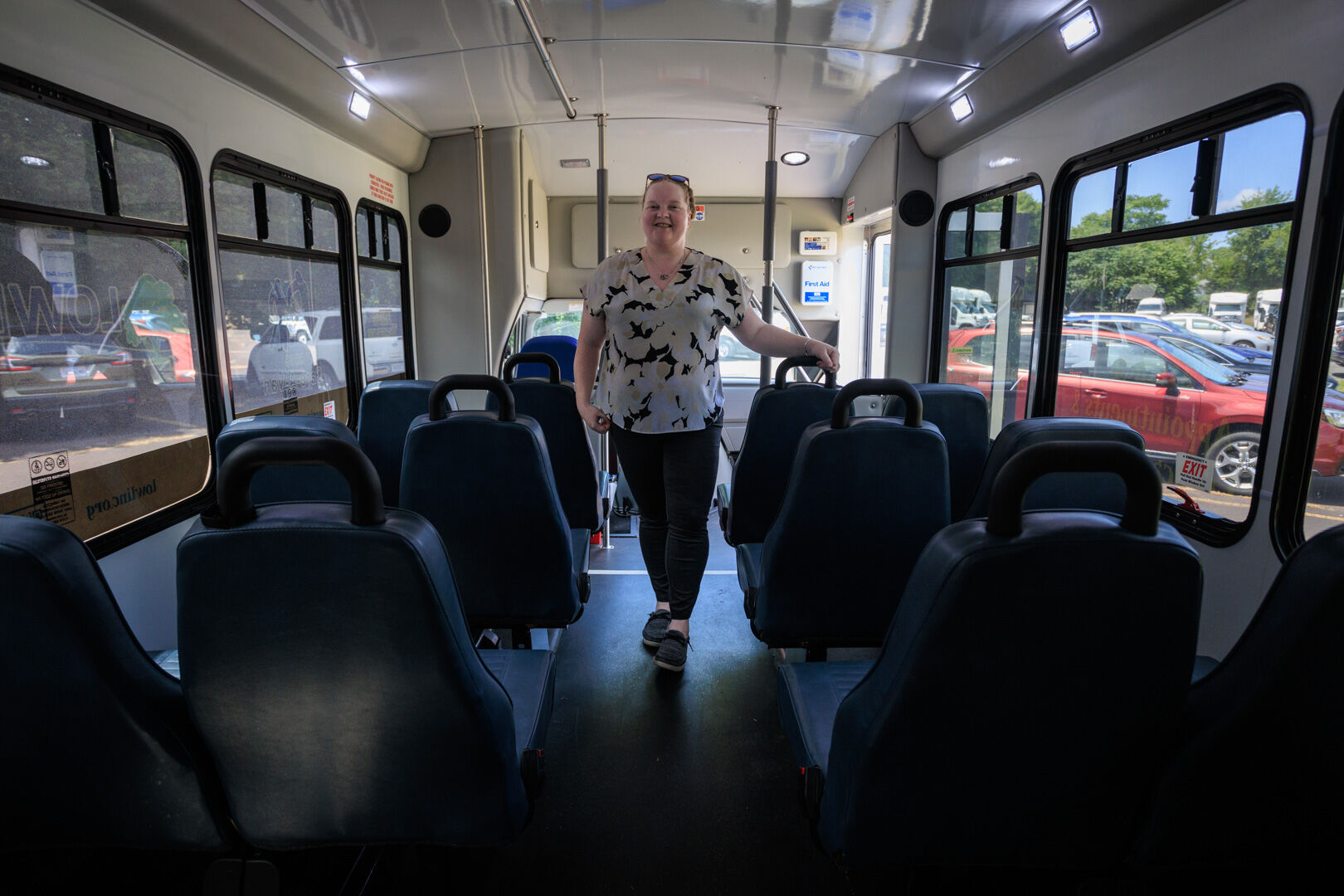
There’s a part of that trend that’s often overlooked: The challenge of actually getting people to treatments and checkups. As Mobility Manager for the Rappahannock-Rapidan Regional Commission, Kristin Lam Peraza is in charge of helping older people and those with disabilities find transportation to their appointments.
2023-07-FF-Transportation-Kristin-Lam-Peraza–6-web.jpg
Kristin Lam Peraza of the Rappahannock-Rapidan Regional Commission is in charge of helping older people and those with disabilities find transportation to their appointments.
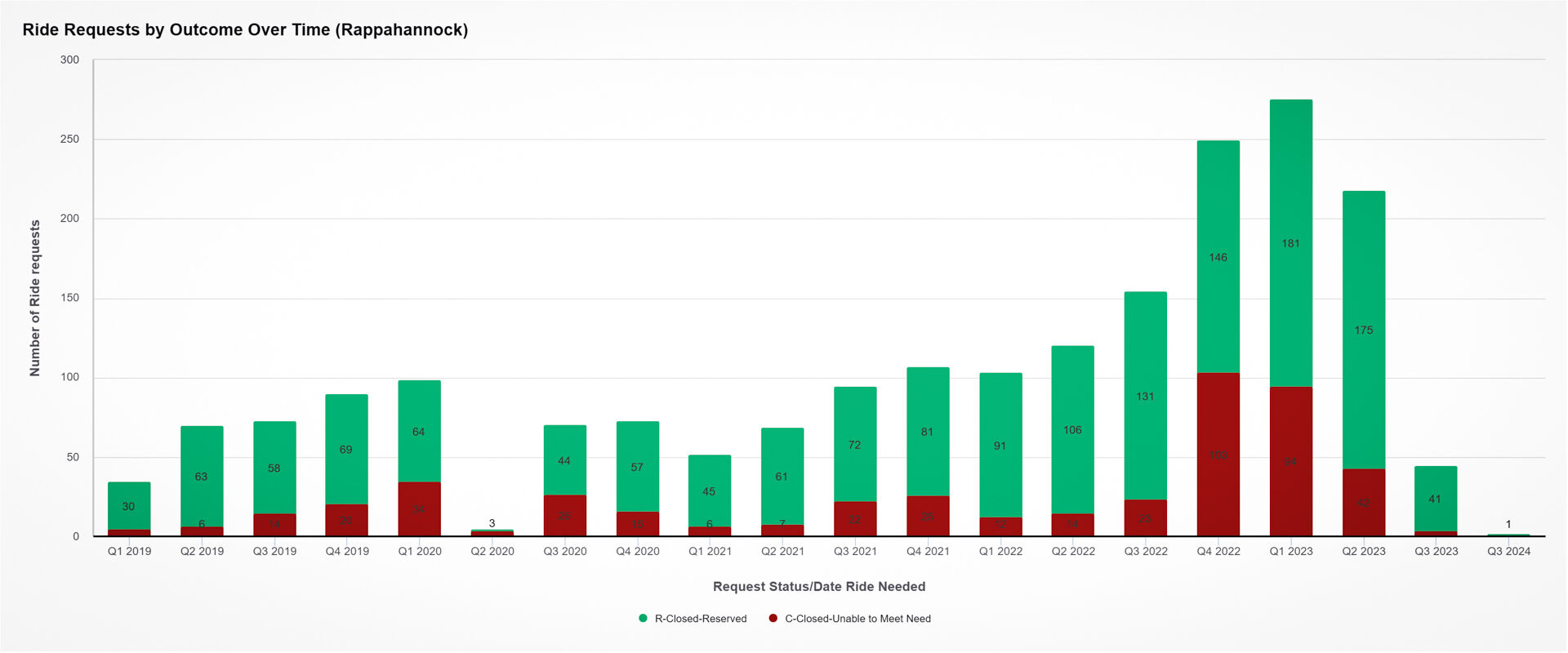
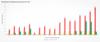
In Rappahannock, without a public transit system, that means relying on volunteer drivers, and in the majority of cases, free rides can be arranged, she said. But since early 2019, almost a quarter of the transportation requests from Rappahannock residents haven’t been met, and the demand is increasing.

ride-requests-by-outcome-(1)-web-2.jpg
ride-requests-for-rappah-(1)-web-2.jpg
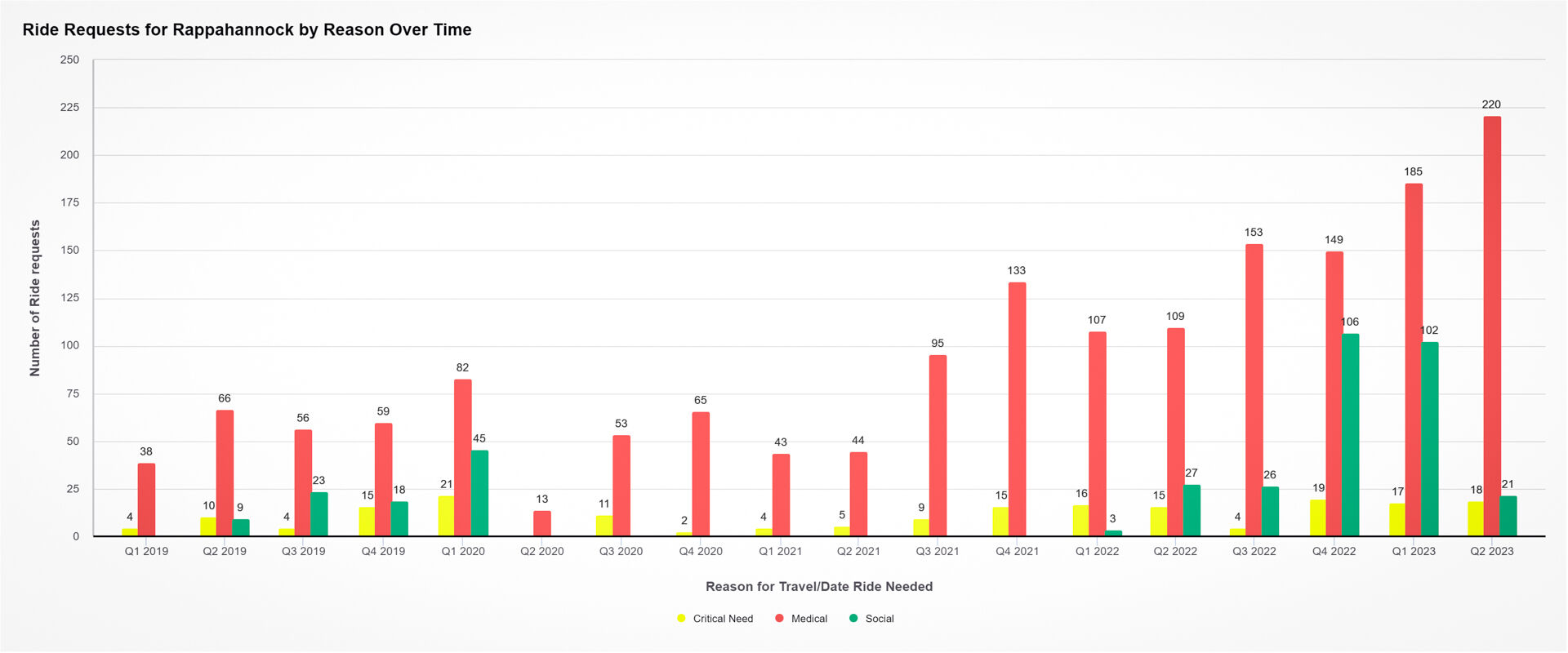
From the fourth quarter of 2022 through the second quarter of this year, the Regional Transportation Collaborative’s (RTC) Mobility Center received 741 requests for rides from Rappahannock, compared to 329 requests from fall 2021 through spring 2022.
“We’ve been warned for years that the census data showed that we’re going to have a significantly large portion of older adults that will continue to grow,” said Peraza. “We’re headed in that direction.”
Rappahannock service
But thanks to a state grant the RTC received earlier this year, Peraza’s operation will get more support.Specifically, the Virginia Department of Rail and Public Transportation is providing $75,000 to fund a pilot project for Rappahannock residents.

2023-07-FF-Transportation-Kristin-Lam-Peraza–7-web.jpg
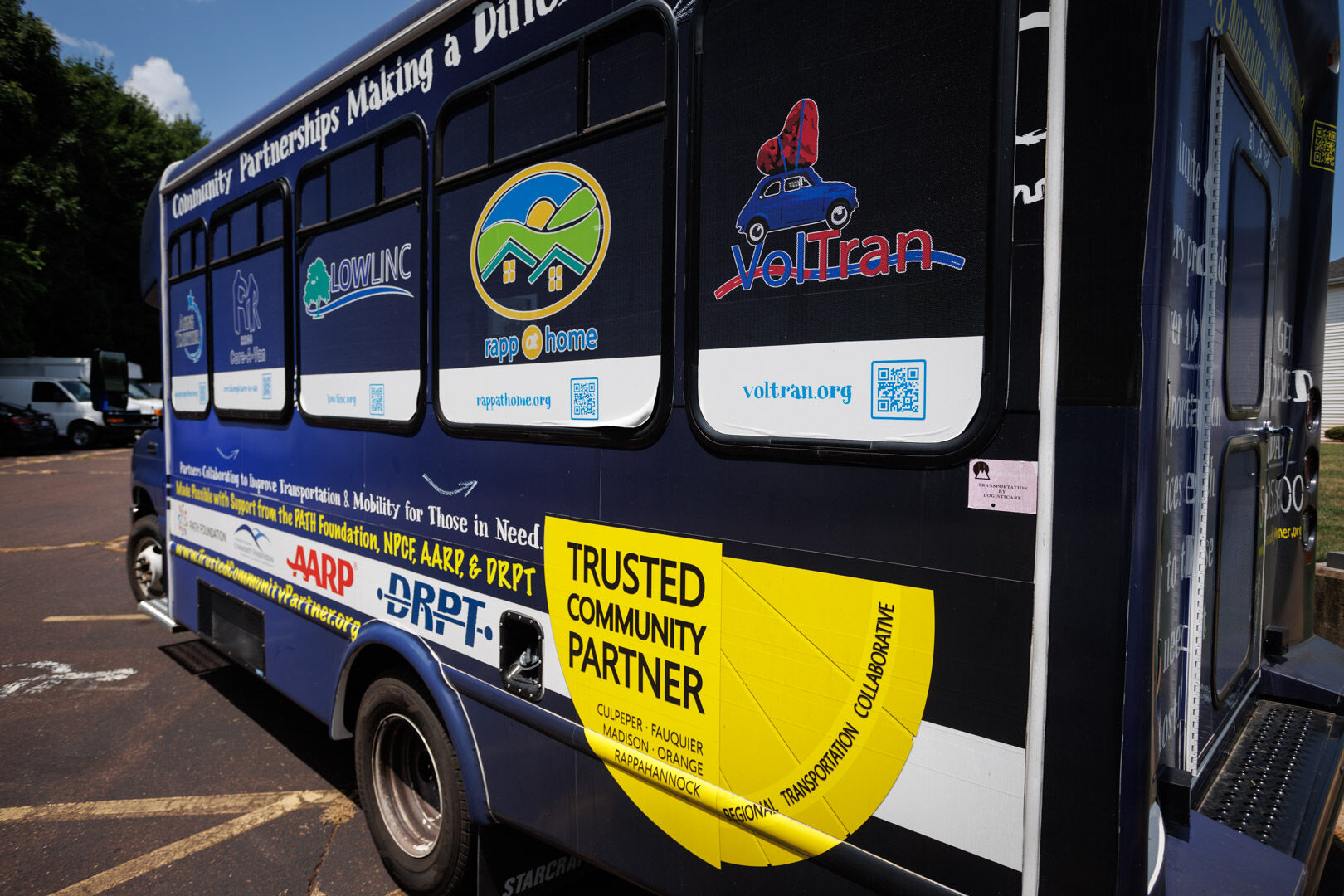
The Regional Transportation Collaborative has many partners assisting in the mobility program.
The money will enable the RTC, beginning in January, to contract with an outside firm to provide backup service when rides with voluntary drivers from organizations such as Rapp at Home, Care-A-Van and VolTran can’t be arranged. Riders won’t actually schedule trips with that service, but it will be used by the RTC to supplement volunteer drivers.
Volunteer drivers can choose not to take on trips that involve traveling long distances or include a lengthy medical procedure for the rider. Drivers with a private company wouldn’t have that option.
Peraza thinks the addition of contracted drivers could be particularly helpful in providing transportation for people with chronic conditions, such as those who require regular dialysis treatments. About 17% of the medical ride requests from Rappahannock are to get to and from dialysis sessions, second only to the 19% who need transportation to physical therapy appointments.
“A lot of our clients, over time, just become more vulnerable. They need more help,” said Peraza. “And it’s natural for a volunteer driver to say, ‘Let me help you.’ But it can be so difficult because they’re not trained to physically support someone.”
She pointed out that the situation is complicated by the personal connections volunteer drivers and riders often develop.
“The volunteers can become really dedicated to helping these people, and they don’t want to say no because right now there’s no alternative,” Peraza said. “The other issue with people with chronic conditions is if someone has been driving them every week for months and then that volunteer isn’t available. It can really come crashing down for the rider.”
“I hate for people to rely on us as a single source of transportation for chronic needs because I want them to have stability over time,” she added. “It’s another part of the equation we need to work on. How do we provide support in the long-term for these individuals?”
Going social
While most of the rides still relate to medical issues, the number of requests for other types of trips is also increasing. Since last October, 229 “social” requests have come from Rappahannock residents. That’s at least in part due to RTC’s access to a mini-bus, and a close working relationship with Rapp at Home.

2023-07-FF-Transportation-Kristin-Lam-Peraza–4-web.jpg
Kristin Lam Peraza occasionally helps out with diving the vans.
“We have people going to events, or to get their hair done or to go get food or go to the pharmacy,” said Peraza, who said the service has also helped people reduce their social isolation.
The funding for the pilot program will run through September 2024, at which time its effectiveness and use will be evaluated.
Rides can be scheduled through the RTC Mobility Center by calling 540-829-5300.

Foothills logo – horizontal
Foothills Forum is an independent, community-supported nonprofit tackling the need for in-depth research and reporting on Rappahannock County issues.
The group has an agreement with Rappahannock Media, owner of the Rappahannock News, to present this series and other award-winning reporting projects. More at foothillsforum.org.